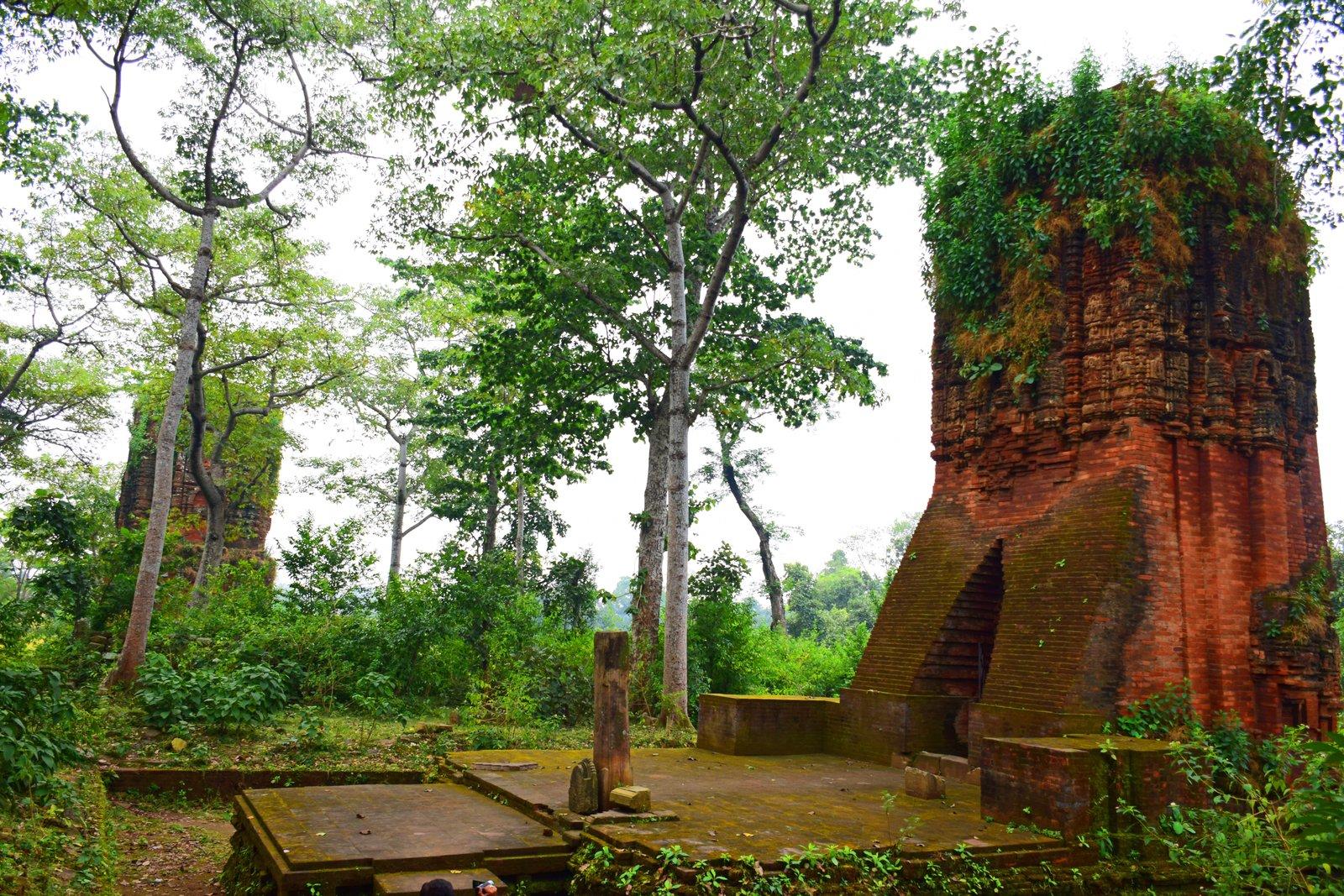
Deulghata, near Boram village in Arsha block, is a cluster of temple ruins on the bank of the Kangsabati (Kansai). Two tall brick rekha deuls, worked in finely moulded brick and stucco, rise among trees at the edge of paddy fields, with fallen stone shrines and old sculptures around them. A rewarding stop for anyone interested in early temple architecture.
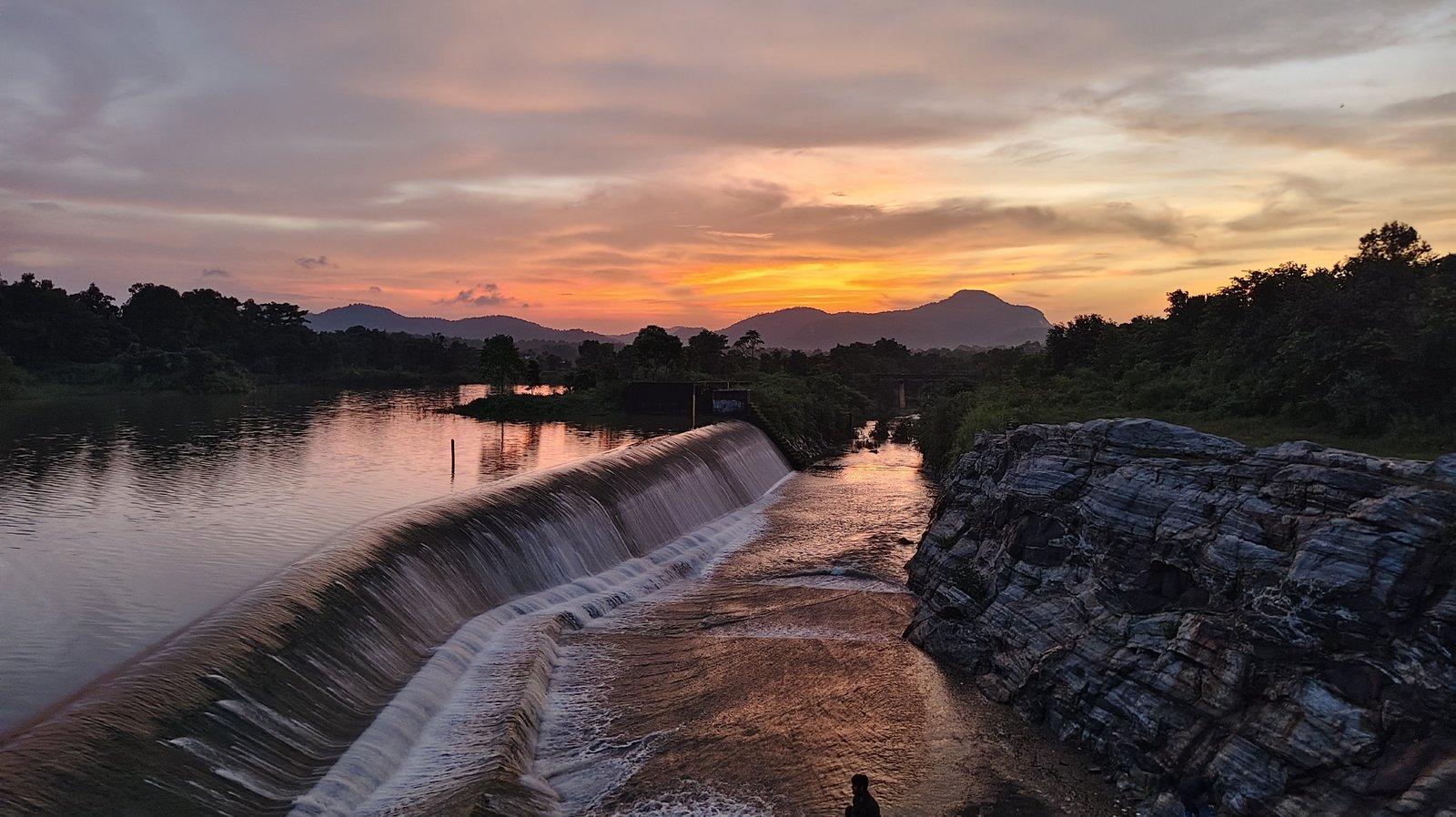
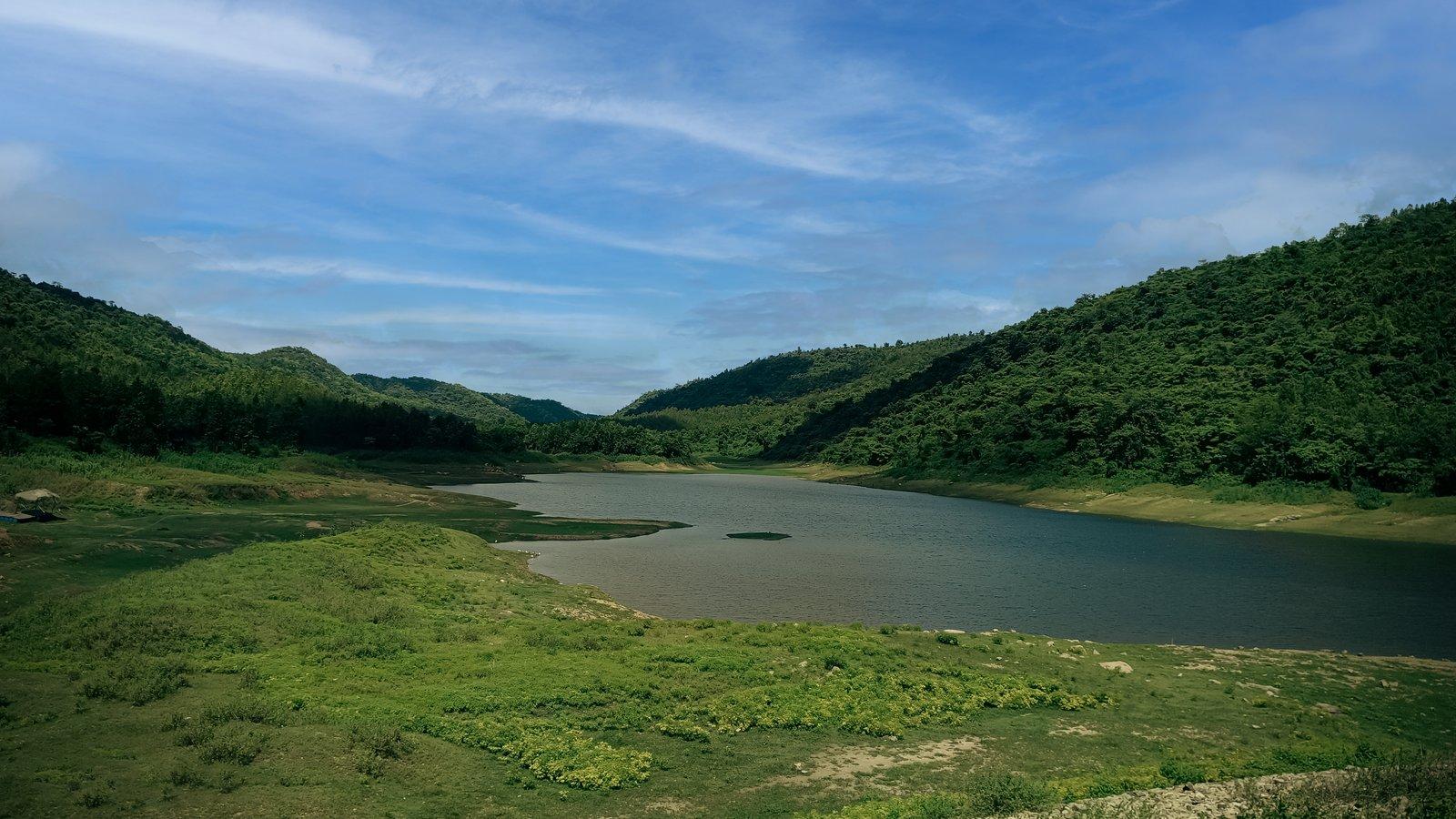
The place takes its name from its deuls, or temple towers. It lies a few kilometres south of Jaipur (Joypur), off the Ranchi-Purulia road, where the Kangsabati runs past Boram. The district administration counts the ruins of some 15 temples. Of the three brick temples recorded in the 1860s, two stand; the third collapsed in 2002, and its overgrown base lies to the north-west near the river.
Both surviving towers are east-facing rekha deuls on raised plinths, each with a tall curved spire over a small sanctum entered through a triangular corbelled doorway. Their walls are decorated almost entirely in moulded brick, with stucco in places: rows of miniature temple towers, scrollwork, geese and, over the southern temple's entrance, a kirtimukha, a fanged mythical face. The tops of both towers have worn away.
Around them are the stumps of stone temples, a modern Shiva temple built on an old base, and small rooms and trees sheltering carved stone images. Quiet for most of the year, the site fills with people at the Tusu and Dol festivals.