At a glance
- Tusu runs through the Bengali month of Poush, from mid-December, and ends on Makar Sankranti on 14 or 15 January.
- It is a harvest thanksgiving led by women and girls, built around new Tusu songs sung every evening.
- On Sankranti morning, bamboo-and-paper chaudals are carried in procession to rivers and ponds and immersed.
- Deulghata on the Kangsabati, about 44 km from the resort, holds the best-known Tusu fair in the area.
- Ask before photographing anyone, watch immersions from the edge and enter homes only when invited.
The Tusu festival in Purulia, known locally as Tusu Parab, is a month of songs that runs through the Bengali month of Poush and ends on Makar Sankranti (Poush Sankranti) in mid-January. Women and girls keep Tusu at home, sing new songs to her every evening and, on the last morning, carry her on a decorated bamboo-and-paper chaudal to a river or pond for immersion, while fairs spring up on the banks. To see it, plan to be in Purulia for the last two or three days of Poush.
When is the Tusu festival in Purulia?
Tusu begins as the paddy harvest ends. Traditionally, on the last day of Agrahayan (mid-December), the head of the family brings home the dinimai, the last stack of paddy left in the field, and the girls of the house establish Tusu the same day. The worship then continues every evening through Poush.
The festival builds over the final three days of Poush and ends on Makar Sankranti, which falls on 14 or 15 January depending on the almanac. For 2027 the calendars differ: the sun enters Capricorn late on 14 January, so panchang-based calendars such as Drik Panchang mark Sankranti on the 15th. Check locally before you fix your dates. The following day, the first of Magh, is Akhan Jatra, which the district administration describes as an auspicious day.
What is Tusu, and who celebrates it?
Tusu is a harvest thanksgiving of the Chhota Nagpur plateau, kept in Purulia, Bankura and Medinipur and across the border in Jharkhand and Odisha. It is most closely tied to the Kurmi (Kudmi) Mahato community, for whom it is one of three great festivals alongside Karam and Bandna, the cattle festival. Bhumij, Munda, Oraon and many other households in the district keep it too.
It is above all a women's festival. Unmarried girls traditionally lead the worship, and in many villages Tusu is not an idol at all: the offering is a clay pot or a wall niche holding rice husk, cow-dung balls, durva grass, flowers and a lamp. The Purulia district administration notes that images of Tusu have come into use only in recent times.
Where does the name come from? Folklorists list several possibilities, the most widely accepted being tush, the husk of rice. There are stories as well. According to one legend, Tusu, or Tusumani, was a village girl who took her own life rather than give in to a ruler who wanted her; in another she was a potter's daughter married to a prince, who died on his pyre on Makar Sankranti. The details change from village to village, and they are told as legends.
Tusu songs: the heart of the festival
The district administration sums up Tusu songs as the joys, sorrows, imagination and experiences of village life. Girls and women sing them every evening of Poush, often in Kurmali or the Manbhum dialect of Bengali, and many are made up on the spot. Older songs pray for a good harvest; others tease husbands and in-laws or take on local and political issues, and Tusu herself is sung to as a goddess, a daughter and a friend. New songs are composed every year, and the good ones are remembered and passed on.
That edge has a history. In January 1954, during the Manbhum language movement that eventually brought Purulia into West Bengal on 1 November 1956, campaigners turned Tusu songs into protest songs in what became known as the Tusu Satyagraha. On 10 January that year, 11 protesters were arrested for singing them. Our short history of Manbhum and Purulia tells the wider story.
Today recorded Tusu songs play from loudspeakers at the fairs, and folklorists note that commercial recordings are crowding out the improvised singing at home. The evening singing still goes on in villages, but it is family worship rather than a performance. For the region's other song traditions, see our guide to Jhumur, the folk songs of Manbhum.
The chaudal and the day of immersion
In Purulia the centrepiece is the chaudal (also spelt choudal), a light frame of bamboo or jute sticks covered in coloured paper, which the Daricha Foundation's folklore archive describes as standing up to six feet tall. It looks a little like a small temple chariot without wheels, and it is carried by hand or on the shoulders, depending on its size.
The eve of Sankranti is a night of vigil, with singing that goes on into the small hours. On Sankranti morning the women and girls carry their Tusu and chaudals in procession to a river, stream or pond, singing farewell songs, and immerse them. The parting is often compared to a daughter leaving for her husband's home. Families then bathe and turn to food: across Bengal, Poush Sankranti is the day for pitha, rice-flour sweets made with new rice and date-palm jaggery.
In some places the chaudal has become a contest. Taller, brighter chaudals, built in sections and joined at the fairground, compete for cash prizes, and the crowds they draw have turned some immersions into one-day spectacles.
Where to see a Tusu mela near the Ajodhya Hills
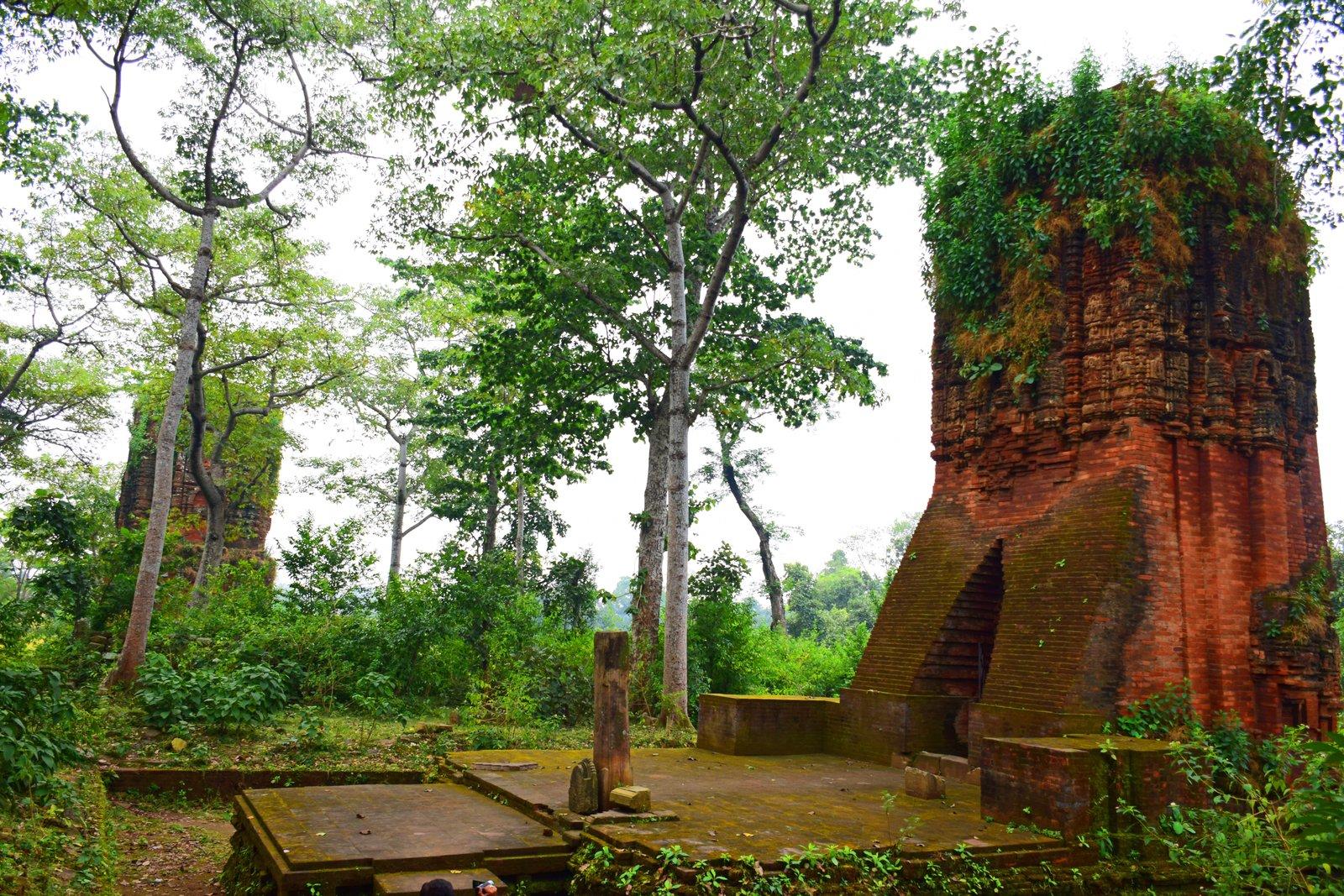
The best-documented Tusu fair in this part of the district is at Deulghata, where two tall brick temples stand on the Kangsabati (Kansai) near Boram, about 44 km from our cottages. Outlook Traveller describes a large fair there on Makar Sankranti, with Tusu floats immersed in the river, and the temples draw their biggest crowds of the year at Tusu.
Beyond Deulghata, most Tusu fairs are local. Wherever villages meet a river or a large tank, the bank becomes a fairground on Sankranti, with stalls of local goods, food and music and, at some, Chhau or other dance. Fair sites change from year to year, so ask locally a few days ahead. Across the border in Jharkhand, Tusu is also celebrated around Chandil Dam, where the old Jayda Shiva temple holds a fair at Makar Sankranti.
| What | When | Where |
|---|---|---|
| Evening Tusu songs | Every evening of Poush (mid-December to mid-January) | Homes and courtyards, mostly in villages |
| Night of vigil | Eve of Makar Sankranti | Homes and village grounds |
| Chaudal procession and immersion | Makar Sankranti morning | Rivers, streams and ponds |
| Tusu melas | Makar Sankranti and the days around it | Riverbanks, such as Deulghata on the Kangsabati |
How to see the Tusu festival respectfully
Tusu is a living women's worship, not a show staged for visitors. A few simple habits make a difference:
- Ask before you photograph anyone, especially the girls and women carrying Tusu, and accept a no. Never ask anyone to pose or repeat a ritual.
- Watch from the edge at an immersion. Don't touch the chaudal or the offerings, and don't step on the alpana patterns in courtyards.
- Don't walk into homes for the evening singing unless you are invited in.
- Buy from the stalls at the fair; the melas are an important market for local makers.
- Take your litter away and keep music off. Riverbanks are crowded and slippery on Sankranti, and visitors should not swim in the rivers or tanks.
- Dress warmly for a dawn start. Mid-January mornings are among the coldest of the year in Purulia.
Planning a Tusu trip from the Ajodhya Hills
Mid-January is the heart of winter in Purulia. India Meteorological Department averages for Purulia town (1991–2020) give January days of about 24°C and nights of about 12°C, with very little rain, so the weather suits a festival trip combined with the hills and dams. Our guide to Purulia in winter covers the rest of the season.
A good plan is to arrive two days before Sankranti, spend one day on the Ajodhya Hills circuit and keep Sankranti morning free for an immersion and a fair. From Rangamati, at the foot of Matha Buru, Deulghata is about 44 km by road, and we can arrange a local guide or sightseeing cab on request, which helps when fair sites are decided locally. Evenings are cold, so a bonfire on the lawn, also on request, is a good way to end the day.
If you are coming over the year-end holidays instead, you will catch the first weeks of Poush, when the evening singing has begun but the immersions are still ahead. Our guide to Christmas and New Year in Purulia has a plan for that week.