Explore Purulia

Hill

Joy Chandi Pahar

A rocky hill near Raghunathpur, known for rock climbing and hilltop temples.

Directions
  • 95 kmBy road from the resort
  • North-eastOf the resort
  • HillHills & views

Overview
Hill

Visiting Joy Chandi Pahar

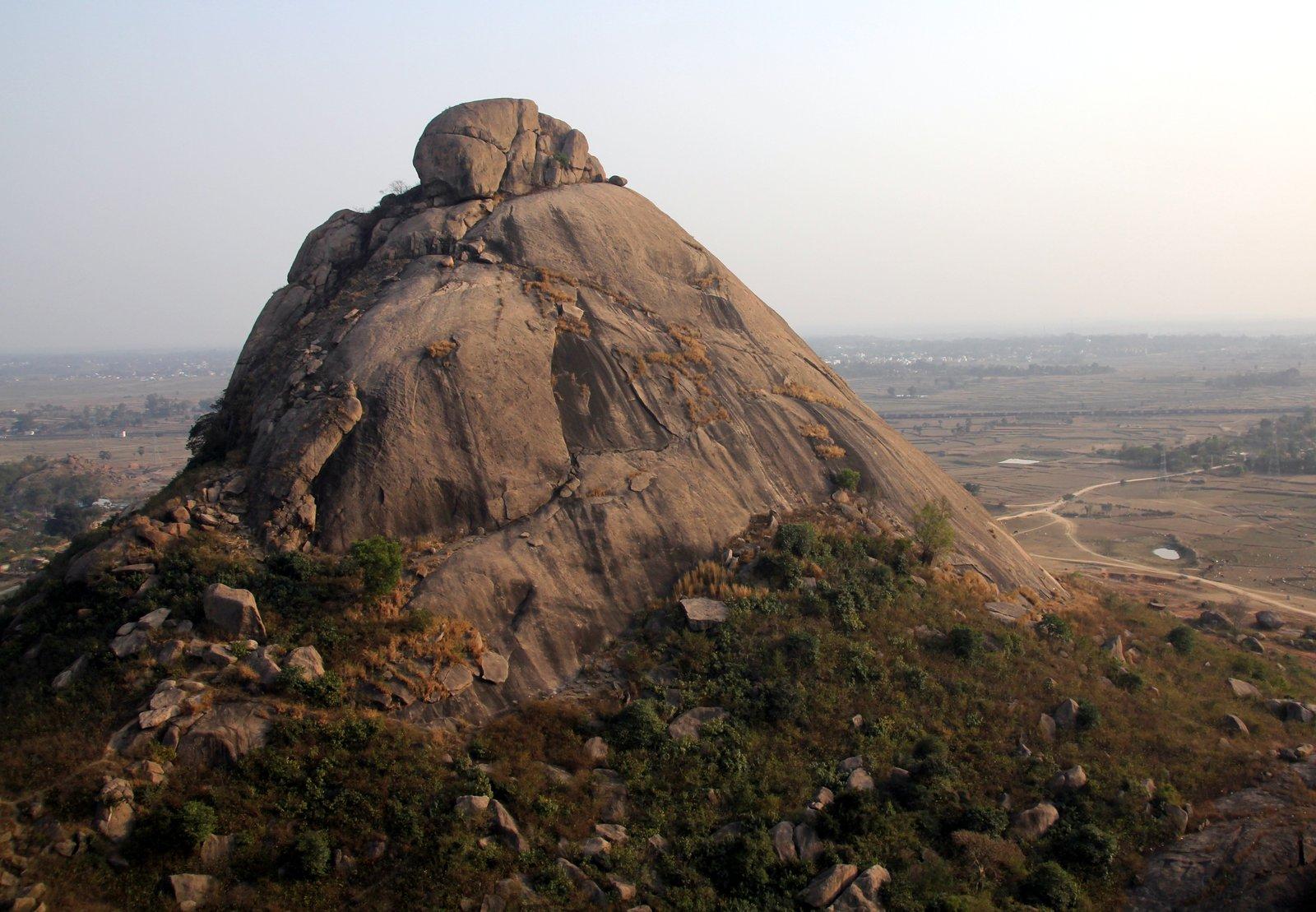
Joychandi Pahar is a cluster of bare, rocky hills on the edge of Raghunathpur, with its own railway station on the Adra-Asansol line. A long flight of steps climbs past the ruin of a British-era semaphore tower to temples of Chandi and Hanuman near the top. Climbers train on its rock faces in winter, and Satyajit Ray shot much of Hirak Rajar Deshe here.

The hill stands about 2 km from Raghunathpur, the subdivisional town, and about 4 km from Adra. Joychandi Pahar station, on the Adra-Asansol section of the South Eastern Railway, is about 1.5 km away. The district administration lists Joychandi as a trekking and picnic spot and notes that everyday facilities are available in Raghunathpur town.

Joychandi is really a small group of rocky hills rather than a single peak, and each has its own local name; the temple hill is the one most visitors climb. The hills rise mostly as bare rock with scattered patches of green, out of open fields, village ponds and red laterite tracks.

For such a rocky place it supports a good variety of plants, among them shikakai, neem and palash, and a survey published in 2024 recorded 74 species of butterflies around the hill.

Past & present
History & stories

The story of Joy Chandi Pahar

The ruined two-storey masonry tower on the way up is one of the semaphore towers built by the British for an optical telegraph between 1816 and 1830. Towers with shutters or moving arms passed signals from one to the next; the longest line ran about 400 miles from Calcutta to Chunar. Two-storey towers like this one stand on hilltops in Purulia, while four-storey ones were built on the plains.

The Calcutta-Chunar line worked only until 1828; maintenance costs and the electric telegraph ended the system, and the towers, often mistaken for watchtowers, fell out of use.

In 1980 Satyajit Ray filmed much of Hirak Rajar Deshe, his satirical sequel to Goopy Gyne Bagha Byne, among these hills. The link is still remembered: the opening of the hill's 18th tourism festival was held at Satyajit Ray Square in the foothills.

Sita's tears

Near the Chandi temple on the hilltop is a small, deep hollow in the rock that holds water. A member of the temple committee told Kolkata on Wheels that when Ravana carried Sita away to Lanka, his chariot wheel left its mark on a rock here, and that the hollow was filled by Sita's tears. Local belief holds that it never dries up and that the water has healing powers.

The tiger's den

Among the rocks at the top is a cleft known locally as Bagher Dera, the tiger's den. Visitors are told that a tiger used to shelter there until not many years ago.

When you're there
See & do

Things to see and do

  1. 01

    Climb to the hilltop temples

    A long stairway, level in stretches and unexpectedly steep in others, leads to two well-kept temples near the summit, of the goddess Chandi and of Hanuman (Bajrangbali), where local priests carry out daily rituals. Seats at intervals and the shade of trees make the climb easier.

  2. 02

    The semaphore tower

    Partway up, look out for the shell of the two-storey semaphore tower, a relic of the early 19th-century British optical telegraph.

  3. 03

    View from the top

    The summit gives an all-round view of fields, ponds, villages, Raghunathpur and the railway, where the local trains of the Adra-Asansol line can be watched passing below. A winter morning is the pleasantest time to be up there.

  4. 04

    Rock climbing

    Joychandi is one of the region's established rock-climbing grounds, used for training by clubs and colleges, mostly in winter. In December 2024, for example, two colleges ran a five-day camp here with rope work, rappelling and practice on the rock faces.

  5. 05

    Tussar silk

    In nearby Nonduara village silkworms are reared on arjun trees for tussar silk, and some households about 3 km from the hill weave it on handlooms.

Gallery
Photos

Joy Chandi Pahar in pictures

Photos coming soon

We're putting together our own photographs of Joy Chandi Pahar. Been there with us? We'd love to see yours.

Getting there
From Rangamati

Where it lies

Joy Chandi Pahar is 95 km by road from the resort, to the north-east. A local guide, sightseeing cab or driver can be arranged on request.

The drive
From the resort the road runs down to Balarampur on SH4, then follows NH18 through Arsha to Purulia. Skirt the town on the bypass and take SH5, the Purulia-Barakar road, north-east to Raghunathpur. In Raghunathpur turn onto the Adra road; Joychandi Pahar is signposted and lies a short way west of it.
The last stretch
A narrow lane leads to an open field at the foot of the hill, where the tarmac ends; the temple steps start from this field. Small stalls by the field sold tea, biscuits, chips and soft drinks (2019).
Open in Google Maps
10 km25 km50 km100 kmNJoy Chandi Pahar
Rings show straight-line distance from the resort; the road is longer.

Before you go

Facilities
Places to stay beside the hill include the Joychandi Pahar resort, a state tourism project opened in 2015 and run by a local operator, the Pathasathi lodge and a large youth hostel. Other facilities are in Raghunathpur town.
Food nearby
The resort's dining room served simple Bengali meals to day visitors as well as guests (2019); otherwise eat in Raghunathpur.
Getting around
The temples are reached by several hundred steps; published counts range from about 400 to over 500. The open ground and ponds at the foot of the hill are level, so those who cannot manage the climb can still enjoy the setting.

Through the year
Seasons & festivals

When to go

  • Summer

    March – June

    Mar-Jun: Purulia summers are hot, with temperatures reaching about 40 C, so an early-morning climb is best.

  • Monsoon

    July – September

    Jul-Sep: the surroundings turn green and the trees are in full leaf, which makes the monsoon a good second choice.

  • Winter

    October – February

    Oct-Feb: the most comfortable time for the climb and the main season for rock-climbing camps; the tourism festival runs at the foothills at the turn of the year.

Fairs & festivals

  • 28 December to 1 or 2 January

    Joychandi Pahar Paryatan Utsav

    A tourism festival and fair held each year in the foothills, started by the late MP Basudeb Acharia. Afternoons and evenings bring cultural programmes by local and Kolkata artists; the 18th edition had more than 200 stalls, including a crafts market.

Good to know
Questions

Frequently asked questions

How far is Joy Chandi Pahar from Rangamati Eco Resort?

About 95 km by road, by way of Purulia and Raghunathpur. The resort can arrange a sightseeing cab, a driver or a guide on request.

How many steps are there to the temples?

Several hundred; counts vary from about 400 to just over 500. Some stretches are gentle and others steep, with seats to rest on along the way.

Can visitors try rock climbing?

Climbing at Joychandi takes place on organised courses: mountaineering clubs and colleges hold training camps here, mostly in winter. Casual visitors should keep to the stairway and leave the rock faces to organised groups with instructors.

Was Hirak Rajar Deshe really filmed here?

Yes. Satyajit Ray shot much of Hirak Rajar Deshe (1980) in the Joychandi hills.

Can it be combined with Baranti and Garh Panchkot?

Yes. All three are in the north of the district: Baranti is about 21 km from Joychandi Pahar, and Garh Panchkot is a short drive from both.

Make a day of it
Close by

Nearby places

Other places close to this one, so you can see a few in a single trip.

Sources: en.wikipedia.org · bn.wikipedia.org · purulia.gov.in · kolkataonwheels.com · wikidata.org · commons.wikimedia.org · outlooktraveller.com · en.wikipedia.org · wikidata.org · en.wikivoyage.org · tribuneindia.com · sripatsinghcollege.edu.in · jiyobangla.com · westbengalnews.blogspot.com · en.wikipedia.org · threatenedtaxa.org · router.project-osrm.org

Make Rangamati your base.

Rangamati is your base for the Ajodhya hills — tell us your dates and we'll plan the drive.

WhatsApp us

Book your stay

Check availability

Check-in 10:00 AM · Check-out 9:00 AM · Meal package ₹1,600 per head / per day

Opens WhatsApp with your details filled in. Prefer to talk? Call +91 96417 88198