At a glance
- Brick and stone temples at Pakbirra, Deulghata, Banda and Telkupi show the area was settled and prosperous between roughly the 9th and 12th centuries.
- Garh Panchkot was the seat of the Panchkot rajas until Maratha (Bargi) raids in the 18th century drove them to Kashipur.
- The British created Manbhum district in 1833 with its headquarters at Manbazar, and moved the headquarters to Purulia in 1838.
- From 1948 the Lok Sevak Sangha, founded at Pakbirra, led a Bengali language movement that included the 1954 Tusu Satyagraha and a 1956 march to Calcutta.
- Purulia district joined West Bengal on 1 November 1956 under the Bihar and West Bengal (Transfer of Territories) Act, 1956.
The history of Purulia runs from Jain and Hindu temples built between roughly the 9th and 12th centuries, through the forest kingdom of the Panchkot rajas, to the British district of Manbhum and a language movement that brought the area into West Bengal on 1 November 1956. Purulia town was Manbhum's headquarters from 1838, and when Manbhum was divided its Bengali-speaking south became Purulia district. This short history keeps to dates that can be traced to a source, and points to the places where you can still see each chapter.
Purulia's history at a glance
| When | What happened |
|---|---|
| c. 9th–12th centuries | Jain and Hindu temples built at Pakbirra, Deulghata, Banda, Telkupi and elsewhere |
| 11th century | Rudrasikhara rules from Tailakampi, today's Telkupi |
| Until about 1750 | Garh Panchkot is the capital of the Panchkot Raj |
| 1765 | The East India Company gains the diwani of Bengal, Bihar and Orissa |
| 1805 | The Jungle Mahals district is created |
| 1832–33 | The Bhumij revolt led by Ganga Narayan Singh |
| 1833 | Manbhum district is created, with its headquarters at Manbazar |
| 1838 | The headquarters moves to Purulia |
| 1912 | Manbhum becomes part of the new Bihar and Orissa province |
| 1948 | The Lok Sevak Sangha is formed at Pakbirra on 14 June |
| 1954 | The Tusu Satyagraha, 9 January to 8 February |
| 1956 | The march to Calcutta begins on 20 April; Purulia joins West Bengal on 1 November |
Ancient Purulia: Jain shrines and temple towns
The district administration's own history traces Purulia back to old texts: it says the Jaina Bhagavati Sutra (around the 5th century CE) lists the area among the sixteen mahajanapadas, and that it formed part of a land called Vajra-bhumi. These are traditions drawn from scripture rather than firm geography, but they show how strongly the region links its past to Jainism.
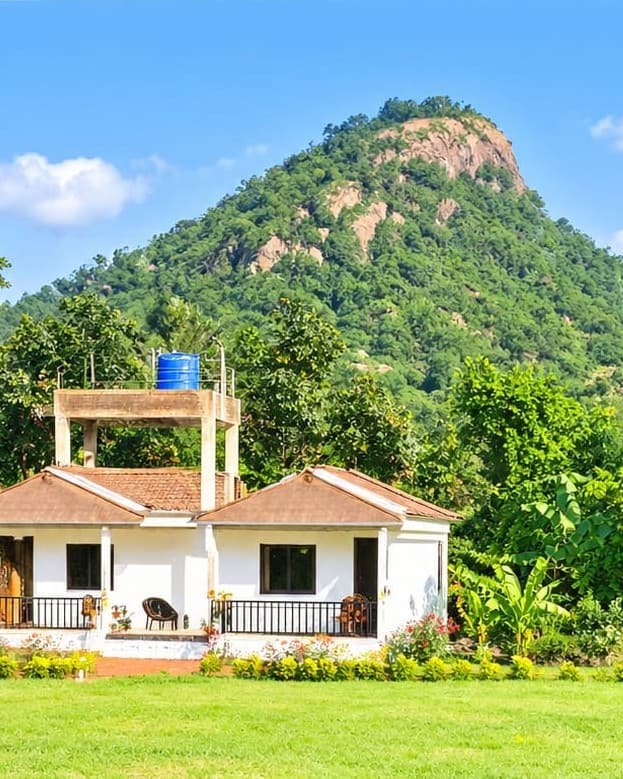
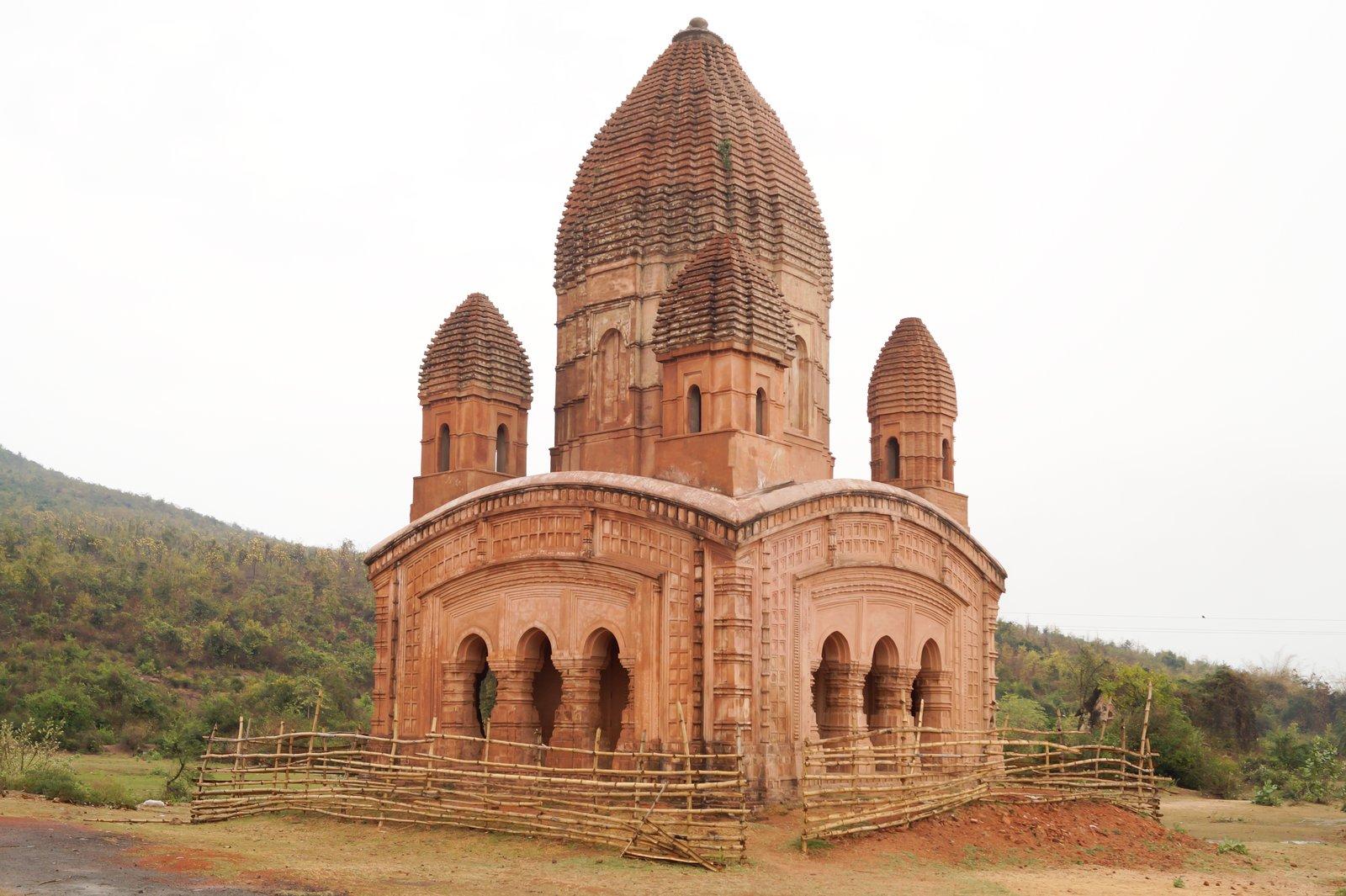
The firmer evidence is in stone and brick. At Pakbirra a group of three Jain temples is dated to around the 9th century, and the archaeologist J. D. Beglar recorded a colossal standing Jina about 7.5 ft tall there in the 1870s. Jain images have also been found around Suisa and Deuli, in Baghmundi block below the Ajodhya Hills, the same block as our resort.
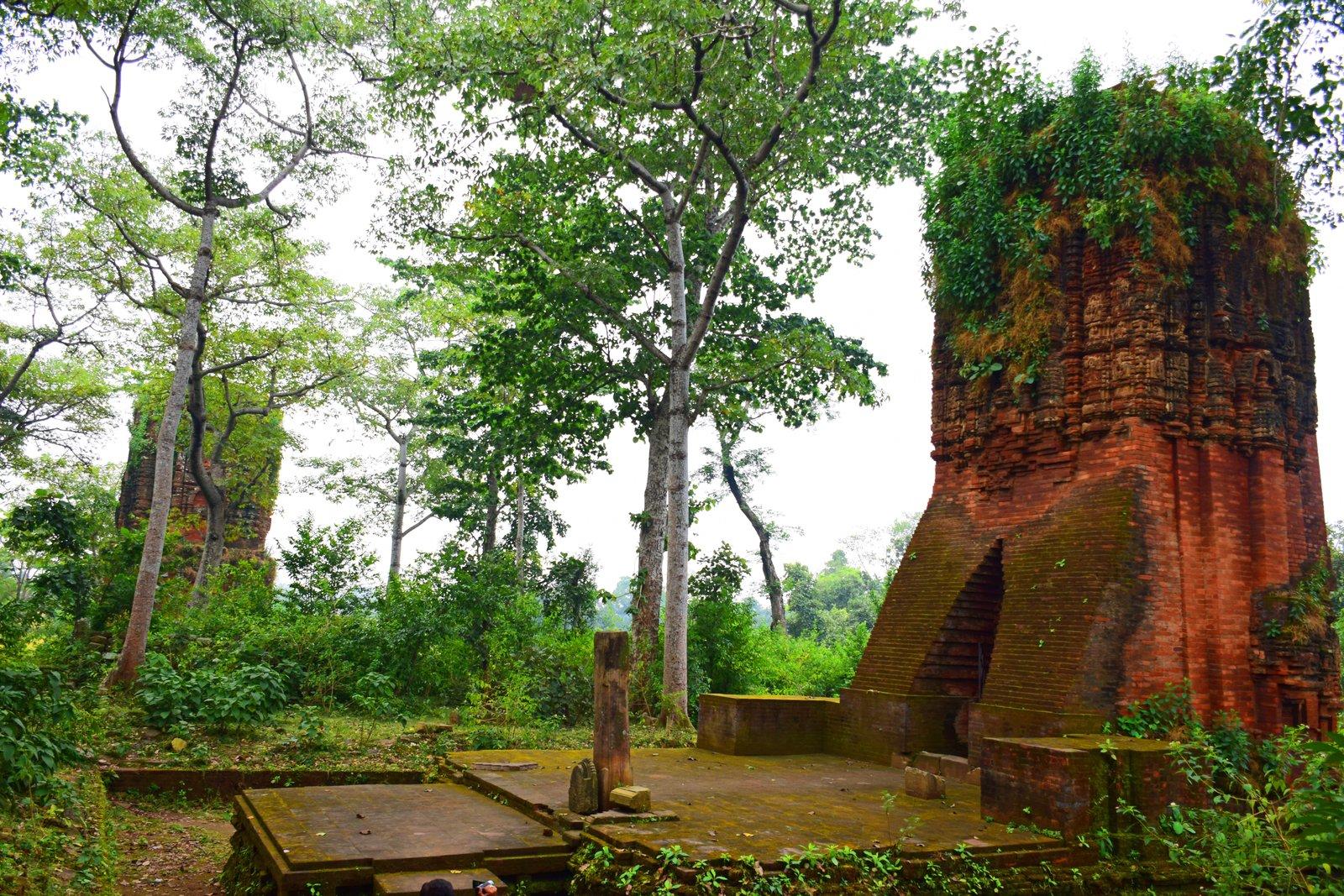
Hindu temples of the same era survive too. The two brick towers of Deulghata on the Kangsabati are dated anywhere from the 9th to the 12th century, and the stone deul at Banda to about the 11th. Telkupi, now drowned by the Panchet reservoir, is identified with Tailakampi, the capital of Rudrasikhara, a local ruler who helped the Pala king Ramapala in the 11th century; the historian Niharranjan Ray placed his reign around 1070–1120. Our guide to the ancient temples of Purulia covers these sites in detail.
The Panchkot Raj and the forest country
For centuries the most powerful family in the area was the Panchkot Raj. Its early history is uncertain: family tradition places its founding by Damodar Sekhar in the first century CE, while the West Bengal Heritage Commission says Garh Panchkot became the capital in 940 CE and remained so until about 1750. According to a legend the Commission records, Damodar Sekhar was a newborn left behind at Jhalda, believed dead, by a king travelling to Puri, and was found and raised by seven local tribal chiefs.
Around 1600 the kingdom seems to have come for a time under the Malla kings of Bishnupur, whose king Bir Hambir is named on two of the fort's gateways. In the 18th century the Bargis, the Maratha cavalry of Raghoji I Bhonsle of Nagpur, sacked Garh Panchkot, and around 1750 the family moved to Kashipur, where their later palace still stands. The poet Michael Madhusudan Dutt briefly worked for the rajas there in 1872.
The hills were home to other peoples long before any raja. A researcher of tribal culture, Jaladhar Karmakar, has said the nomadic Birhor were the first people of the Ajodhya plateau, followed by the Bhumij and the Santals, and the plateau's villages are still largely Adivasi.
How was Manbhum district created?
British rule here began on paper in 1765, when the East India Company obtained the diwani of Bengal, Bihar and Orissa. A regulation of 1805 grouped 23 parganas and mahals, including today's Purulia, into a district called the Jungle Mahals.
In 1832–33 the Bhumij revolt, led by Ganga Narayan Singh, began in the Barabhum estate and spread across the Jungle Mahals and beyond. Barabhum is also the name of the railway station many visitors to the Ajodhya Hills use today. In 1833 Regulation XIII broke up the Jungle Mahals and created Manbhum, with its headquarters at Manbazar.
The new district was huge, taking in parts of present-day Bankura, Bardhaman, Dhanbad, Dhalbhum and Seraikela-Kharsawan, about 7,896 sq mi in all. In 1838 the headquarters moved to Purulia. Pieces were cut away in 1845–46, 1871 and 1879, when three police stations went to Bankura, leaving Manbhum at about 4,112 sq mi.
Manbhum was placed under an officer reporting to the Agent to the Governor-General for the South-Western Frontier; Act XX of 1854 renamed the post Deputy Commissioner, and the district became part of the Chota Nagpur Division. When Bengal was reorganised in 1912, Manbhum went into the new province of Bihar and Orissa, and when that province was split on 1 April 1936 it stayed in Bihar, although most of its people spoke Bengali.
What was the Manbhum language movement?
After independence, the Bihar government made Hindi the official language of Manbhum and introduced it from the primary classes, closing the Bengali department at the local zila school. On 30 May 1948 a proposal to recognise Bengali was defeated in the district Congress, and on 14 June 1948 the Lok Sevak Sangha was formed at Pakbirra village to resist the change.
The Sangha was led by Atul Chandra Ghosh, its president and a former secretary of the Manbhum Congress, and his wife Labanya Prabha Ghosh, remembered as Manbhum Janani, the mother of Manbhum. Their son Arun Chandra Ghosh edited Mukti, a Bengali bi-weekly that carried the movement's message. It moved through stages: a satyagraha in 1949–51, then the Hal Joal agitation over the sale of farm tools.
Its best-remembered phase was the Tusu Satyagraha of 9 January to 8 February 1954. Activists wrote new Tusu songs on political themes and sang them in village processions, and protesters were arrested for singing them. A collection of these songs, Tusu Gaaney Manbhum, sold out quickly.
The States Reorganisation Commission, set up in December 1953, heard evidence in Manbhum on 5 February 1955 and in its report of 10 October 1955 proposed a new Purulia district for West Bengal. In January 1956 the chief ministers of West Bengal and Bihar, Bidhan Chandra Roy and Shri Krishna Singh, floated a plan to merge the two states instead. On 20 April 1956 the Sangha set out from Pakbirra on a march to Calcutta with 1,005 satyagrahis; they reached the city and courted arrest on 7 May, and the merger plan was dropped.
When did Purulia become part of West Bengal?
The Bengal–Bihar boundary bill passed in Parliament on 17 August 1956 and in the Rajya Sabha on 28 August, and the President signed it on 1 September. It became the Bihar and West Bengal (Transfer of Territories) Act, 1956, which transferred the Purulia subdivision of Manbhum, minus a few police-station areas, to West Bengal from the appointed day, 1 November 1956.
The new district started with 16 police stations, about 2,007 sq mi and 1,169,097 people, according to the district administration. Chandil and Patamda stayed in Bihar, and the coal country around Dhanbad, with the Chas and Chandankiyari police stations, became a separate Dhanbad district the same year. Those areas have been part of Jharkhand since 15 November 2000.
Purulia today
Purulia covers 6,259 sq km and had 2,930,115 people at the 2011 census, spread across four subdivisions and 20 community development blocks. It remains a largely rural district at the lowest step of the Chota Nagpur Plateau, with hills, sal forest and red soil.
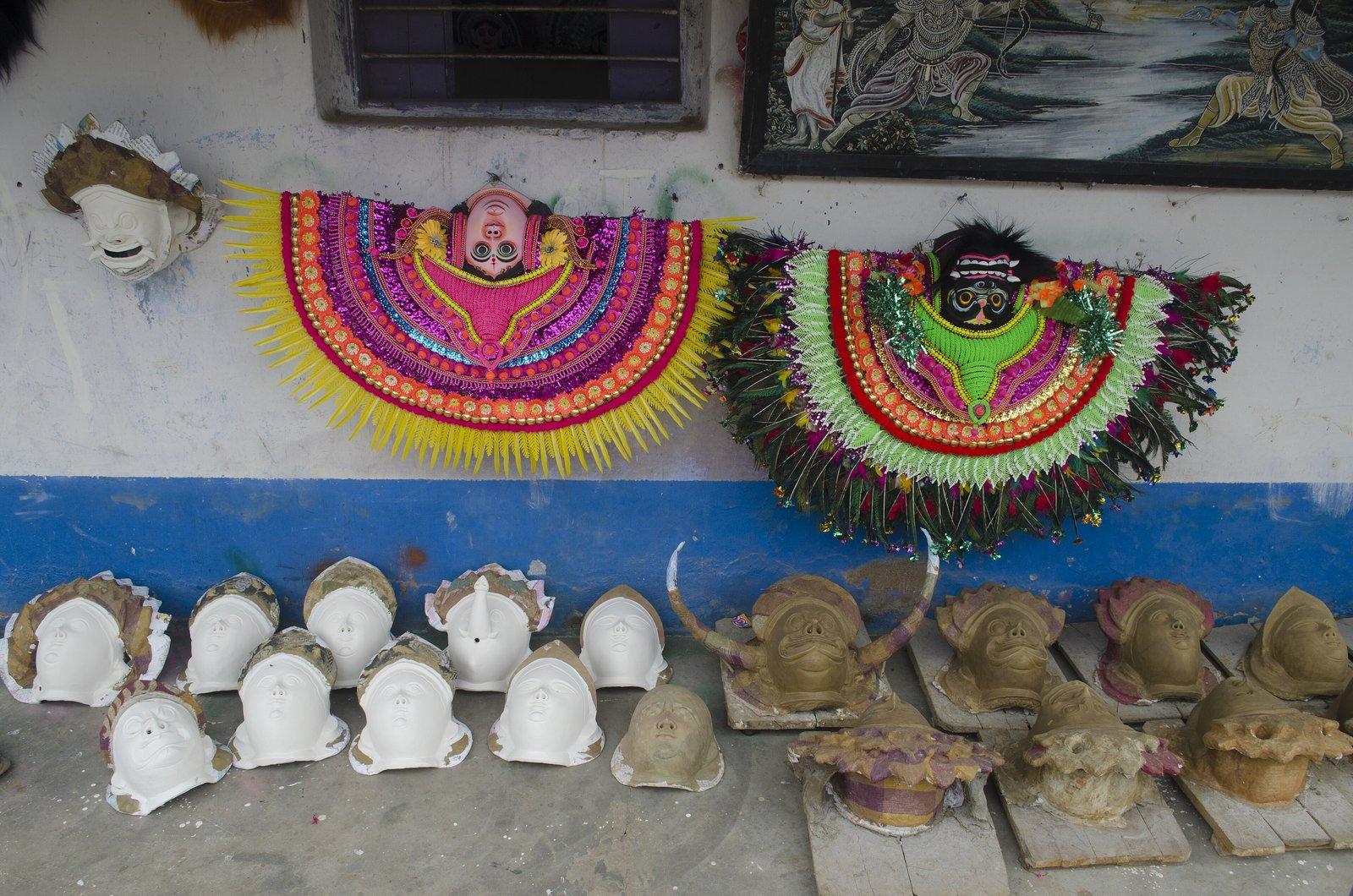
Old crafts and industries still matter. The district produces about 90 per cent of West Bengal's lac, and "Lac of Purulia", filed by a shellac cooperative in Balarampur, is now a registered Geographical Indication; the Purulia Chhau mask was registered in 2018. The Chhau dance was inscribed on UNESCO's intangible heritage list in 2010, and Charida, about 10 km from us, is where its masks are made.
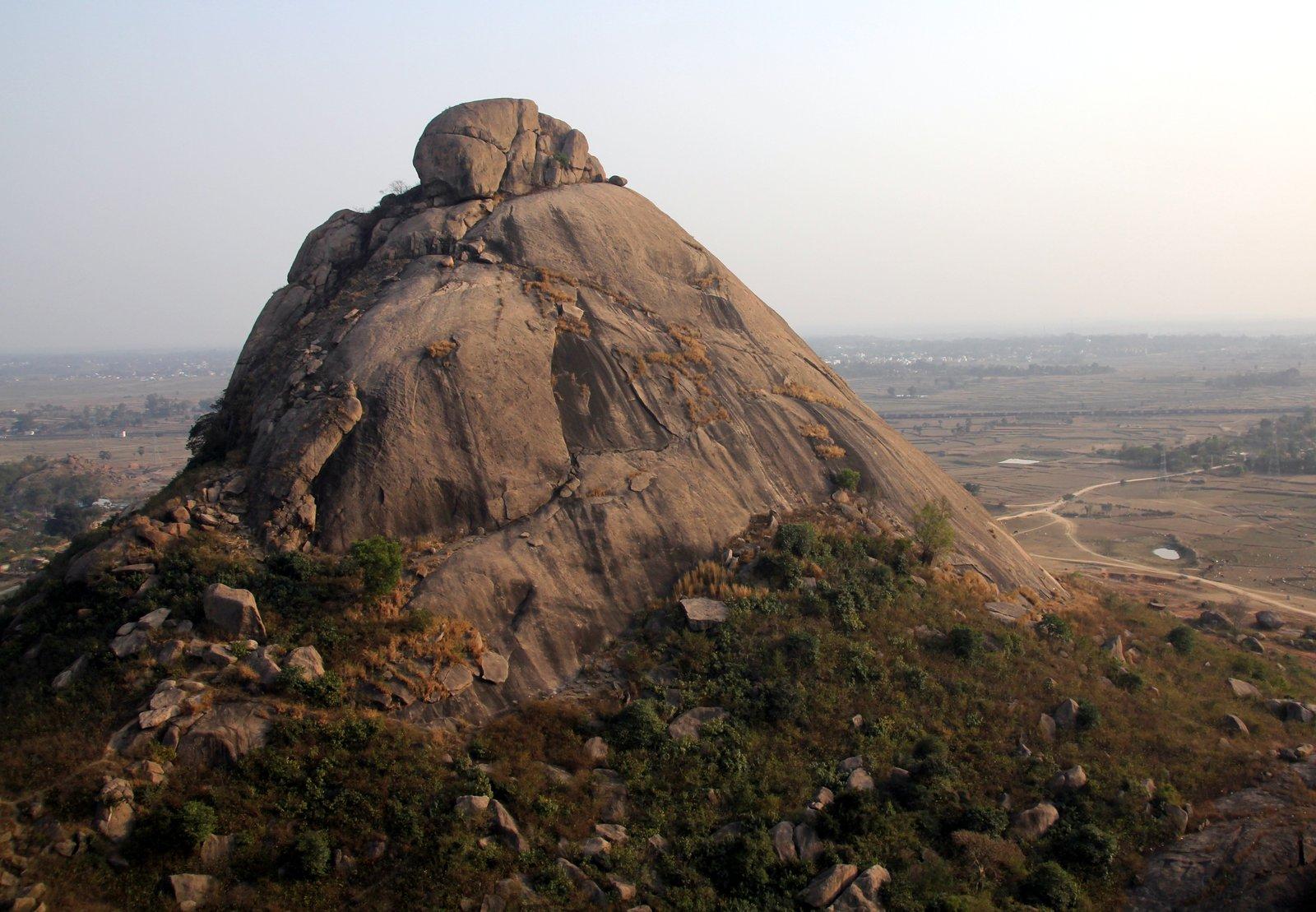
The Ajodhya Hills, also written Ayodhya Hills, changed in the 2000s, when the Purulia Pumped Storage Project brought two new dams and a wave of visitors. Around 2010 the area was also affected by Maoist activity; the rock carving at Pakhi Pahar, for example, stopped for about five years and resumed in 2015. Today the plateau draws visitors for its dams, waterfalls, palash and Chhau.
Where can you see Purulia's history on a trip?
Most of the history above can still be visited, though some sites are a long drive from the Ajodhya Hills:
- Deulghata, 44 km from the resort: early brick temple towers on the Kangsabati, recorded by Dalton in 1864–65 and Beglar in 1872–73.
- Pakbirra, near Puncha in the east of the district: Jain temples and sculpture, and the village where the Lok Sevak Sangha was born.
- Garh Panchkot, 110 km away: ruins of the Panchkot rajas' fort and a terracotta pancharatna temple declared a heritage site in 2010.
- Joy Chandi Pahar, 95 km away: the ruin of a semaphore tower from the British optical telegraph of 1816–1830.
- Charida, 10 km away: mask makers whose craft, by tradition, dates to the time of the Baghmundi king Madan Mohan Singh Deo, about 150 years ago.