At a glance
- Rock climbing in Purulia is done on organised winter courses run by mountaineering clubs; there is no walk-in climbing for tourists.
- Matha Buru near Bagmundi and Joychandi Pahar near Raghunathpur have been Bengal's training walls since about 1980.
- A basic course runs four or five days between November and March and covers knots, belaying, climbing and rappelling.
- Published course fees have been around ₹2,000–3,000 including travel, tents and meals (2019 and 2024 examples).
- Never climb or scramble on these rock faces without a qualified instructor and proper equipment.
Rock climbing in Purulia happens on organised winter courses run by mountaineering clubs, not as a walk-in activity. For more than four decades, clubs from Kolkata and other Bengal towns have trained beginners on the granite walls of Matha Buru near Bagmundi and Joychandi Pahar near Raghunathpur, usually between November and March. If you want to climb here, join a basic course with an established club, and never try the rock on your own.
Why Purulia became Bengal's rock-climbing classroom
The hills of Purulia and neighbouring Bankura are made of hard, ancient granite and gneiss, with clean slabs, cracks and overhangs, and they lie an overnight train ride from Kolkata. Wikipedia's list of Indian climbing areas names Purulia, Matha Buru, Joychandi and Susunia as the rock-climbing destinations within about 300 km of the city.
The story starts just across the district border. The Himalayan Association, often called the mother organisation of mountaineering in West Bengal, held the state's first organised rock-climbing course at Susunia hill in Bankura in January 1965. The Jadavpur University Mountaineering and Hiking Club (JUMHC) followed with its own course there in December 1966.
Purulia came next. According to a JUMHC member's history, Himalayan Association climbers began using Mathaburu in 1978–79, and the first organised course there, in 1980, was run jointly by the Kanchenjunga Foundation, the Chandannagar Mountaineering Association and the Bharat Scouts, with JUMHC providing the trainers. From 1981 JUMHC held its annual course at Mathaburu every year until 2025.
Matha Buru: the training walls near Bagmundi
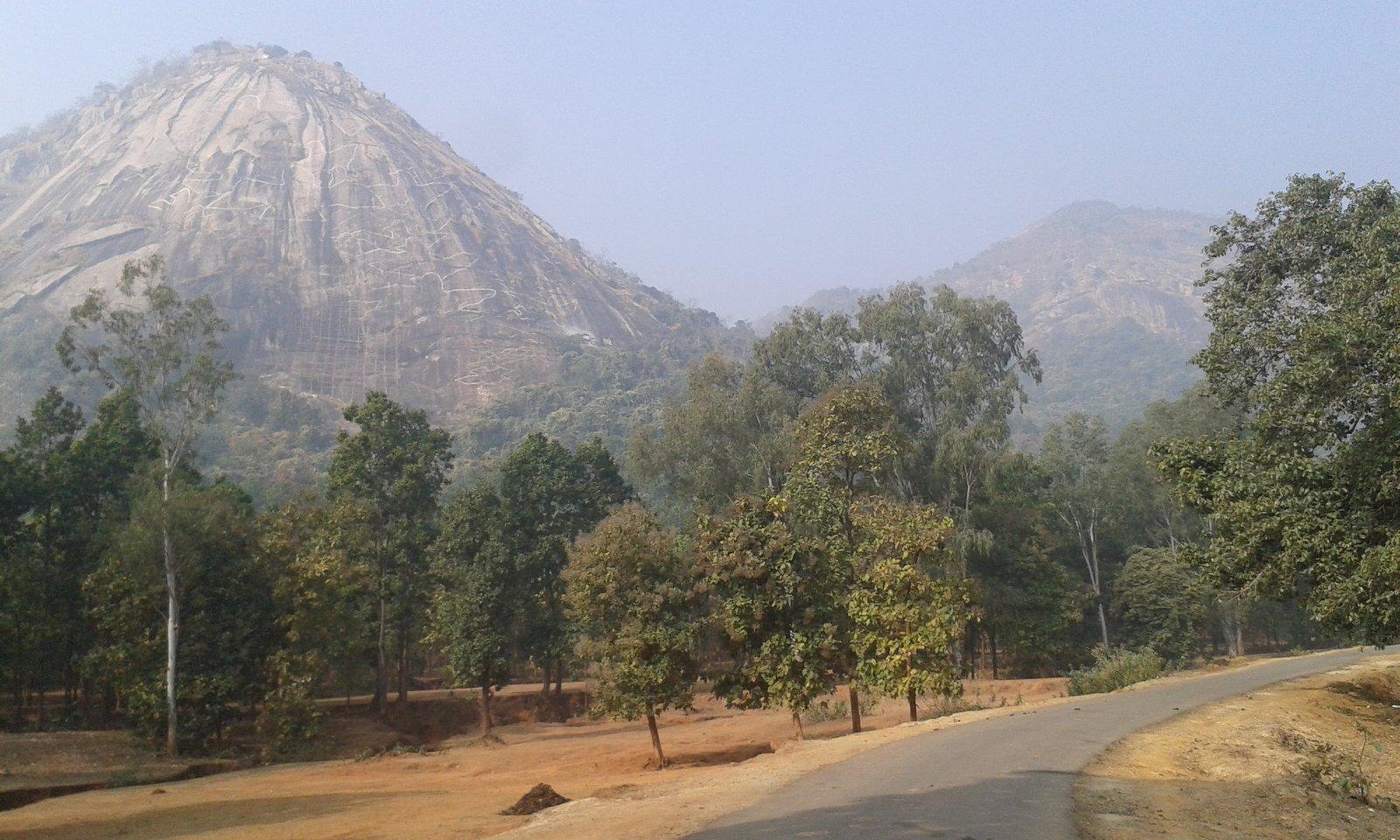
Matha Buru is a rocky hill of about 478 m rising from the sal forest of the Forest Department's Matha range, 3 km from our cottages. Climbers' photographs from 1990 show leads up long and overhanging walls on its faces, and generations of Bengal mountaineers took their first roped steps here.
Several clubs have used it. The Nabadwip Trekkers' Association ran a four-day course on Mathaburu from 2 to 5 February 2019, and the South Calcutta Trekkers Association, registered in 1984, describes winter courses held mainly at Susunia and Mathaburu.
Things have shifted recently. JUMHC wrote in 2026 that charges imposed by the West Bengal Forest Department from December 2019 had made Mathaburu harder to use, and the club has since developed new training grounds elsewhere in the district. The Tribune noted back in 2015 that while small groups were usually allowed to practise, training courses often needed Forest Department permission.
Joychandi Pahar: climbing beside a railway line
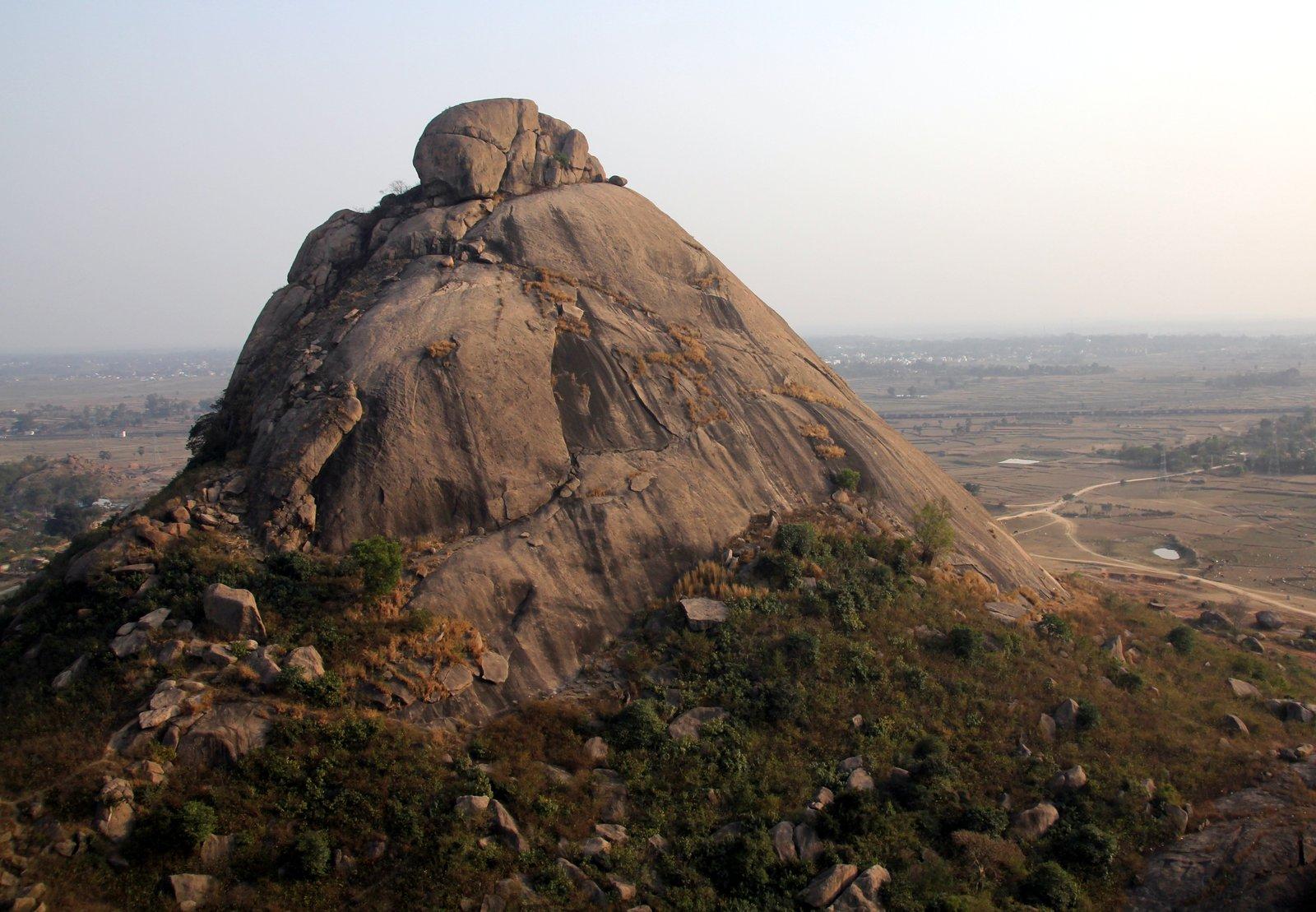
Joychandi Pahar, 95 km from the resort near Raghunathpur, is a cluster of bare rocky hills with its own station on the Adra–Asansol line. JUMHC used it from the start for its advanced students and traditionally held the final day of each course there.
Colleges use it too. In December 2024 the physical education departments of Sripat Singh College and S.R. Fatepuria College, Beldanga, ran a five-day rock-climbing and adventure camp at the Jaychandi hills. Their published schedule shows the shape of a typical course: dawn physical training, sessions on the rock face, classes on ropes and knots, equipment, mountain terminology and hazards, practice on the rock, and a written test on the last day.
Non-climbers can still enjoy the hill. A long stairway of several hundred steps climbs past a ruined British-era semaphore tower to temples of Chandi and Hanuman near the top. Our north Purulia day trip guide combines it with Garh Panchkot and Baranti.
Bansa and the new climbing grounds of western Purulia
Since 2024 climbers have opened new training sites in the Bansa hills near Tulin, beside the Ranchi–Purulia road in the west of the district. According to JUMHC's account, the Kolkata Prakriti Paribrajak Samiti held its ninth rock-climbing course at a site called Karilata in December 2024, with 35 trainees and 13 instructors.
In February 2026 JUMHC ran its own course on a cluster of hills there — Dhelburu, Rani Tungri, Majher Tungri and Chandni Pahar — with 68 trainees and about 105 people in all, including instructors and camp staff. The same account notes that Karilata has no road access beyond a foot trail and no drinking water, which is typical of how basic these camps can be.
What about Pakhi Pahar and the Ajodhya Hills?
Pakhi Pahar is a different kind of climbing site. Its rock face is being carved with giant birds by the sculptor Chitta Dey and carvers who work in harnesses on ropes. Between 1995 and 1999 Dey trained about thirty young people from nearby villages, and their skills included climbing and rappelling. The face is a work of art in progress, not a climbing wall: admire it from the ground.
More broadly, Wikipedia describes the Ajodhya Hills as a popular place for young mountaineers to learn the basics of rock climbing. In 2016 the Millennium Post reported that the state's West Bengal Mountaineering and Adventure Sports Foundation, under the Youth Affairs department, was offering ₹25,000 to clubs that trained at least 20 young people between November and February, with training mainly at Joychandi and the Matha area in Purulia and at Susunia in Bankura.
How to learn rock climbing in Purulia: basic courses
A basic course is the only sensible way in. Clubs supply the instructors, ropes and climbing equipment, and trainees usually camp in tents near the rock. The courses we found share a common pattern:
- Length: four or five days in winter, often with an overnight train from Kolkata or another Bengal town.
- Skills: rope handling and knots, belaying, climbing on graded rock, and rappelling (abseiling) down the face.
- Theory: equipment, mountain terminology and hazards, rescue drills and first aid.
- Routine: early starts, physical training at dawn, long days on the rock, and camp discipline.
- Age: the courses we found took trainees from 14 years old.
To give a sense of cost, the Nabadwip Trekkers' Association's 2019 Mathaburu course cost ₹2,000 per head, covering transport, accommodation and meals. The Himalayan Club's Kolkata Section charged ₹3,000 for its four-day course at Susunia in February 2024, including sleeper-class travel from Howrah, tents and all meals. Fees and dates change every season, so contact the clubs directly, usually in the autumn.
When is the climbing season?
November to March. Every course we found fell in December, January or February, when days are dry and cool. India Meteorological Department normals for Purulia town put the average April and May high at around 37–38 °C, and bare granite in that heat is punishing. In the monsoon, from June to September, wet rock becomes slippery and dangerous.
If you are visiting in winter anyway, our winter guide to Purulia suggests how to spend the rest of your days.
Safety: don't climb without a qualified instructor
These are real rock faces with long falls. Granite slabs that look easy from below can be smooth and polished, loose blocks sit on ledges, and medical help is limited: the plateau has a 12-bed primary health centre at Ajodhya hill top, and the larger 30-bed Pathardihi Rural Hospital is near Baghmundi.
Other risks are local. Elephants from the Dalma forests move through the Matha and Ajodhya forests, mostly at night, so camps keep to daylight on the rock and stay alert after dark. Our trekking guide covers elephant safety in more detail.
Climbing responsibly
Mountaineers in Bengal have long taught respect for nature as part of the training, and JUMHC's account of choosing new sites lists minimal disruption to local ecology and the acceptance of local communities among its tests. Visitors and trainees can follow the same rules:
- Carry out all rubbish, including food scraps and tape.
- Keep off temples, shrines and sacred rocks, such as the hilltop temples at Joychandi.
- Hire local support staff where camps need them, and buy food locally.
- Keep noise down near villages, especially in the early morning and at night.
If you are in the area on a winter weekend, you may see a club at work on Matha Buru, just down the road from Rangamati. For the many other ways to spend a day in these hills, see our photographer's guide to Purulia.