At a glance
- Joychandi Pahar, Garh Panchkot and Baranti are 95, 110 and 120 km by road from the resort, in the north-east of the district.
- The natural order is Joychandi in the morning, Garh Panchkot at midday and Baranti for sunset, which falls around 5 pm from November to January.
- Done as a return trip from the Ajodhya side it means roughly 250 km of driving, so many visitors fold it into the journey home or stay a night.
- Baranti is about 30–35 km from Asansol, a major railway junction, and Garh Panchkot about 250 km from Kolkata by road.
- Leave Garh Panchkot hill by late afternoon, and carry cash and medicines for Baranti, which had no ATM or pharmacy as of April 2026.
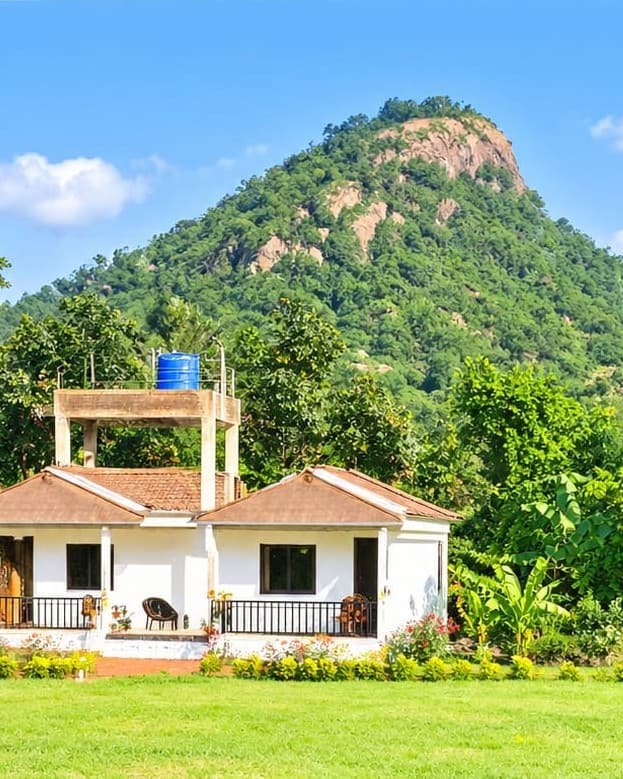
A Garh Panchkot and Baranti trip makes the best day out in the north of Purulia district, and it pairs naturally with Joychandi Pahar on the way. From our cottages in the Ajodhya Hills, Joychandi Pahar is 95 km by road, Garh Panchkot 110 km and Baranti 120 km. Take them in that order: Joychandi's temple steps in the cool of the morning, the fort ruins at midday, Baranti's lake for sunset. As a return trip it is a long day of about 250 km, so many visitors fold it into the journey home towards Asansol and Kolkata, or stay a night by the lake.
How the Garh Panchkot and Baranti trip fits together
The three places sit close to each other in the north-east corner of the district, near the Jharkhand border, a long way from the Ajodhya Hills in the south-west.
| Leg | Distance by road | What to expect |
|---|---|---|
| Resort to Joychandi Pahar | 95 km | The longest drive, via Purulia town and Raghunathpur |
| Joychandi Pahar to Garh Panchkot | About 20 km | Through Raghunathpur, turning off at Gobag More |
| Garh Panchkot to Baranti | A short drive | Sources give 7 to 18 km, depending on the route |
| Baranti to Asansol | About 30–35 km | For trains, or the road to Kolkata |
| Baranti back to the resort | 120 km | Only worth it if you leave before sunset |
That last line is the catch. Baranti is at its best at sunset, and the drive back to the hills afterwards means 120 km on the road in the dark, much of it through villages. If you are heading home anyway, end the trip at Baranti and carry on to Asansol the next morning.
The route north from the Ajodhya Hills
From the resort the road runs down to Balarampur on SH4, then follows NH18 through Arsha to Purulia. Skirt the town on the bypass and take SH5, the Purulia–Barakar road, north-east to Raghunathpur. Joychandi Pahar is signposted a short way west of the Adra road in Raghunathpur. For Garh Panchkot, continue beyond Raghunathpur on the Asansol road to Gobag More, where a road on the left leads to the ruins. Baranti lies east, near Santuri and Muradi; the last few kilometres are narrow village roads.
Leave early. You want to be climbing Joychandi before the day warms up.
Stop 1: Joychandi Pahar in the morning
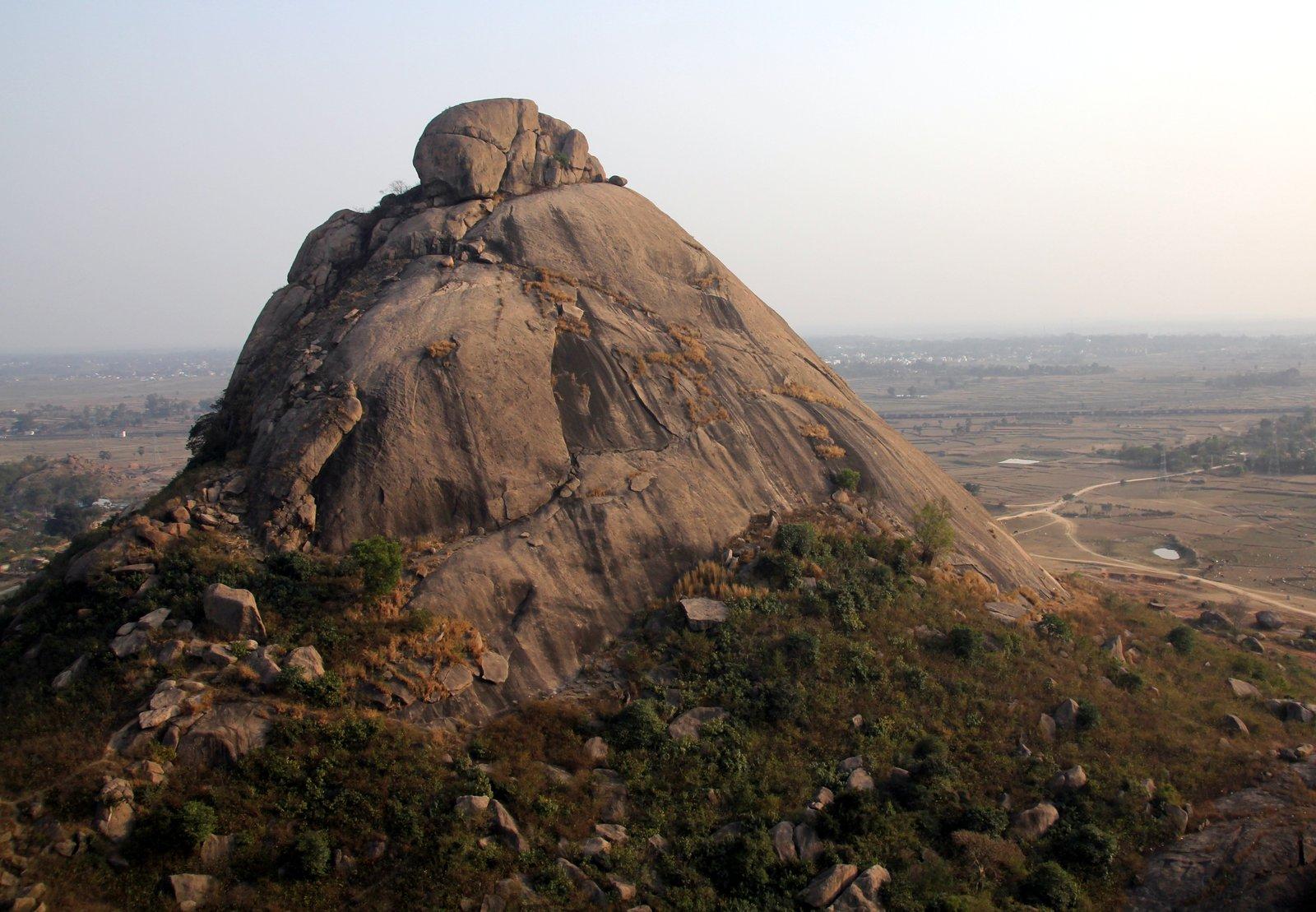
Joychandi (Joy Chandi) Pahar is a cluster of bare, rocky hills on the edge of Raghunathpur, with its own station on the Adra–Asansol railway line. A long stairway, gentle in places and steep in others, climbs to temples of the goddess Chandi and of Hanuman near the top, where local priests perform daily rituals. Published step counts range from about 400 to just over 500, and there are seats along the way.
Partway up, look for the shell of a two-storey masonry tower. It is one of the semaphore towers the British built between 1816 and 1830 for an optical telegraph that passed signals from hilltop to hilltop towards Calcutta. From the summit the view takes in fields, ponds, villages, Raghunathpur and the railway below; a travel writer for Kolkata on Wheels recommended the top in the soft sun of a winter morning.
- On film: Satyajit Ray shot much of Hirak Rajar Deshe (1980) among these hills. Our post on Purulia in films has more.
- On the rock: clubs and colleges run climbing camps on its faces in winter; see our guide to rock climbing in Purulia. Casual visitors should keep to the stairway.
- A legend: near the Chandi temple is a small hollow in the rock that holds water. A temple committee member told Kolkata on Wheels that it was filled by Sita's tears as Ravana carried her away to Lanka.
Carry water: the only refreshments are at small stalls at the foot of the hill. If you are travelling at the turn of the year, the Joychandi Pahar tourism festival runs in the foothills from 28 December to 1 or 2 January.
Stop 2: Garh Panchkot at midday
Garh Panchkot was for centuries the capital of the Panchkot rajas. The West Bengal Heritage Commission says it became the dynasty's seat in 940 CE and remained so until about 1750, while the district administration dates the surviving fort ruins to around 1600; dates for this family vary widely. In the 18th century the fort was sacked by the Bargis, the Maratha cavalry of Raghoji I Bhonsle of Nagpur, and the family moved its seat to Kashipur.
What you see today is spread through scrub and forest at the foot of Panchet Hill:
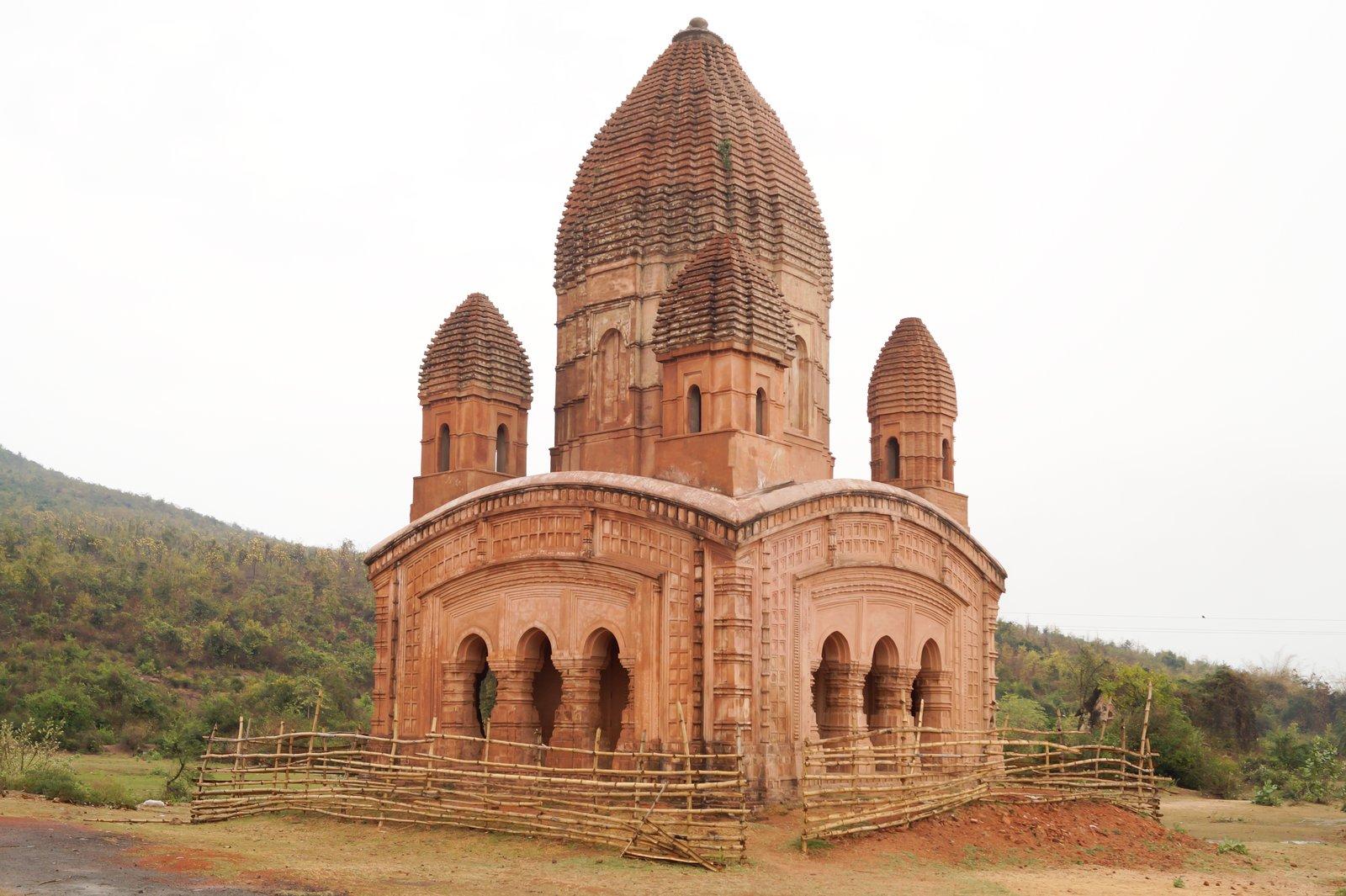
- The Pancharatna temple: a five-spired brick temple at the entrance to the site, declared a heritage site by the state in 2010, with triple-arched entrances and terracotta panels of flowers, dancers and musicians. The staircase inside is in poor repair.
- A second temple: to the north-west stands a terracotta pancharatna temple that has lost four of its five spires.
- Kankali temple and palace ruins: the broken stone temple of the rajas' family deity, with jor-bangla temples and palace walls nearby.
- The hill: a forest road climbs towards the top, which looks out over the Panchet reservoir. In January 2025 an astronomical observatory, described as eastern India's first, opened on the hill.
There is no restaurant at the ruins; temporary stalls sell tea and fried snacks, and the panchayat samiti charges for parking (as of 2026). The Panchet Dam, built by the Damodar Valley Corporation and opened in 1959, is close by if you want a look at the river. Our post on ancient temples of Purulia puts Garh Panchkot's temples in context.
Stop 3: Baranti for sunset
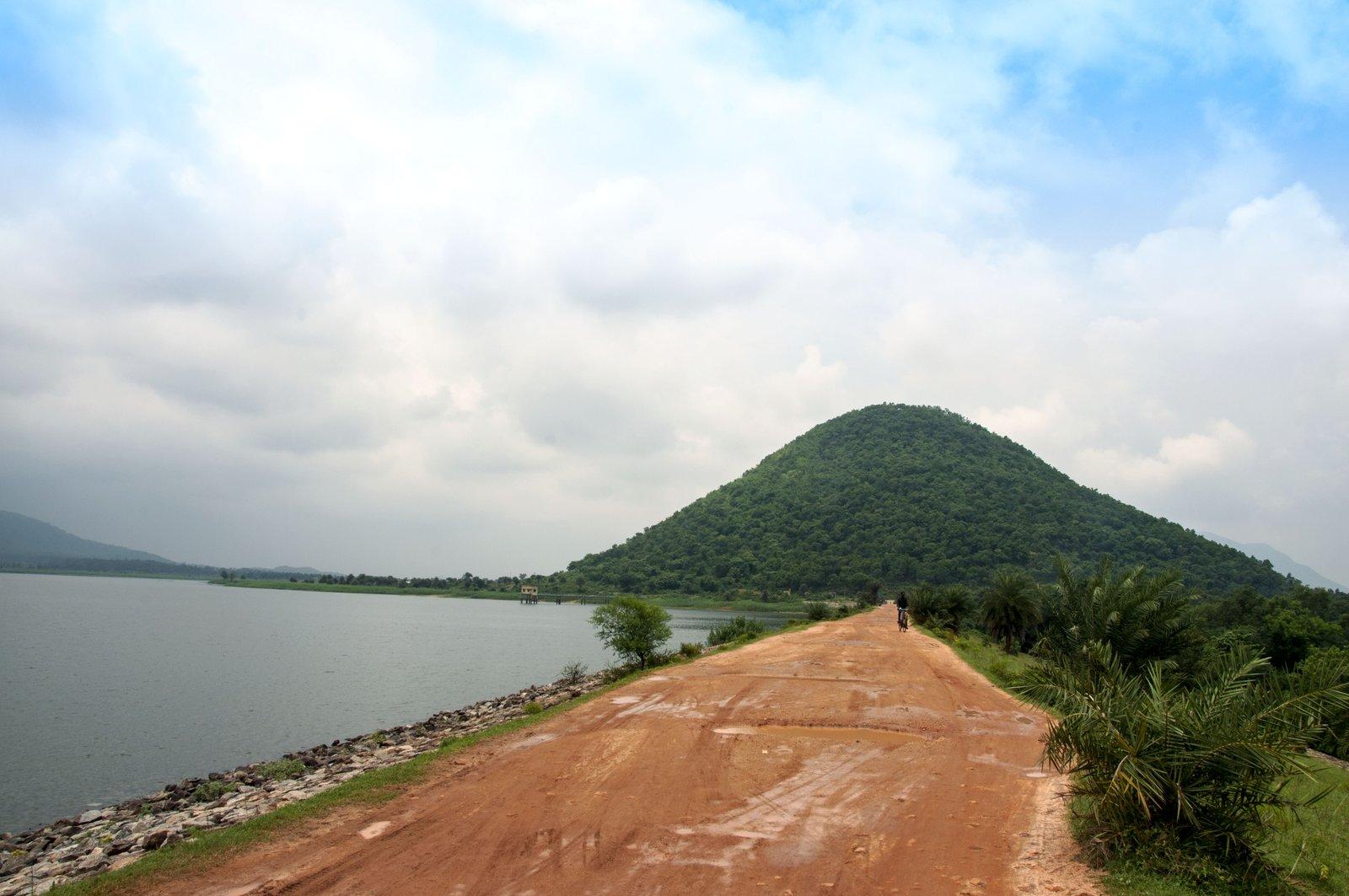
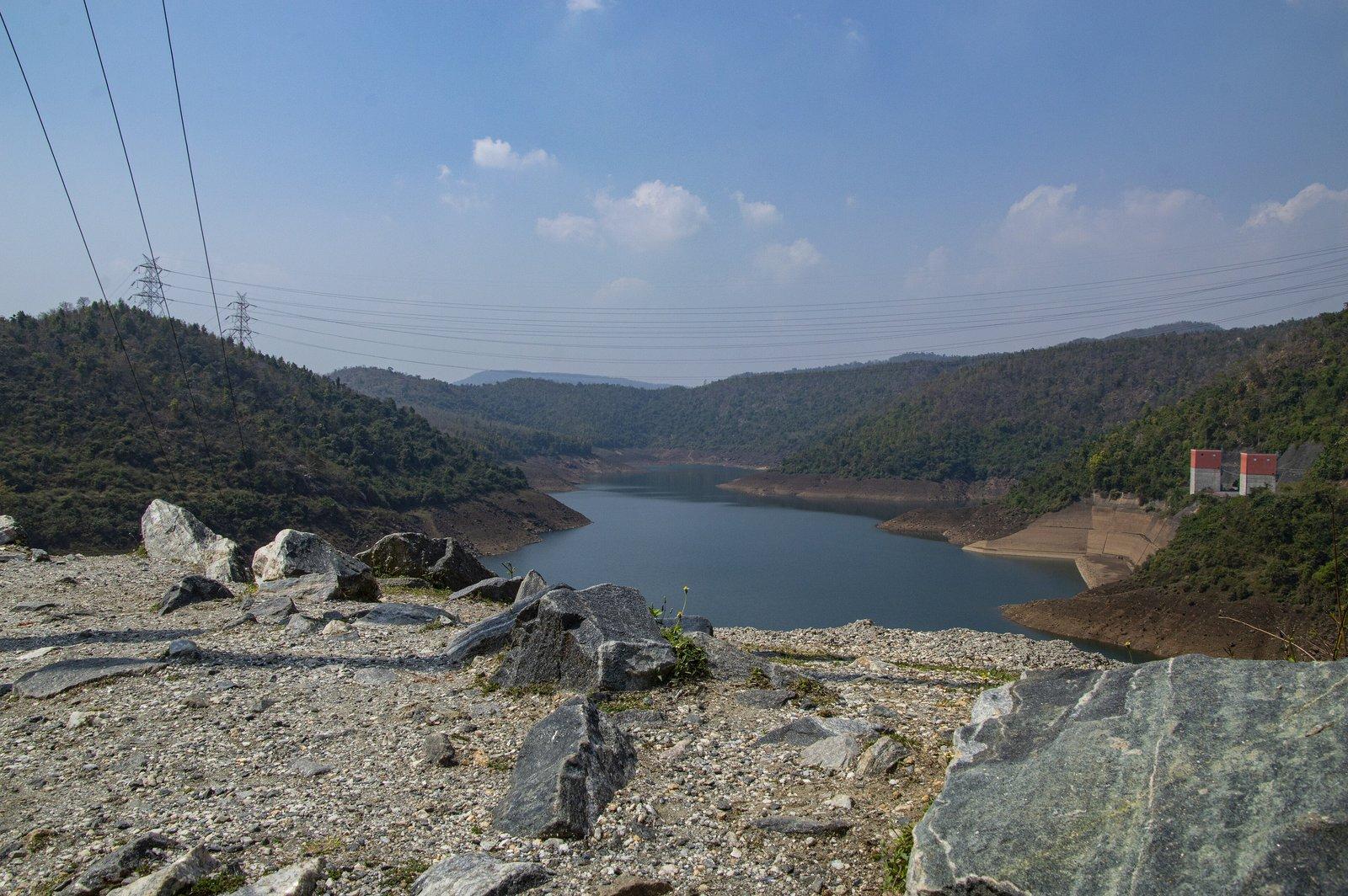
Baranti is a small tribal village on the shore of the reservoir behind the Ramchandrapur irrigation project's dam near Muradi, completed in 1991. Low wooded hills ring the water. In The Telegraph's words, sunset is particularly special here, as the lake changes colour and shades of yellow and red spread onto the paddy fields. Outlook Traveller recommended sunrise as well as sunset at the lake.
At Baranti's latitude the sun sets at about 4:57 pm in mid-November, 4:58 pm in mid-December and 5:17 pm in mid-January, so aim to arrive by 4 pm in winter. Winter also brings migratory birds to the reservoir; our birdwatching guide covers what to look for. In March the palash turns the surrounding hills red.
Go prepared. As of April 2026 ETV Bharat found no boating, no seating at the sunset point, no ATM and no pharmacy in the village, weak mobile signal and lake-road lights that were not working. There are no restaurants outside the resorts, so eat where you stay or carry food. The approach roads pass through villages and are narrow, with children and cattle on the way; drive slowly.
Heading home towards Asansol or Kolkata
This trip suits the last day of a Purulia holiday, because it moves you most of the way back. From Baranti, Asansol is about 30–35 km away. Asansol is a major junction with frequent trains towards Howrah; check current trains and times on IRCTC or NTES before you book. Muradi station on the Adra–Asansol line is about 6 km from the lake, with autos, totos and hired cars.
By road, Wikivoyage puts Garh Panchkot about 250 km from Kolkata, a drive of five to six hours. The usual route runs via Asansol onto NH19 and the Durgapur Expressway. Our guide on how to reach Purulia covers trains and roads in more detail.
Staying a night near Garh Panchkot or Baranti
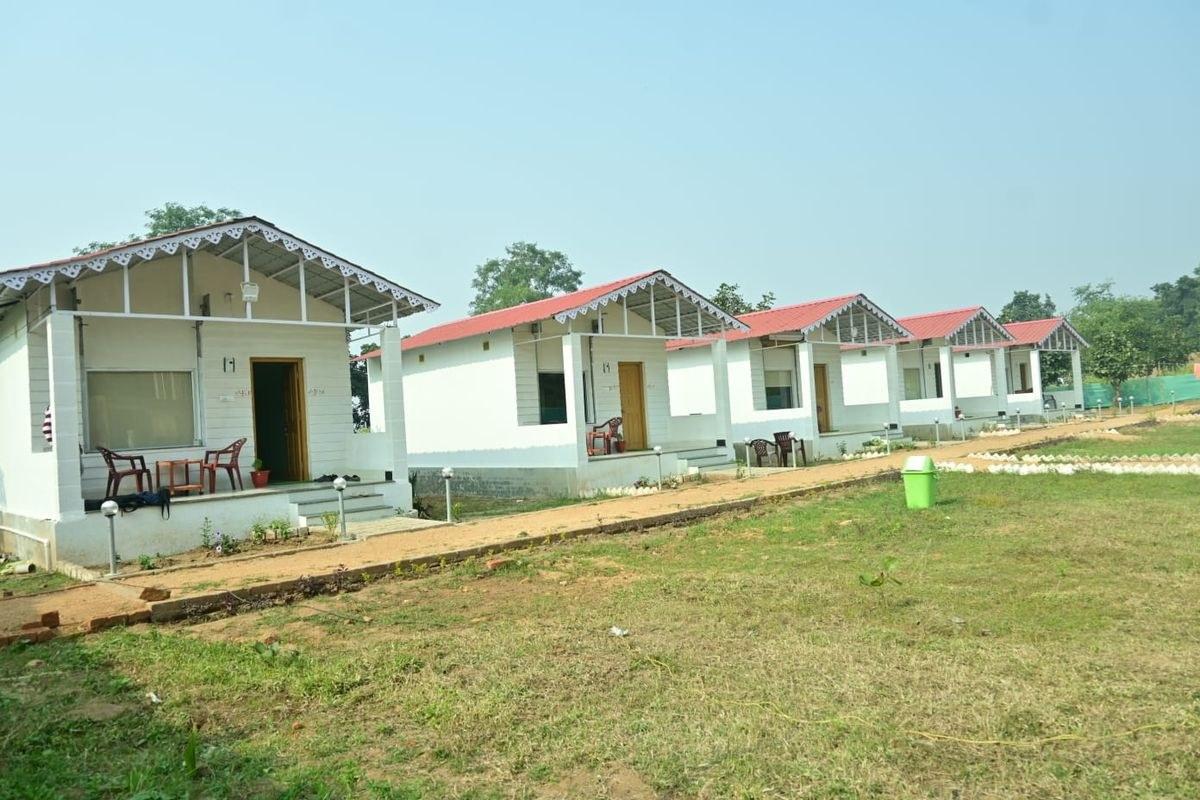
To see Baranti at both sunset and sunrise, or to take the whole circuit slowly, stay a night. There is a forest corporation lodge at the foot of Garh Panchkot hill, and private resorts around the lake at Baranti and near Joychandi Pahar. Book well ahead for winter weekends and the Christmas–New Year week.
If you would rather keep the Ajodhya Hills as your base and still see the north, our 3-day Purulia itinerary builds Garh Panchkot into a longer plan. From Rangamati we can arrange a sightseeing cab or driver for the day on request.
Visiting with care
- Joychandi's temples are places of worship: dress modestly and follow the priests' lead.
- Don't climb on the Garh Panchkot ruins; the brick and terracotta are fragile.
- Ask before photographing people in the villages around Baranti.
- Take your litter away from the lake shore and the hill.