At a glance
- Purulia photography has three peaks: winter for clear sunrises and mask workshops, spring for palash, and the monsoon for waterfalls and green hills.
- Usuldungri is the local sunrise viewpoint; Murguma and Baranti reservoirs are the classic sunset spots.
- Ask before photographing people, workshops or rituals, and buy directly from the Charida mask makers you photograph.
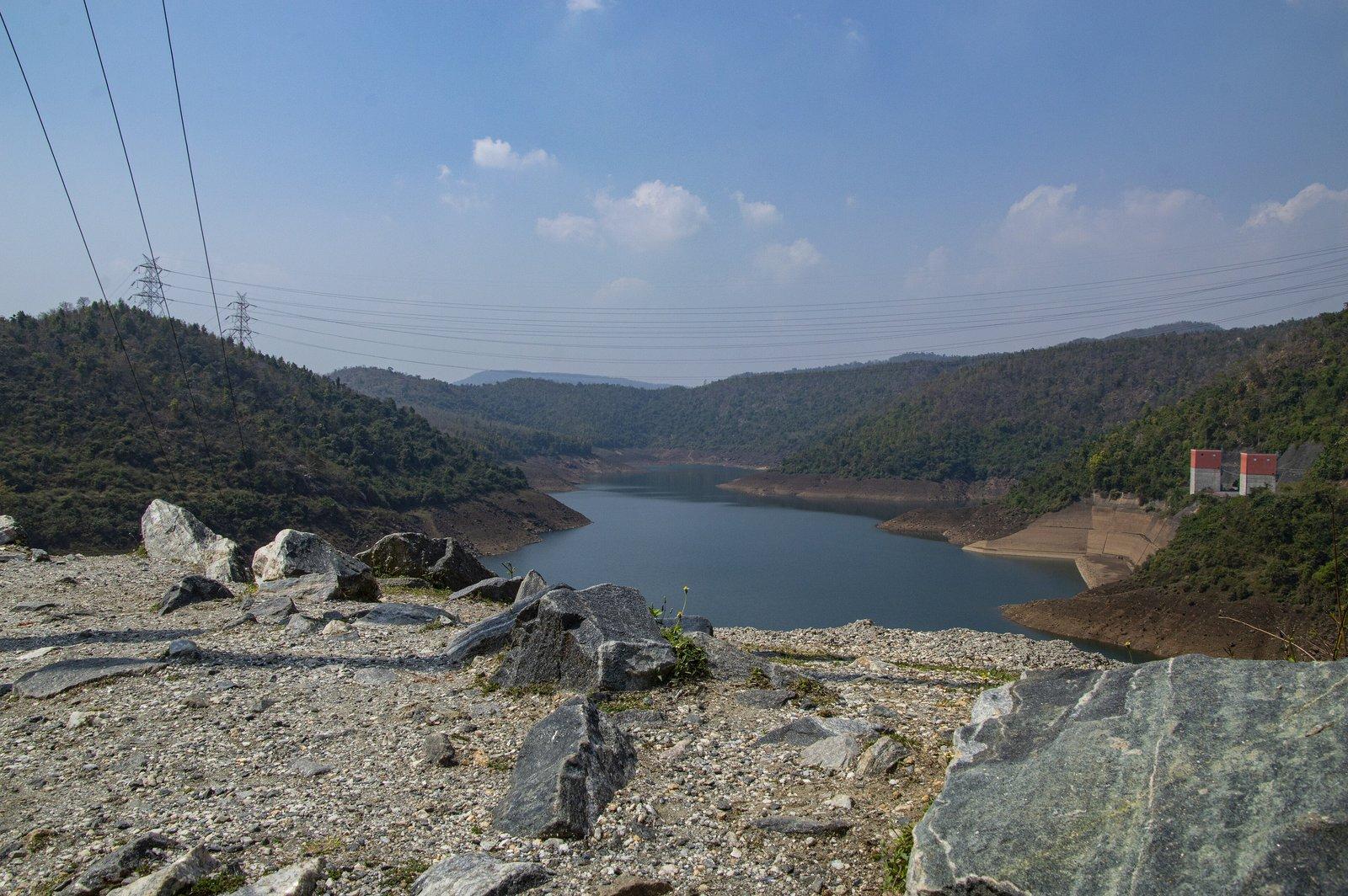
- India's Drone Rules, 2021 allow flights without permission only in green zones up to 120 m; get permission before flying near the hill dams, which belong to a working power station.
- Waterfalls are most photogenic and most dangerous in and just after the rains: shoot from stable ground and never stand in a stream bed.
Purulia photography has three peak seasons. Winter (November to February) brings clear sunrises, mist on the reservoirs and the busiest months in Charida's mask workshops; spring (March into April) turns the forests red with palash; and the monsoon and the weeks after it fill the waterfalls and paint the hills green. Shoot the first and last hour of light, ask before you photograph people, and check the drone rules before you fly near the Ajodhya (Ayodhya) Hills' dams, which belong to a working power station.
When is the best time for photography in Purulia?
| Season | Months | What to shoot | Where |
|---|---|---|---|
| Winter | November to February | Clear sunrises, mist, waterbirds, mask workshops | Usuldungri, Murguma, Baranti, Charida |
| Spring | March into April | Red palash, Gajan fairs and all-night Chhau | Khairabera, forest roads, Lahariya temple |
| Summer | May and June | Dawn light on bare red earth; harsh by mid-morning | Short dawn outings only |
| Monsoon and after | July to October | Full waterfalls, green hills, cloudscapes, Karam festival | Bamni, Turga, Murguma |
Winter is the easiest season to work in: dry, cool air, long clear mornings and soft evening light. Spring is the most colourful, but the heat builds quickly. The monsoon gives the most dramatic skies and the fullest falls, along with slippery rock and sudden spates.
Sunrise and sunset spots
For sunrise, local guides drive early risers about 9 km across the plateau from Ajodhya hill top to Usuldungri, a hill village with a watch tower looking over the ridges. It is 29 km from the resort, so you will need a very early start. Closer in, the observation tower on Mayur Pahar, 20 km away near the hill top, gives a wide view over the range in the early morning.
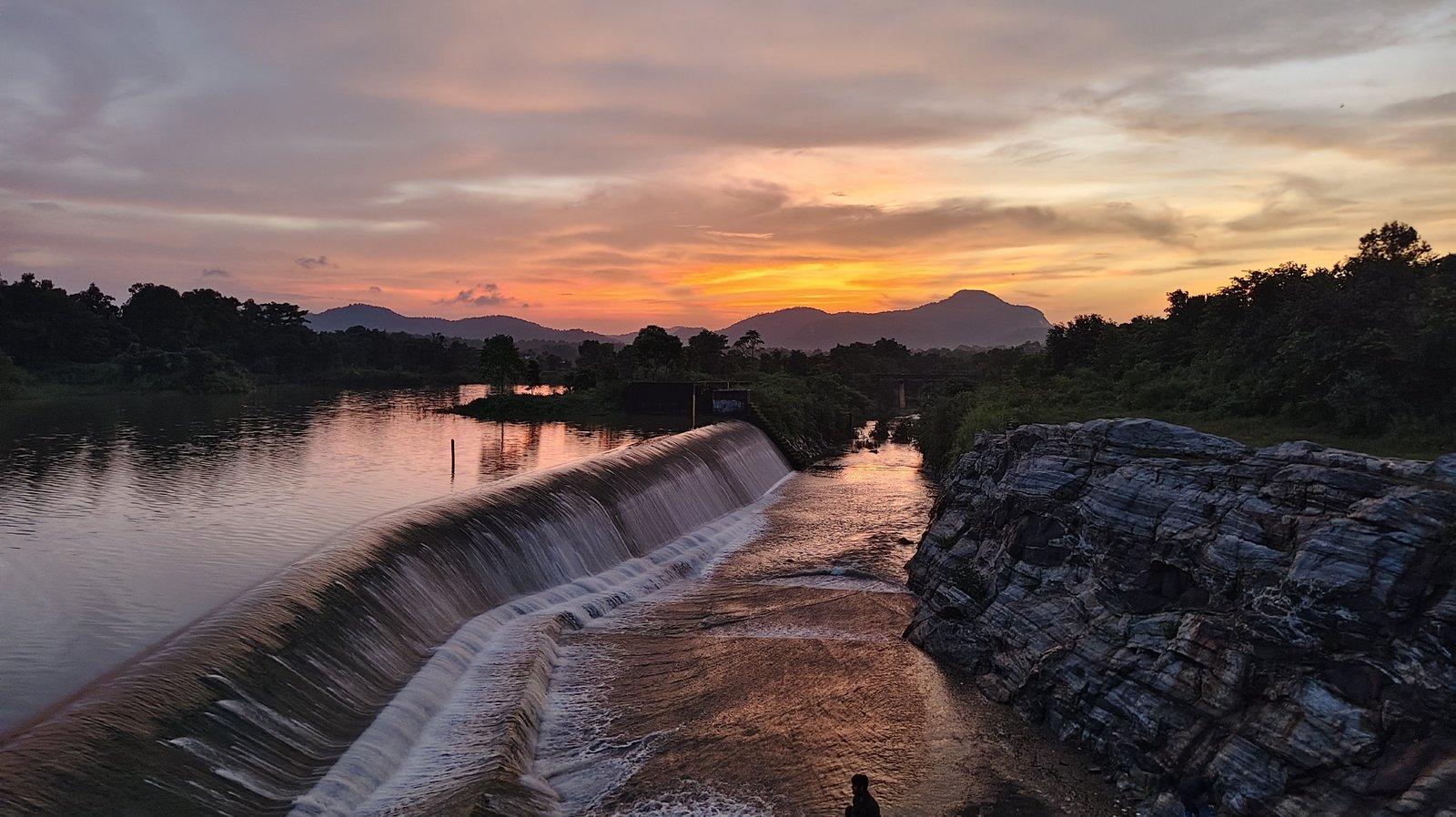
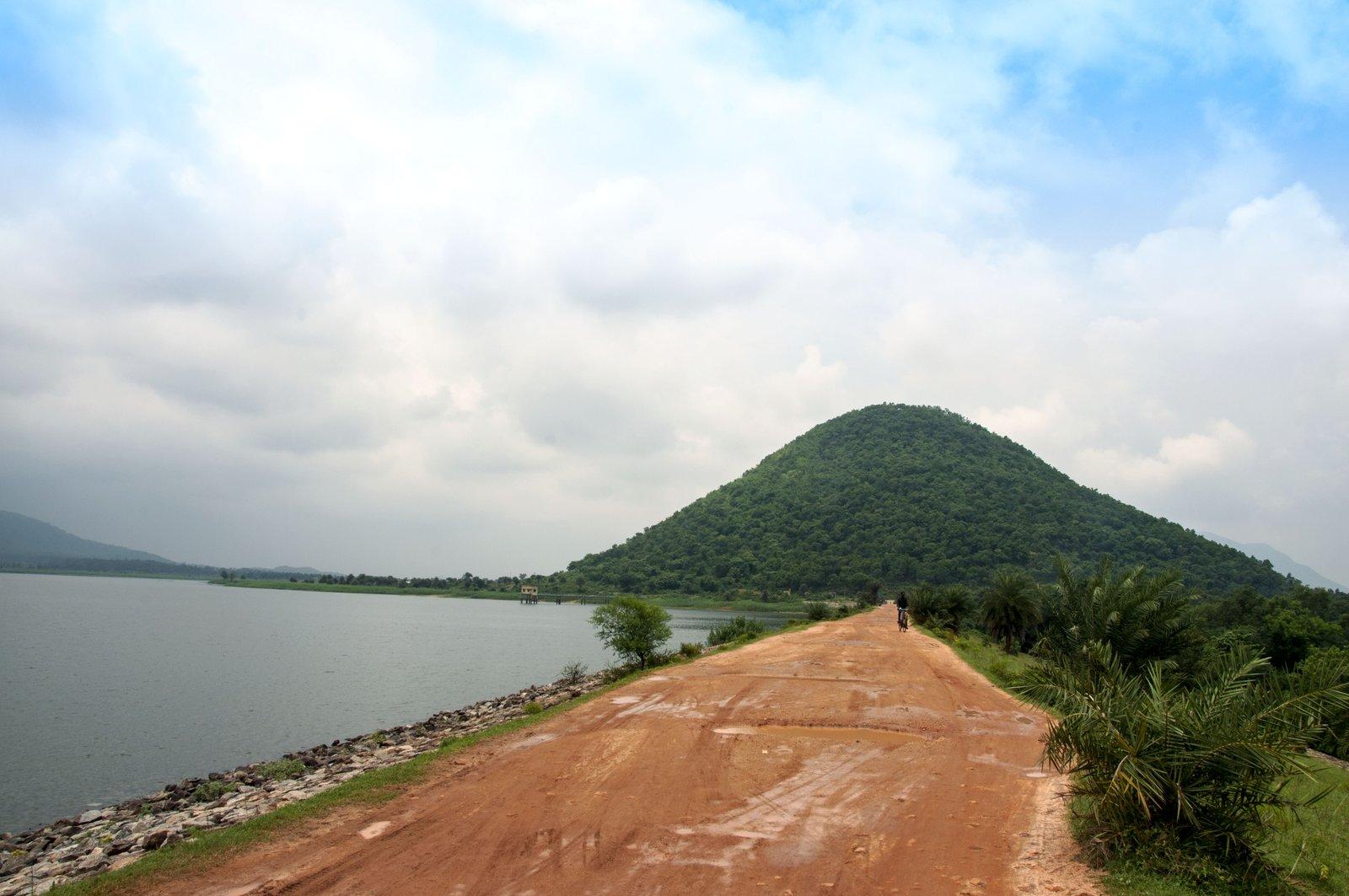
For sunset, walk the 2 km embankment at Murguma Dam, where the low sun lights the island-dotted lake with the Ajodhya range on the skyline. In the far north of the district, Baranti is known for sunsets that colour the reservoir and the paddy fields around it. Outlook Traveller remembered stars coming out over the water at Khairabera after sunset.
Even without leaving the resort, the hill behind our cottages is worth watching at dusk: a full moon rising over its dark outline makes a fine telephoto picture. Our guide to the best sunrise and sunset points in Purulia has more options.
Landscapes: rock, water and red earth
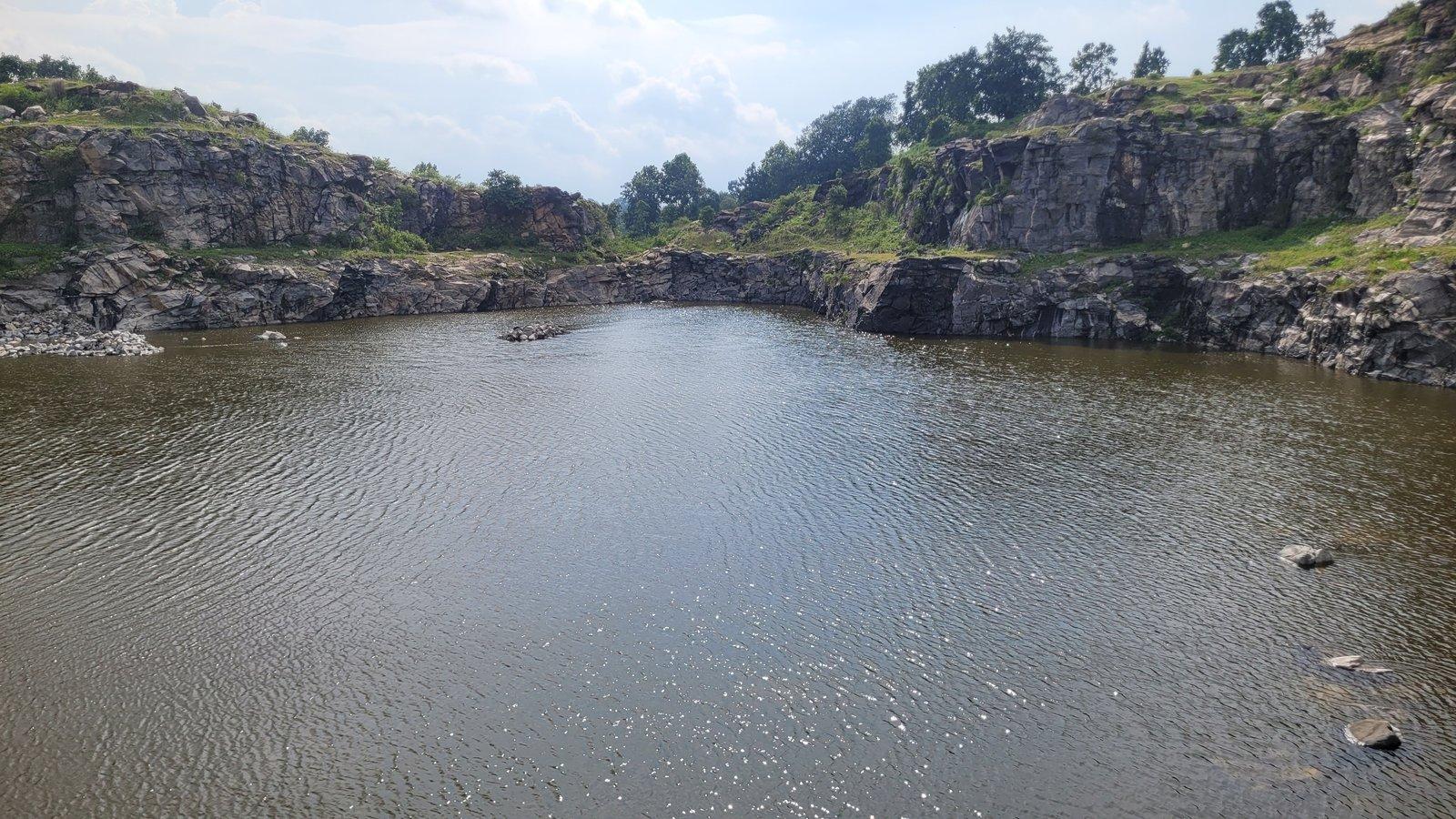
Marble Lake, 19 km away, is a flooded quarry whose deep water turns a strong blue on a clear, bright day, so it is one of the few places in Purulia that photographs well around midday. A polarising filter deepens the colour. Look also at the quarry walls, where the blasting exposed light-and-dark banded rock cut by darker dykes, and stay well back from the rim.
At Pakhi Pahar, 6.5 km away, giant birds are being carved into the bare rock face. The first panel is on the hill's western face, so late-afternoon light, raking across the carvings, shows their outlines best. In the cool, dry months you may see carvers at work on ropes; ask the team before photographing them.
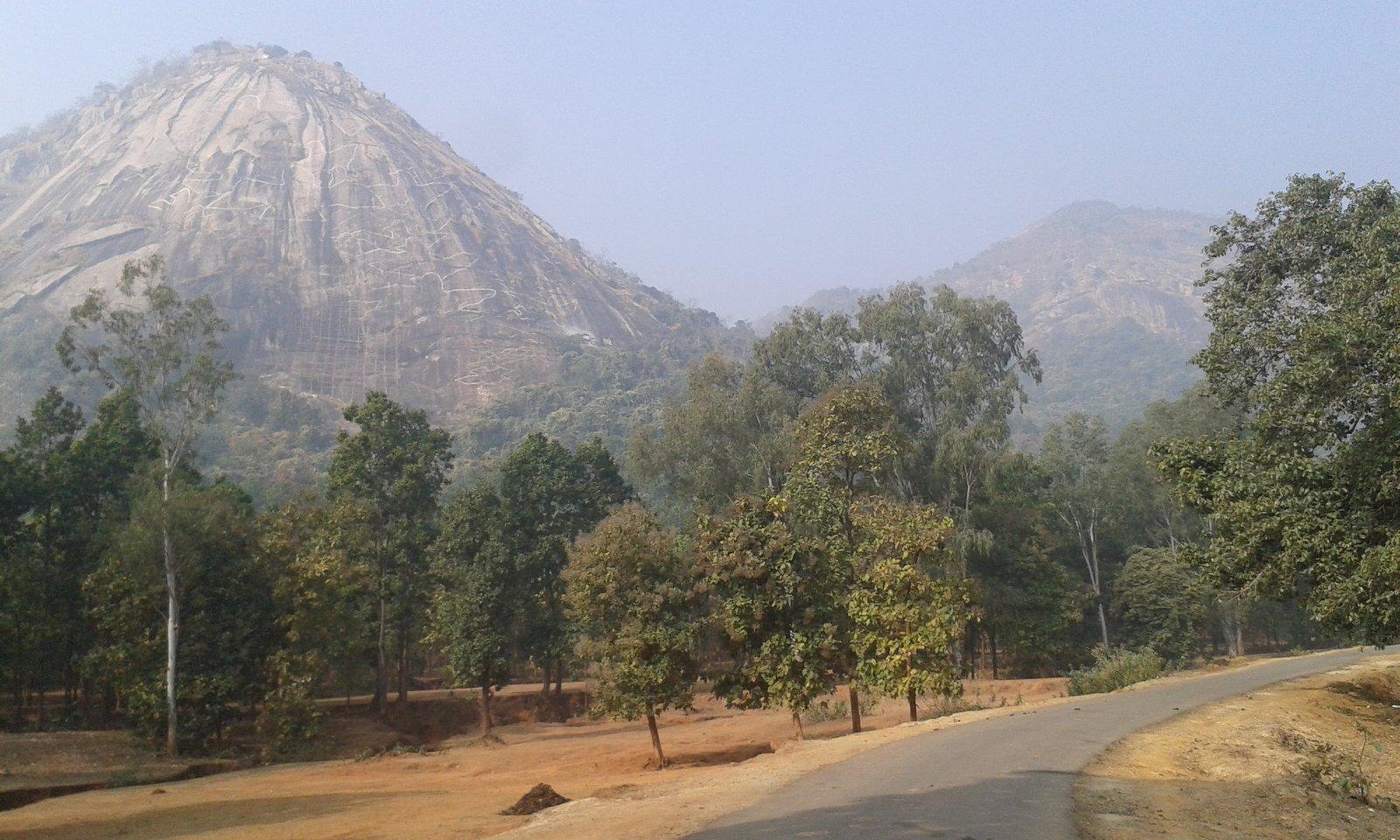
The roads themselves are subjects: red laterite tracks between sal trees, villages of mud houses, and granite domes rising out of the fields. Further north, Joychandi Pahar gives a summit view of fields, ponds and the trains of the Adra–Asansol line, the same rocky country where Satyajit Ray filmed Hirak Rajar Deshe.
Palash season
Palash, the "flame of the forest", flowers from about March into April, and around Holi the trees around Khairabera Dam turn red. Backlit flowers against a clear blue sky are the classic shot; early morning gives soft light before the heat haze builds. Our palash season guide lists the best roads and hills.
Waterfalls in the monsoon
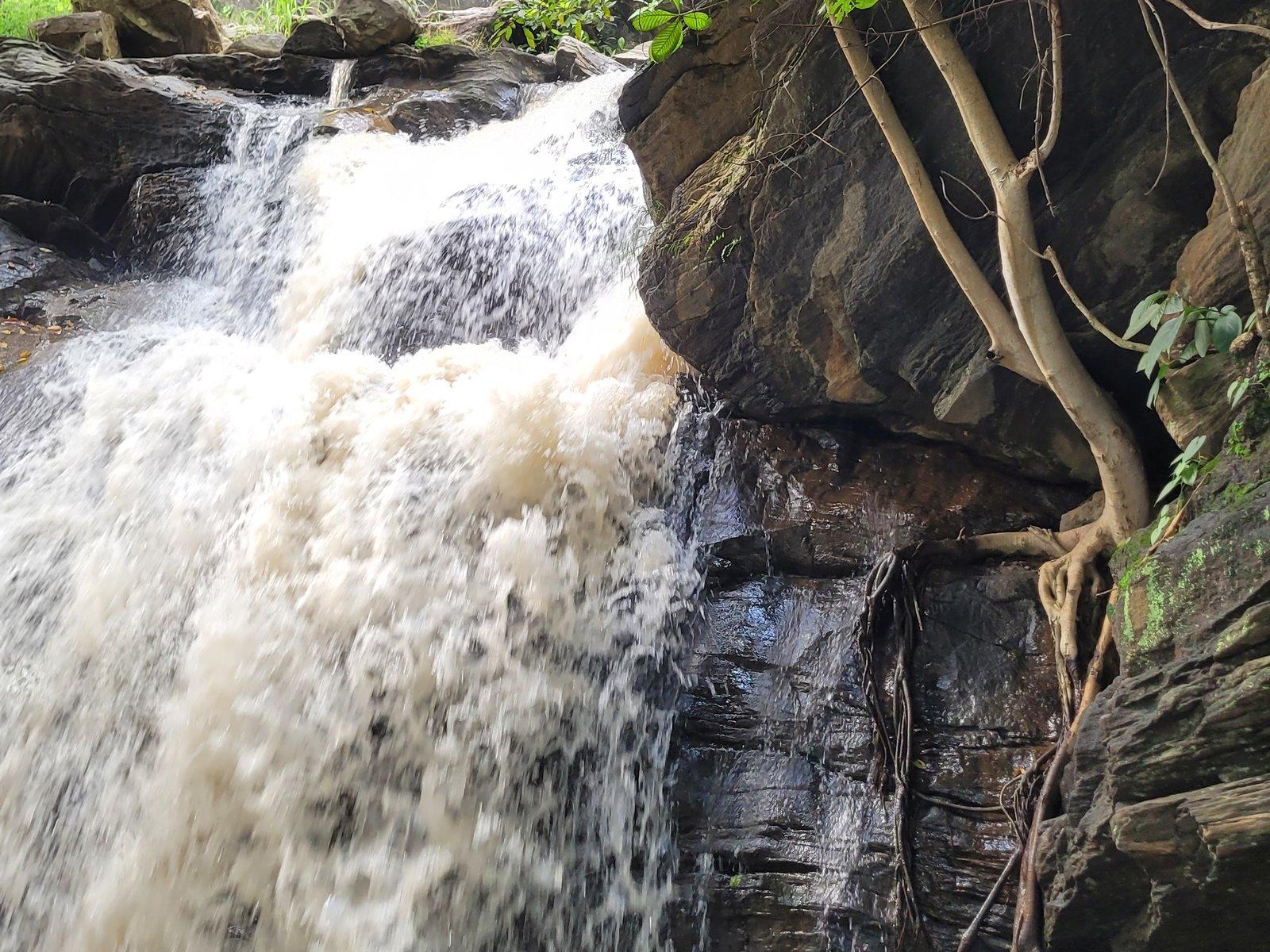
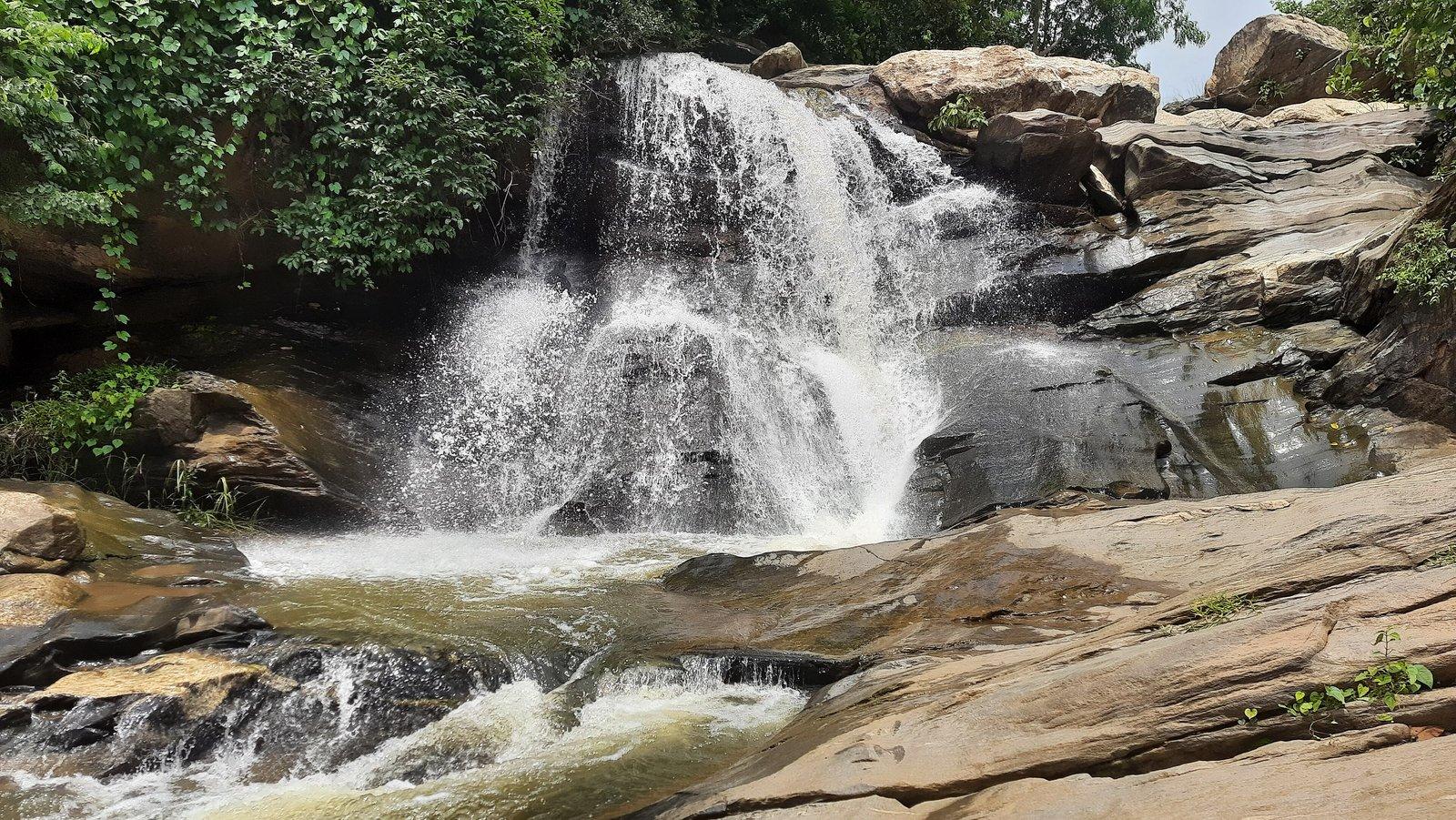
Bamni Falls and Turga Falls are fullest in and just after the monsoon, which is also when they are most dangerous. A tripod and a neutral-density filter let you use slow shutter speeds for silky water, but a rain cover for the camera matters just as much.
Chhau, masks and festivals
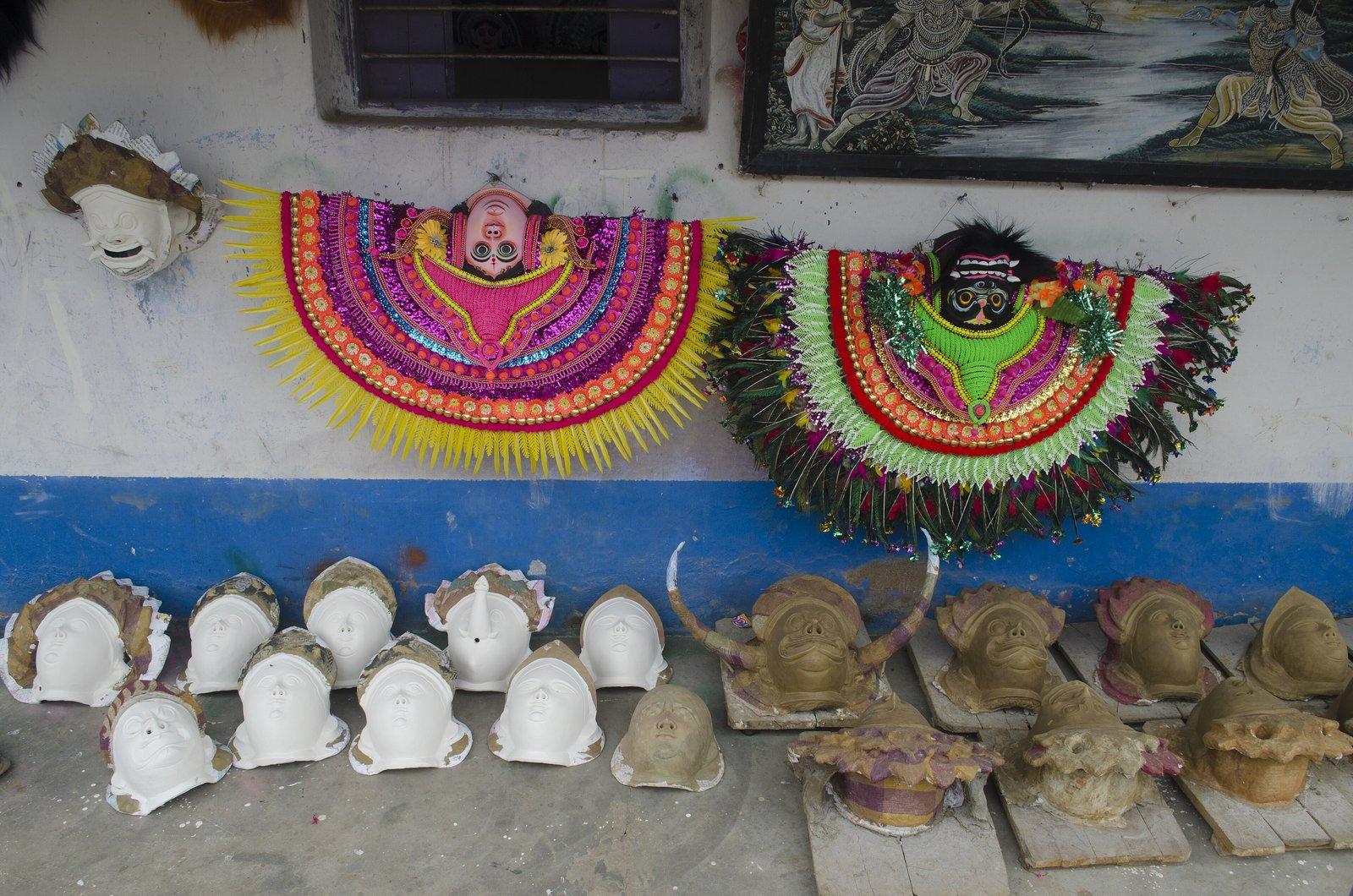
Purulia Chhau, the masked martial dance that UNESCO inscribed on its intangible heritage list in 2010, is the district's most photographed tradition. Its masks come from Charida, 10 km from the resort, where more than a hundred families work in open-fronted workshops along the main road. Winter, roughly November to February, is the busiest season there.
The porches give soft, shaded light that suits close-ups of the painting, beadwork and moulding. Ask before photographing artisans or their work, and buy a mask, however small, from the people you photograph; the Purulia Chhau mask carries a Geographical Indication tag.
For the dance itself, the Lahariya Shib Mandir holds a Gajan fair before Chaitra Sankranti in mid-April, with an all-night Chhau performance that draws thousands. Expect crowds, dust and low light: a fast lens and a high ISO will serve you better than flash, which distracts dancers mid-leap. If your dates don't match, the resort can arrange a Chhau or Santhali dance on the lawn on request; see our experiences.
In the monsoon, Outlook Traveller's writer found villagers around Murguma carrying green branches for the Karam festival in Bhado (August–September), and the painted walls of Santal homes are at their freshest around festival time.
Photographing people: ask first
The villages of these hills are home to Santal, Bhumij and other Adivasi communities, and they are living cultures, not a backdrop. A few simple rules make for better pictures and better relations:
- Ask before you raise the camera, and accept a "no" with a smile. A guide can help you explain.
- Don't photograph rituals, sacred groves or shrines unless you are clearly invited to.
- Never photograph people bathing at waterfalls, ponds or wells.
- Ask parents before photographing children.
- Don't ask anyone to dress up or pose as a stereotype of "tribal" life.
- If you promise to send a picture, send it.
Drones in Purulia: rules and restrictions
India's Drone Rules, 2021, announced by the Ministry of Civil Aviation in August 2021, allow drones to fly without permission only in green zones, up to 120 m (400 ft), while yellow and red zones need prior permission. The zones are shown on an airspace map on the DGCA's Digital Sky platform. The rules said no remote pilot licence was needed for nano drones or for micro drones flown for non-commercial use, and set a maximum penalty of ₹1 lakh. They have been amended since, so check the current registration and pilot requirements before you travel.
Locally, a green zone on the map does not settle everything:
- Dams and the power station: the Upper and Lower Dams belong to a working power project. Get permission from the operator and local authorities before flying anywhere near them.
- Forest and wildlife: drones stress birds and can agitate elephants. Don't fly over flocks on the reservoirs or anywhere elephants have been reported.
- Villages, festivals and crowds: don't fly over homes, people, the Gajan fair or Chhau performances; it is unsafe and intrusive.
Gear and practical tips
- Lenses: a wide-angle for landscapes, a short telephoto for faces and festivals, and a long lens (300 mm or more) for birds; our birdwatching guide lists where to find them.
- Filters: a polariser for Marble Lake and palash skies, and a neutral-density filter for waterfalls.
- Weather: a rain cover in the monsoon, and a blower and cloth for the dust of the dry months.
- Power: bring spare batteries and cards; mobile coverage is patchy in the hills. The resort has 24-hour power backup for charging.
- After dark: don't linger in the forest for night or star shots, because elephants move through these hills after sunset. Shoot the night sky from open, safe ground near a village or lakeside, with a driver nearby.
A two-day photo plan from the foot of Matha Buru
- Day one: an early start for sunrise at Usuldungri, then Mayur Pahar and Ajodhya hill top (20 km from the resort), Marble Lake in the bright middle of the day, Bamni Falls if it is flowing, and back down the hill road before dusk.
- Day two: morning at the Charida workshops while the porches are shaded, an afternoon at Pakhi Pahar as the light turns onto the carvings, and an evening Chhau or Santhali dance on the lawn, if arranged, with the moon rising over the hill.
Pack light, start early, and let the light decide where you go.