At a glance
- Warli art is the painting tradition of the Warli people of northern Palghar district in Maharashtra and the neighbouring Gujarat border, not of Purulia.
- It is painted in white rice paste on mud walls with a red ochre ground, using circles, triangles and squares; the tarpa dance circle is one of its best-known scenes.
- Jivya Soma Mashe (1934–2018) took Warli painting from ritual walls to paper and canvas from the 1970s and received the Padma Shri in 2011; Warli painting became a GI in 2014.
- Purulia has its own traditions: Santal women's Sohrai likhan, finger-traced into clay before Sohrae, and Kurmi women's Bandna floor and wall art in rice paste.
- The freshest painted walls in Purulia are seen just before the harvest festivals; they are people's homes, so ask before you photograph.
Warli art is a tribal painting tradition of the Warli people of Maharashtra, painted in white rice paste on mud walls with simple circles, triangles and lines: dancers in a spiral, farmers at work, trees, animals and a sacred square at the centre. It is not from Purulia. We use Warli-style drawings across this website, and that is exactly why this post exists: to explain where the style really comes from, and to introduce Purulia's own painted walls, the Sohrai and Bandna art of its Santal and Kurmi villages.
Where does Warli art come from?
The Warli live in the hills and coastal plains along the Maharashtra–Gujarat border. Their heartland is the Jawhar, Vikramgad, Mokhada, Dahanu and Talasari talukas of northern Palghar district, once part of Thane district, with communities in Nashik, Dhule and Nandurbar, in Gujarat's Valsad, Dangs, Navsari and Surat districts, and in Dadra and Nagar Haveli. Their own language, Varli, is unwritten.
Painting was part of ritual life. The Warli paint for special occasions such as weddings and harvests, usually inside their houses, and until the late 1970s it was the work of women. How old the tradition is remains uncertain; Wikipedia's article treats the 10th century CE as the earliest plausible date.
How Warli paintings are made
The materials come straight from the village. Walls built of branches, earth and cow dung give a red ochre ground. The paint is white: rice flour mixed with water and bound with gum. The brush is a bamboo stick, chewed at one end until it frays.
Because there is only one colour, everything depends on line and pattern. Figures are small and repeated, so a single wall can hold a whole village at work and at play.
Circles, triangles and squares: the language of Warli
Warli art builds its world from three shapes.
- The circle stands for the sun and the moon.
- The triangle stands for mountains and pointed trees.
- The square is a human invention: a sacred enclosure or a piece of land.
People and animals are drawn as two triangles joined at their tips, the upper for the torso and the lower for the pelvis. At the centre of a ritual painting is a square called the chauk. A devchauk usually holds Palaghata, the mother goddess, while a lagnachauk is painted for weddings. Around it run scenes of hunting, fishing, farming, trees and animals.
The best-known scene is the tarpa dance. The tarpa is a trumpet-like wind instrument played in turns by the village men; the dancers circle the player, and two different notes tell the lead dancer to turn one way or the other. In paintings the dancers become a circle or spiral of tiny linked figures.
From ritual walls to canvas
Warli art reached the wider world through Jivya Soma Mashe (1934–2018), born in Dhamangaon village in Talasari taluka. From the 1970s he and his son Balu Mashe painted not for a ritual but every day, on paper and canvas, which let the style grow freer and more personal. He received the National Award for Tribal Art in 1976, the Shilp Guru award in 2002 and the Padma Shri in 2011.
In March 2014 Warli painting was registered as a Geographical Indication (GI), with a Warli community organisation from Dahanu as the proprietor. The protection covers paintings and Warli designs on cards, furniture and textiles. If you buy Warli work, buy it from Warli artists or their organisations.
Why this website uses Warli-inspired drawings
The drawings on this site, from the small walking figures to the huts, trees and dancers between sections, are Warli-inspired: they borrow the style's circles, triangles and stick figures, which work well as small illustrations. They are a borrowed visual language, not a Purulia tradition, and we would rather say so plainly than let anyone think otherwise.
There are real points of contact. Both the Warli and the Adivasi and farming communities of Purulia paint mud walls with earth and rice, paint for harvests and festivals, and dance in lines and circles to drums and wind instruments. But the art of the Purulia villages has its own techniques and its own look, and it deserves to be known by its own names.
Purulia's own painted walls: Sohrai likhan
In northern Purulia, Santal women traditionally repair, plaster and decorate their mud walls before Sohrae, the harvest and cattle festival. The Daricha Foundation, which has documented the practice since 2016, describes each step:
- The walls are repaired with lateritic soil and plastered smooth with sandy loam.
- A wash of diluted cow dung goes on as a base.
- A coat of poli mati, a pale grey worm-cast soil from rice fields and ponds, is spread in wide arcs with a rag and dries off-white.
- The wall is dampened with a thin slip of the same soil, and the women trace designs into it with their fingertips, often three or four fingers in parallel, so the darker layer beneath shows through.
- Geometric bands are made with a soaked rag, and the plinth is painted last in black made from burnt straw.
The motifs are mostly floral and geometric, in a single earth tone rather than Warli's white on red. Researchers from Jadavpur and Sidho-Kanho-Birsha universities name villages such as Hatimara in Hura block, Dhagora in Para block and Amaidih in Neturia block, along with villages in Bagmundi and Jhalda blocks, as known for painted houses, with Santal, Birhor, Kurmi and Oraon households all taking part.
The tradition is fading as brick replaces mud and younger women choose newer styles. Since 2024 the Daricha Foundation has worked with Sohrai painters to carry the motifs onto handmade paper, first exhibited in Delhi in March 2024. Read more about Santal life in our guide to Santhal culture in Purulia.
Bandna art in Kurmi homes
Kurmi households in Purulia paint for Bandna, the cattle festival around the new moon of Kartik. Sahapedia describes floor and wall art made by the women and girls of each family, with skills passed from mother to daughter. The white paint, called chawk, is finely pounded rice mixed with glue from the gamhar tree, thin enough to be poured and dripped from the hand without a brush.
Floors carry geometric patterns and plants and animals; walls carry more elaborate scenes, and are sometimes dampened and incised with household tools for texture. Older colours came from minerals and plants, with charcoal for black. Each year a fresh coat of cow dung gives the women a new surface. See Bandna and Sohrai for the festival itself.
Warli and Purulia wall art compared
| Warli art | Santal Sohrai likhan | Kurmi Bandna art | |
|---|---|---|---|
| Where | Northern Palghar, Maharashtra–Gujarat border | Northern Purulia and nearby | Purulia and the old Manbhum region |
| When | Weddings, harvests | Before Sohrae, after the harvest | Bandna, around Kartik new moon |
| Colour | White on red ochre | Earth tones, black plinth | White rice paste; earlier, mineral and plant colours |
| Technique | Chewed bamboo stick | Fingertips in wet clay, rag | Paste dripped by hand, incised walls |
| Look | Small figures, circles, triangles, tarpa spiral | Floral and geometric patterns | Geometric patterns, plants, animals |
Where to see painted walls around Purulia
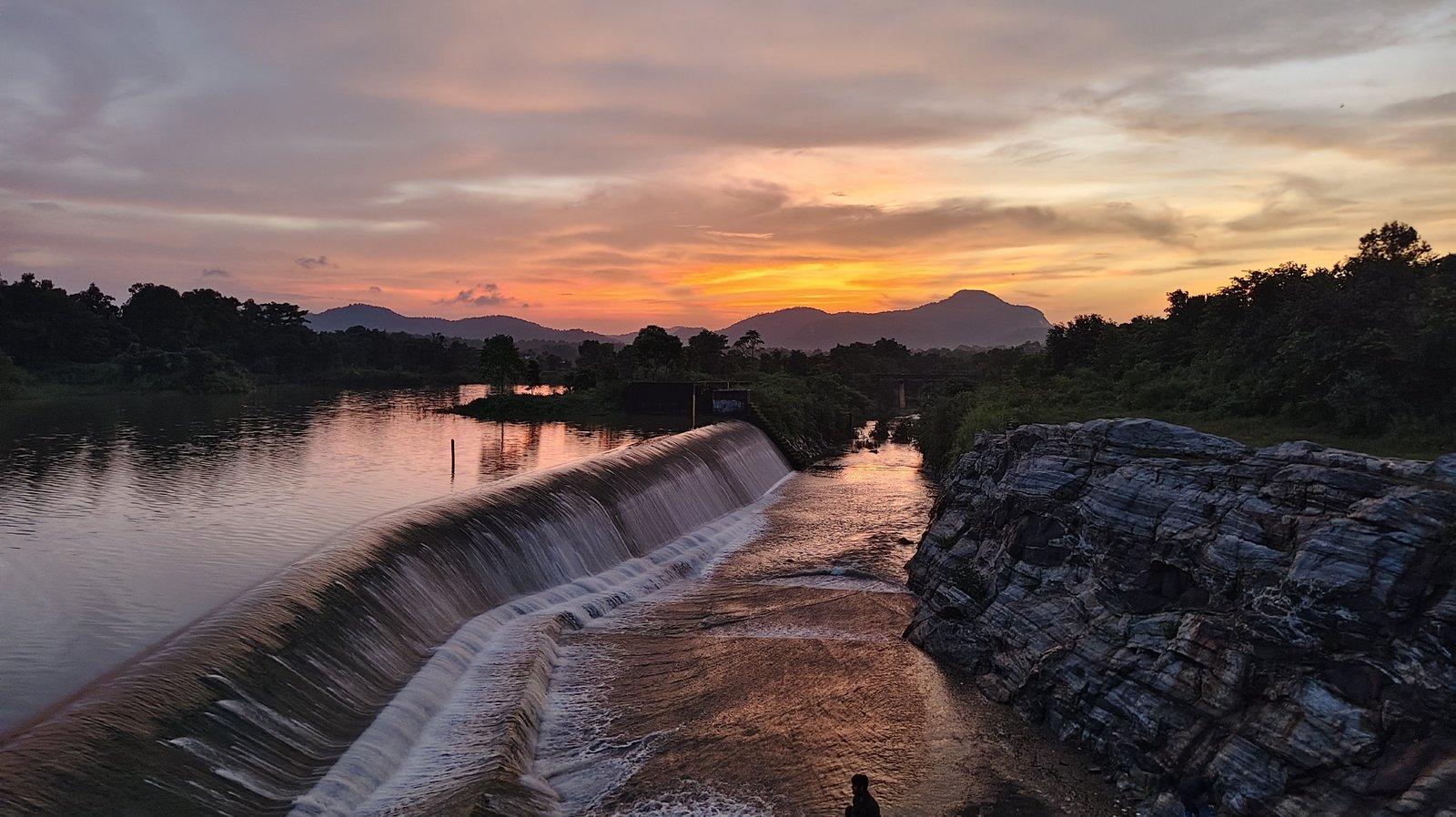
Painted houses are most vivid just before the autumn harvest festivals, when the walls have been freshly done; they weather through the rest of the year. Around Murguma Dam, 37 km from the resort, the Santal villages have hand-painted mud walls. In the Ajodhya Hills the village-built Ram Mandir has walls painted with scenes from the Ramayana, a very different, devotional kind of mural.
A local driver or guide can tell you which villages still paint; our sightseeing cabs can be booked on request. Remember that every painted wall is someone's home. Ask before photographing it or the people in front of it, never touch a wall that is still wet, and leave the village as quietly as you came.
For the wider picture, see our Purulia travel guide, our photography guide or the full list of places in Explore Purulia.