At a glance
- Bandna centres on the Kartik new moon, the night of Kali Puja; in 2026 that is 8 November.
- Over several days, cattle are bathed, fed and anointed, cowsheds lit with lamps and farm tools worshipped.
- Ahira singers go from house to house through the new-moon night, and women paint chowk patterns on floors.
- Garu khuta, the climax, sees bulls tied to a post and roused with drums, songs and a hide.
- Kurmi, Bhumij, Korha and Lodha villages call it Bandna; Santal and Munda villages call it Sohrai.
Bandna, or Bandhna Parab, is the cattle festival of the Jangalmahal, and in Santal and Munda villages it is called Sohrai. In Purulia the Bandna festival centres on the Kartik new moon, the night of Kali Puja in late October or November, and runs over several days: cattle are bathed and anointed with oil and vermilion, cowsheds are lit with lamps, singers go from house to house all night, women paint the floors with rice paste, and bulls are roused at a village post in garu khuta. In 2026, Kali Puja falls on 8 November.
When is the Bandna festival in Purulia?
Bandna follows the moon. Its main night is amavasya, the new moon of Kartik, which Bengal also celebrates as Kali Puja and much of India as Diwali. The rituals begin a day or two before the new moon and end on the second day of the bright fortnight that follows, so the festival usually spans four or five days in late October or November.
Preparations start much earlier, soon after Durga Puja. The monsoon is hard on mud houses, so families repair them and repaint the walls with earths they collect themselves: red soil, and a white earth called khet mati. By Bandna the villages look freshly made. In 2026, with Kali Puja on 8 November, the busiest village days should fall around 8 to 11 November, but each village keeps its own reckoning, so ask locally.
Somenath Mahato, writing in the journal of Sidho-Kanho-Birsha University in Purulia, says that in the district's villages Bandna outshines even Durga Puja. It is also a homecoming: newly married daughters come home with their husbands, and the sons-in-law are honoured, which is why Mahato calls Bandna Purulia's own Jamai Sasthi.
Why Bandna honours cattle: the story told in the villages
The story behind the festival is a legend, told with small variations across the region. Shiva gave people cattle to help them farm, on condition that they treat the animals well. In time the farmers overworked and beat them, and the cattle complained to Shiva, who decided to come down on the new moon of Kartik and see for himself.
Warned in advance, people cleaned their houses and cowsheds, washed their cattle, oiled their horns, fed them well, lit lamps in the sheds and kept them entertained all night with songs. Shiva found the animals content and the complaint unfounded. When the cattle complained again the next year, the farmers did the same, and so, the story goes, Bandna began. Behind the humour is a serious idea: a yearly thanksgiving to the animals and tools that make farming possible.
Bandna day by day
Sources divide the festival in different ways, from four days to seven, and every village has its own habits. The sequence described by Mahato for Purulia runs like this:
- Tel dewa, two days before the new moon: oil and vermilion are smeared on the horns of cows, buffaloes, goats and sheep, the cowshed is lit with lamps, and families make rice-flour pitha.
- Ghawa, the next day: houses and yards are cleaned and the farm implements gathered in front of the household's tulsi platform.
- Amavasya, the new moon: cattle are washed in the pond or river, new rice is pounded into flour, lamps made from rice paste are set on sal leaves at every door and at the cowshed, and the night belongs to the singers.
- Gohal or Goroya puja, the first day of the bright fortnight: the farmer himself worships the god of the cowshed, with no outside priest and no fixed mantra, and the women paint chowk patterns on the floor.
- Garu khuta, the second day: bulls are tied to a post and roused in front of the village. Budhi Bandna, a quieter final day of play with the cattle, follows in some villages.
Ahira songs and the night of jagaran
The new-moon night is a night of waking, or jagaran. Groups of drummers and singers, called jhangar or dhingwani teams in different accounts, go from house to house singing ahira songs, which praise the cattle and their owners and compare the cow to Lakshmi. Each household rewards them with pitha, rice or a little money. These songs have never been written down in books; they pass from one generation of singers to the next.
Chowk, painted walls and gohal puja
On gohal puja day the floors and courtyards are purified, ploughs and other tools are washed and set out, and women draw chowk in rice paste from the entrance inwards, often with their fingers. Mohanta and Mahato, who studied the festival among Kurmi (Kudmi) villages in Jharkhand, West Bengal and Odisha, note that the designs vary from clan to clan. Together with the newly painted walls, this is when Purulia's painted village walls look their freshest; around Murguma Dam, the Santal villages' wall patterns are at their brightest in the festival season.
Garu khuta: the bull at the post
Garu khuta (also written gorukhuta or goru khunta) is the moment most people wait for. A post is set up in the village and decorated with rice-paste handprints, vermilion and flowers. One at a time, bulls are tied to it and blessed by the women, then the men, some carrying a dried cow or buffalo hide, rouse them with drums and ahira songs while the bull butts and tosses its head and the crowd cheers. When a bull tires, the next takes its place.
Who celebrates Bandna and Sohrai?
Purulia's district administration lists Bandna as a festival of the Kurmi, Bhumij, Korha and Lodha communities, and notes that the Santals and Mundas call it Sohrai. The festival reaches well beyond Purulia: Sohrai is kept by Santal, Bhumij, Oraon, Ho, Munda and other communities across Jharkhand, West Bengal, Odisha and Bihar. Customs differ between communities and the dates are not always the same; in Jharkhand's Santal Parganas, for example, Sohrai is held in January.
Bandna belongs to the same farming year as the region's other great festivals. For the Kurmi, it is one of three major festivals alongside Karam and Tusu, and the rainy season brings Bhadu to many villages. For the wider picture of Santal life around the hills, see our guide to Santhal culture in Purulia.
Visiting during Bandna: etiquette and safety
Bandna happens in cowsheds, courtyards and village grounds, and it is worship before it is spectacle. Nobody stages it for visitors, so if you are lucky enough to see part of it, behave as you would at a family puja:
- Ask before you photograph people, especially women painting chowk or performing rituals, and accept a no.
- Don't step on the chowk or the lamps laid at doorways, and don't touch, feed or decorate anyone's cattle.
- Keep well back at garu khuta, and never provoke an animal for a picture.
- Accept hospitality politely. Families may offer pitha; there is no obligation to accept rice beer.
- Drive slowly. Cattle are led along village roads to ponds and posts all through the festival, and processions move at walking pace.
- Stay off forest roads after dark. Elephants move through the Ajodhya Hills at night, and the new-moon nights are the darkest of the month.
Planning an autumn trip around Bandna
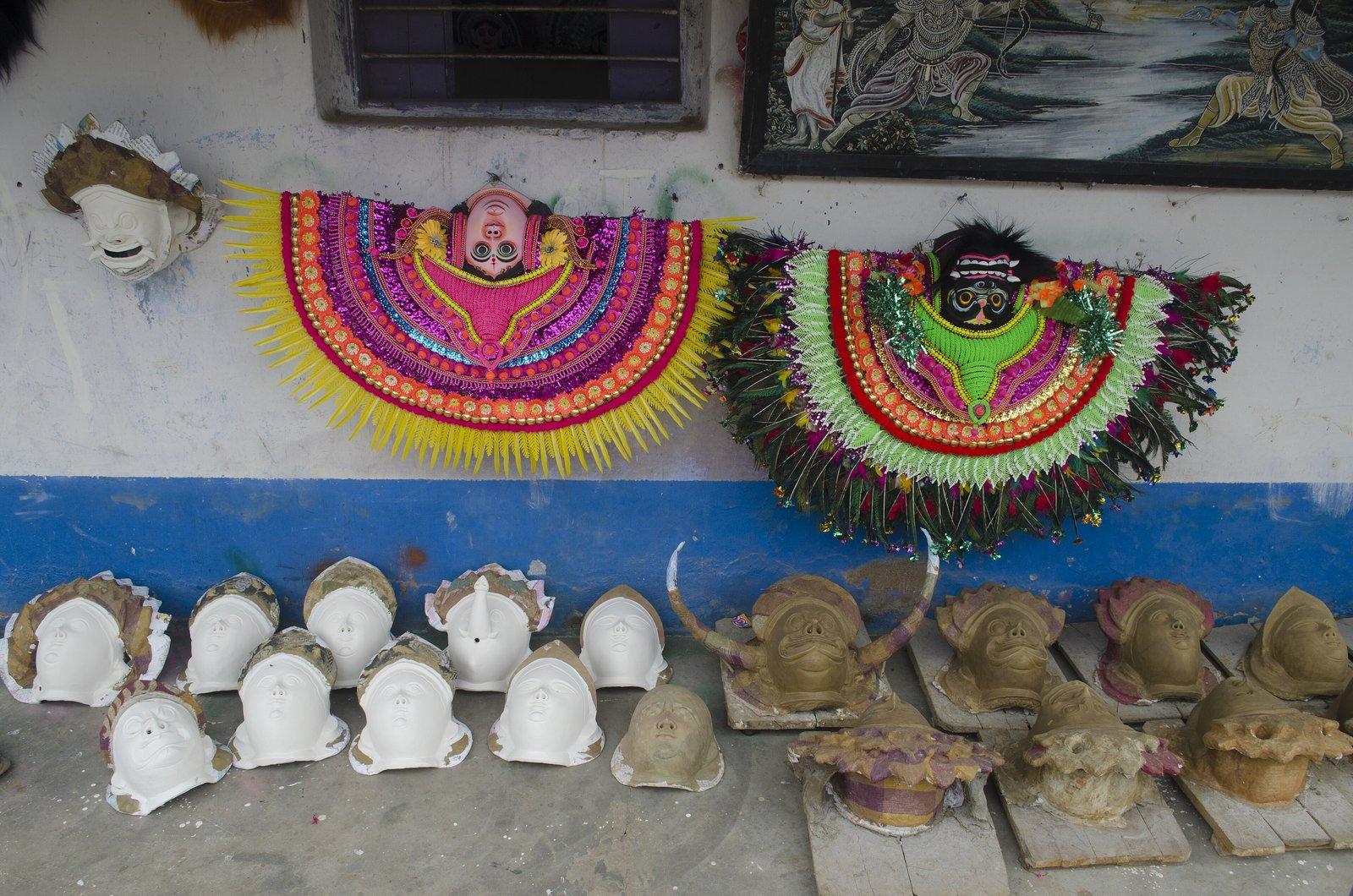
Late October and November are the start of the cool, dry season in Purulia, a good time for the hills after the rains. It is also when Charida, the Chhau mask village, gets busy again: many of its artisans spend the quiet rainy months making Durga and Kali images, and the workshop season for visitors runs roughly from November to February. Our month-by-month guide to the best time to visit Purulia has more on the season.
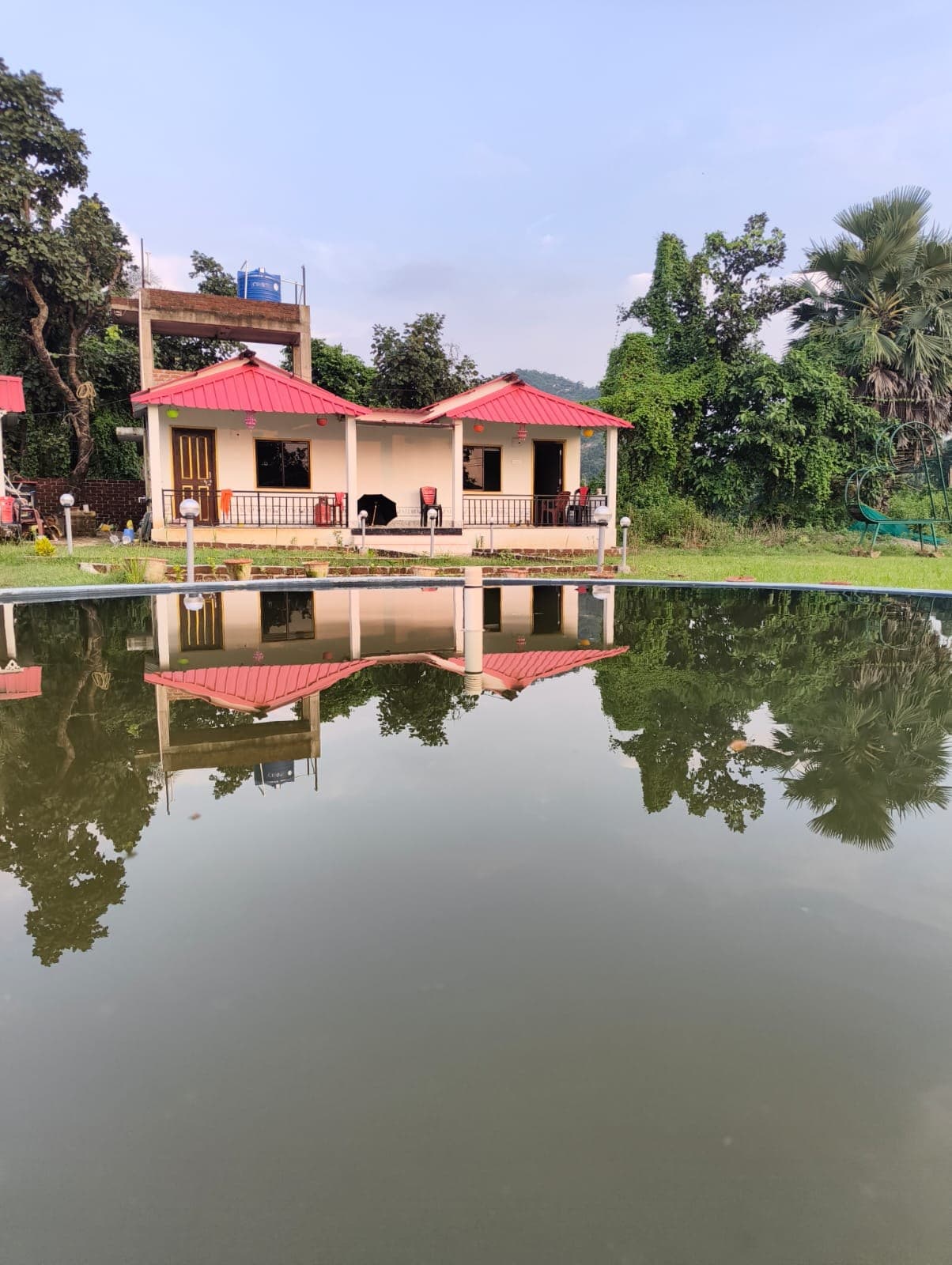
Rangamati sits among villages at the foot of Matha Buru, and we can arrange a local guide on request. A guide can tell you what is happening nearby during Bandna, but we cannot promise you will see the rituals, which depend on each village and family. If you would like to see the region's dance in a setting made for guests, a Santhali dance or a Chhau performance can be arranged at the resort on request; see our experiences page.