At a glance
- Charida, about 5 km beyond Baghmundi and 10 km by road from the resort, is where Purulia's Chhau masks are made by hand.
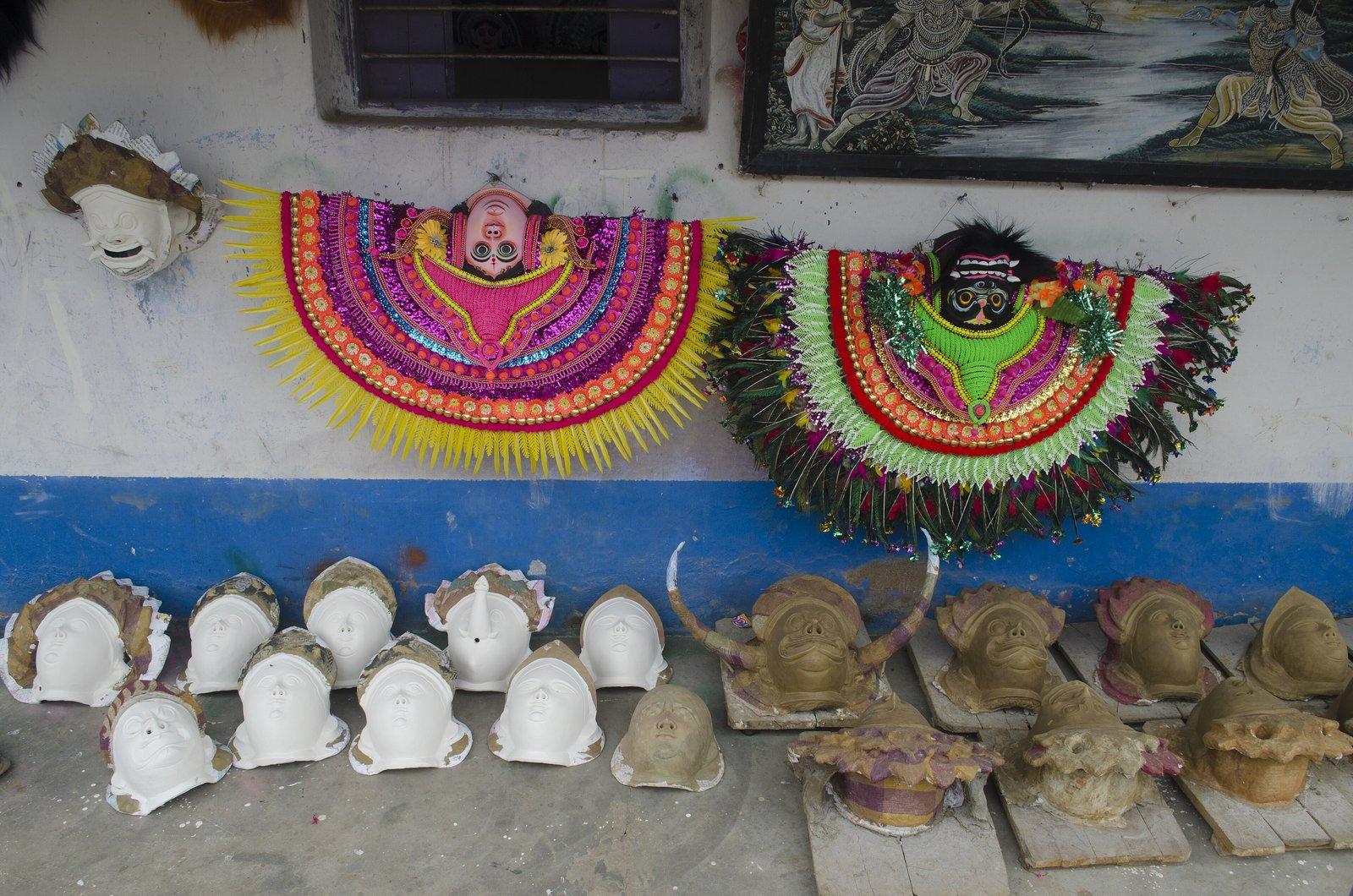
- A mask starts as a clay mould dusted with ash, takes eight to ten layers of glued paper plus clay and cloth, then is dried, lifted off, whitened, painted and decorated.
- A full mask takes from about three days to a week; small souvenir masks can be finished in a day.
- The Purulia Chhau mask has a Geographical Indication tag, usually dated to 2018; individual workshops have been receiving GI certificates since 2022.
- Buy directly from the makers, look beyond the first roadside shops, and ask about thickness: dance masks use eight to ten paper layers.
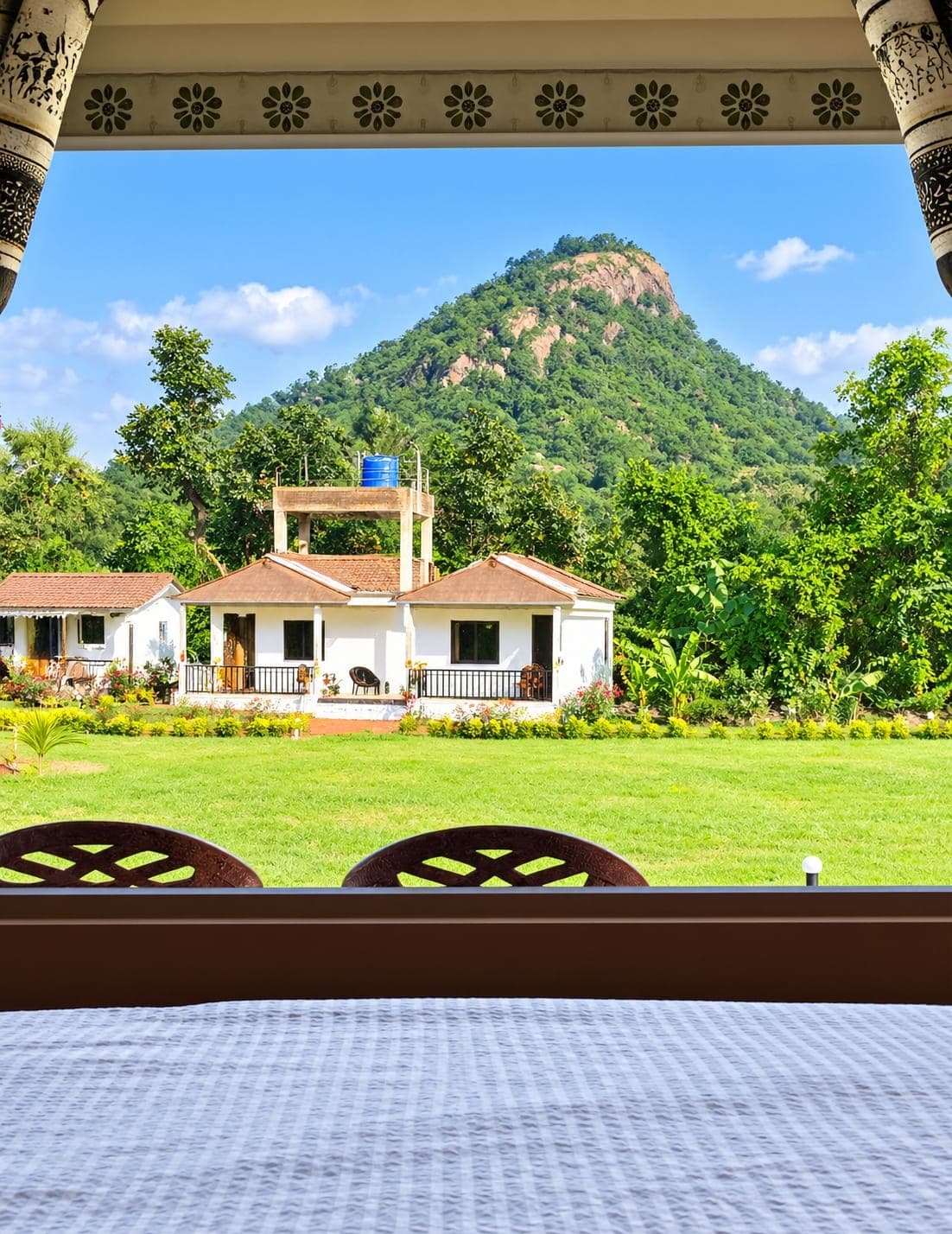
Charida is the Chhau mask village of Purulia: a roadside village about 5 km beyond Baghmundi, at the foot of the Ajodhya Hills, where families of mask makers turn clay, paper, cloth and paint into the masks worn in Purulia Chhau. Nearly every house along the main road is also a workshop, so you can watch each stage of the craft and buy straight from the people who make the masks. It is about 10 km by road from our cottages at Matha, and an easy half-day outing.
Our destination page on Charida Mukhosh Gram covers the village, its history and the practical details. This post goes inside the workshops: how a mask is actually made, what to look for when you buy one, and how to visit well.
Who makes the masks at Charida?
Mask making here is traditionally the craft of Sutradhar families, a community of artisans who also make clay idols. Accounts of its beginnings differ. The usual story dates it to about 150 years ago, under King Madan Mohan Singh Deo of Baghmundi; ETV Bharat reported in 2022 that the Baghmundi royal family brought Sutradhar artisans from Burdwan in the late 18th century to make idols, and that they went on to make the first Chhau masks.
The village remembers Buddeshwar as its first mask maker. He is said to have made the first pair of masks, Kirat and Kiratni, forms of Shiva and his consort, and his statue stands in Charida along with that of the Padma Shri dancer Gambhir Singh Mura.
Counts of the makers vary with the source and the year: 115 households (ICH NGO Forum, 2022), about 150 families (Wikipedia), and up to 377 practising artisans (Asia InCH). Today people from other communities have joined the trade too. What has clearly grown is the number of shops: 101Reporters counted about 130 in 2026, against roughly 10 in 2004–05.
How a Chhau mask is made, step by step
The basic method is papier-mâché over a clay mould, but each stage has its own skill. Put together from the artisans' own accounts and craft documentation, the sequence runs like this:
- Model the mould. The artisan shapes the face of the character in clay, taken from the fields around the village, and dries it in the sun until firm.
- Dust with ash. Fine ash from a clay stove is dusted over the mould so the paper will not stick to it.
- Lay the paper. Eight to ten layers of soft paper soaked in diluted glue or natural gum are pasted on, one over another.
- Add clay and cloth. Features are built up in clay, then a thin layer of earth and strips of cloth go on to strengthen the shell.
- Polish and dry. The surface is smoothed and polished and left to bake in the sun, sometimes polished and dried again.
- Lift off the shell. Once dry, the layers are separated from the mould, leaving a light, hard shell. Holes are cut for the eyes and nose.
- Whiten. The shell gets a white base coat; Millennium Post's artisans described plastering it with khori mati, a calcium-rich soil.
- Paint and decorate. Faces are painted in the character's colours, then finished with beads, sequins, zari, tinsel, foil, feathers, artificial flowers, and jute or wool for hair and manes.
The base takes about three days, mostly drying time, and painting and decoration take three or more working days, so a full mask takes from about three days to a week. Small souvenir masks can be finished within a day. Much of the decoration, from beads to tinsel, is bought in bulk from Kolkata's wholesale markets.
Gods, demons and animals: the kinds of masks
The masks follow the characters of the dance. Makers sort them into types such as babu (male gods), bir (heroes and demons), nari (women and goddesses), bhoot (spirits), and animal and bird masks. 101Reporters puts the number of Purulia-style designs at nearly 500, with new ones added every year.
A performance mask covers the whole face and much of the head, and the tallest beaded headdresses can weigh up to five kilograms. Performance masks are traditionally made to fit the individual dancer, by makers who work closely with the troupe. To see the masks in action, read our guide to Purulia Chhau dance.
Alongside dance masks the workshops now make wall pieces in every size, Kathakali-style faces, comic characters, and the popular "Santhal" couple masks. As one elderly artisan has explained, these are modelled on the Kirat and Kiratni forms of Shiva and his consort rather than on Santal people.
Charida's GI tag and the Rural Craft Hub
The Purulia Chhau mask is a registered Geographical Indication (GI), which ties the product's name to its place of origin. Most sources date the registration to 2018. Certification for individual makers came later: ETV Bharat reported Charida artisans with GI certificates in 2022, and by early 2026, 101Reporters counted 31 shops certified and about 20 more waiting.
Between 2013 and 2016 the West Bengal MSME department and UNESCO ran a Rural Craft Hub in Charida, registering the makers as skilled craftspeople, promoting the village to tourists and setting up a community museum. According to the ICH NGO Forum, average monthly family income rose from about ₹5,500 in 2013 to about ₹9,000 in 2018.
The benefits are uneven. Visitors tend to stop at the workshops on the main road, and makers further into the village see fewer of them. Artisans also told 101Reporters about rising costs for paint and paper, and that about 90% of their tourist sales come from people already visiting the Ajodhya Hills.
Buying a Chhau mask: prices, quality and packing
Prices. The most recent dated figures are from 2019, when artisans quoted about ₹20 for the smallest pieces and up to ₹5,000 for large masks. Prices will have moved since, and they depend on size, detail and how much decoration goes on.
Quality. Ask how many layers a mask has. Dance masks use eight to ten layers of paper; some lighter tourist pieces now use cardboard, and 101Reporters notes that thin masks are prone to break. Look for a mask that feels light but rigid, with neat edges around the eye holes.
Size. Think about where it will go. A palm-sized face packs easily; a full dance mask with a tall headdress is bulky and fragile.
Packing. These are practical suggestions rather than rules:
- Ask the maker to wrap the mask well, with extra padding around the headdress.
- Carry big masks as hand luggage, face up, and keep headdresses from being squashed.
- At home, keep masks dry and out of strong sun, since they are paper, clay and natural glue.
For other things to take home from the district, see what to buy in Purulia.
Visiting Charida respectfully
Charida is a working village, not a museum. The masks drying on the porches are someone's livelihood, and the people painting them are at work.
- Ask before photographing people, especially women and children, and before picking up a mask that is still drying.
- Buy directly from the maker and pay a fair price. If you bargain, keep it light; the makers' margins are thin.
- Walk beyond the first few shops; workshops further in get fewer visitors.
- Visit the community museum to see older masks and the stages of the craft.
- Take your rubbish with you, and keep car music off in the village.
Getting to Charida Chhau mask village, and when to go
From the resort, drive north along the Balarampur–Baghmundi road (SH4) through Baghmundi and continue for about 5 km; the road runs straight through the village. It is 10 km in all. Allow an hour or two to walk the workshops unhurried.
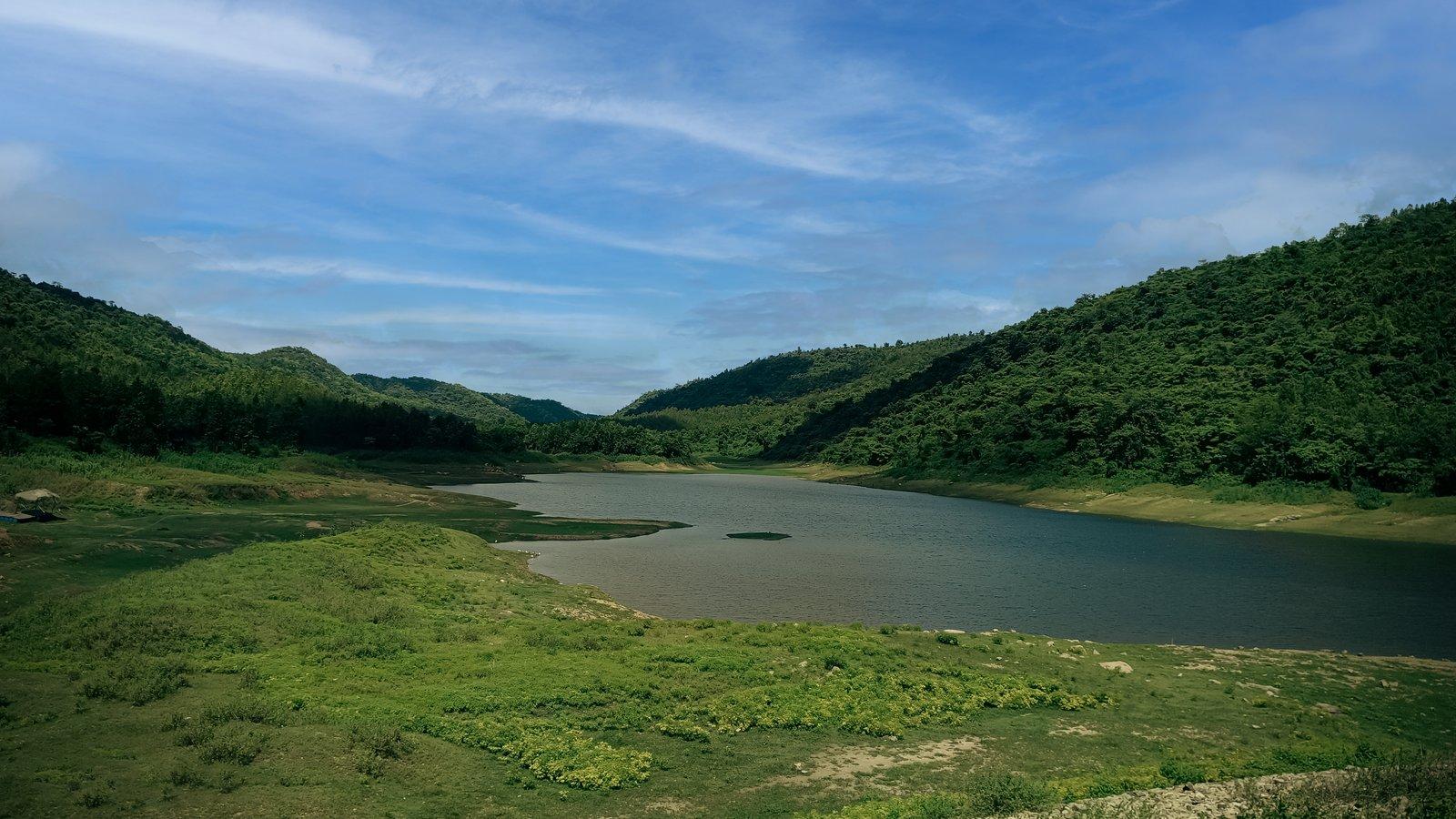
Thurga Dam, 9 km from the resort, makes a good stop on the same morning, and Khairabera Dam, 22 km from the resort, lies further out in the same north-western direction. Our cab and driver service can take you on request.
The busiest season is November to February. The mask makers' collective hosts a festival with Chhau and Jhumur, usually in winter or early spring; reported dates range from December to March, so check before you plan around it. In the hot and rainy months visitors thin out and many artisans turn to making Durga and Kali idols, which has its own interest if you come then. For a fuller plan, see the best time to visit Purulia.