At a glance
- Bhadu is kept through the Bengali month of Bhadra, roughly mid-August to mid-September.
- Women and girls install a small clay image of Bhadu and sing new Bhadu songs to her every evening.
- The image is immersed in a river or pond on the last day of Bhadra, after a night of singing.
- Its legends tie Bhadu to a princess of the Panchakot royal house, now at Kashipur in Purulia.
- Bhadu is home and village worship; watch only when invited and ask before taking photographs.
The Bhadu festival is the monsoon folk festival of Manbhum. Through the Bengali month of Bhadra, roughly mid-August to mid-September, women and girls in the villages of Purulia, Bankura, Birbhum and Bardhaman install a small clay image of Bhadu at home, sing new songs to her every evening and, on the last day of the month, carry her to a river or pond for immersion. It is a festival of the courtyard and the village pond rather than of temples, and of songs above everything else.
When is the Bhadu festival?
Bhadu lasts the whole month of Bhadra. Unmarried girls bring the image home on the first day of the month, and from then on women and girls gather each evening to sing. In Purulia, the district administration links the festival to the harvest of aus, the early paddy crop gathered in this season; Banglapedia ties it instead to the planting season, a reminder that the festival means slightly different things in different places.
The last night of Bhadra is a night of vigil. The girls offer sweets, sing and dance until morning, and the singing turns sad, because Bhadu is about to leave. The image is immersed on Bhadra Sankranti, the last day of the month, which usually falls between 16 and 18 September. That is the same day Bengal marks Vishwakarma Puja, so in towns you will see workshops and factories decorated while village girls are taking Bhadu to the water.
The legends of Bhadu
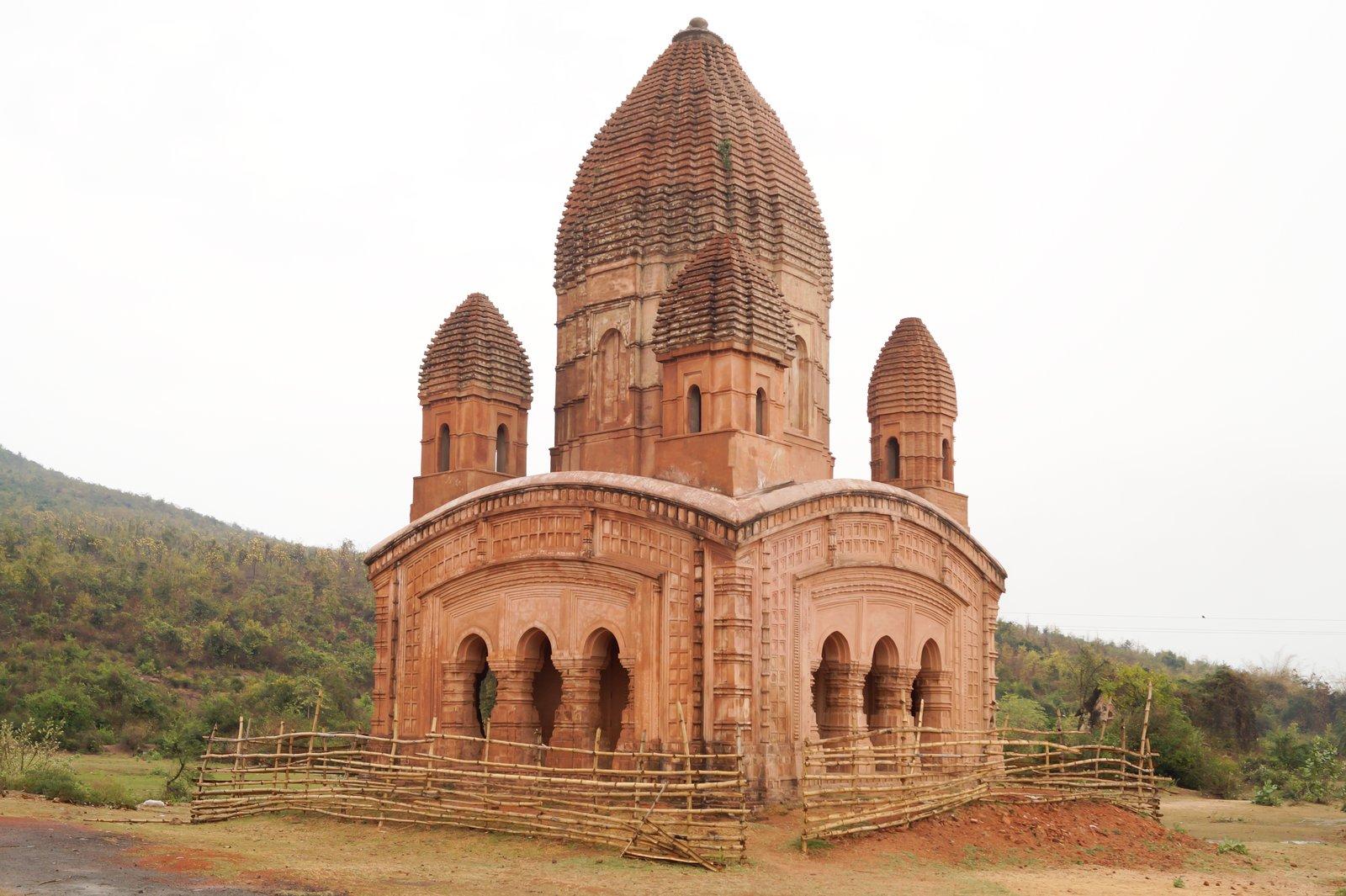
Almost every account of Bhadu leads back to the Panchakot rajas, whose old capital lay at Garh Panchkot before the family moved its seat to Kashipur in the 18th century. Beyond that, the stories disagree, and folklorists record several. All of them are legends.
- The princess who died unmarried. In one widely told version, Bhadu, also called Bhadravati or Bhadreswari, was the only daughter of a Panchakot raja whom the stories name as Nilmani Singh Deo. No groom was found worthy of her, she died young, and the grieving king began her worship in Bhadra.
- The adopted foundling. Another version, which Somenath Mahato's study of Purulia folklore calls the most widely accepted, says the raja found a girl crying alone in the forest while out hunting, adopted her and named her Bhadravati. Her early death left the kingdom in mourning for a month, and the king's worship of her was copied by his people.
- The girl from Lada. A version given by Wikipedia and Outlook Traveller has Bhadu found as an orphan by the chief of Lada village, a vassal of Panchakot. She falls in love with Anjan, a doctor's son, the king imprisons him, and Bhadu wanders the land singing at prison gates. When Anjan is freed, she has vanished.
- The goddess in disguise. In a more mythological telling, the goddess Durga comes to earth as a girl, is adopted by a Panchakot raja and is finally called back to Kailash, leaving the king to worship her memory.
What the stories share is a girl who leaves too soon, and a month of songs to keep her close. That is how the festival is still felt: Bhadu is treated less as a distant goddess than as a daughter or a friend of the household.
Bhadu gaan: the songs of the festival
The songs, Bhadu gaan, are the worship. There is no mantra and no priest: women and girls compose verses to Bhadu, often on the spot, and sing them each night of the month. Banglapedia says the songs mainly concern marriage; others deal with love and longing, family quarrels, poverty and village life, some with humour and teasing. They are passed on by word of mouth, with older women teaching the tunes to girls, and drums such as the dhol and madol often keep time.
Bhadu songs have also had a life beyond the courtyard. Professional singing groups as well as amateurs perform them. At the same time, the tradition has thinned in places: a 2008 report cited by Wikipedia described Bhadu gaan as a dying tradition in Birbhum. For another strand of Manbhum's song culture, see our guide to Jhumur folk songs.
Who celebrates Bhadu, and where
The Purulia district administration notes that Bhadu is especially popular among the Bagdi and Bauri communities of Bankura and Purulia, and that the colonial ethnographer H. H. Risley described Bhadu as a goddess. A paper by Somenath Mahato in the journal of Sidho-Kanho-Birsha University, Purulia, places the stories firmly around Kashipur and the Panchakot court, and describes the Bhadu tales as shared across the district's communities.
It is a women's festival through and through. Girls often bathe in the morning and worship Bhadu in wet clothes, the floor where she sits is decorated with fresh alpana patterns, and in rainy weather a temporary shelter is put up inside the house. The image itself is modest: Outlook Traveller's 2025 report from Sarenga, on the Purulia–Bankura border, describes small clay figures, or sometimes just a mound of earth, decorated with vermilion, flowers and ornaments.
Manbhum's festivals of the rainy months
Bhadu sits inside a busy run of festivals that follows the farming year. The district administration lists Manasa Puja on the last day of Shraban, the eve of Bhadra; Karam, when green Karam branches are planted in the village ground and later immersed in a river, also falls in Bhadra, and Outlook Traveller found it under way in the villages around Murguma Dam; and Chata Parab, once patronised by local rajas and landlords, is popular at places such as Ind in Barabazar.
After the rains come the great autumn and winter festivals: Durga Puja and Kali Puja, then the cattle festival of Bandna (Sohrai) at the Kartik new moon, and finally the month of Tusu songs that ends at Makar Sankranti. Like Bhadu, Tusu is carried to the water by women and girls at the end of a month of singing.
Visiting Purulia during Bhadu
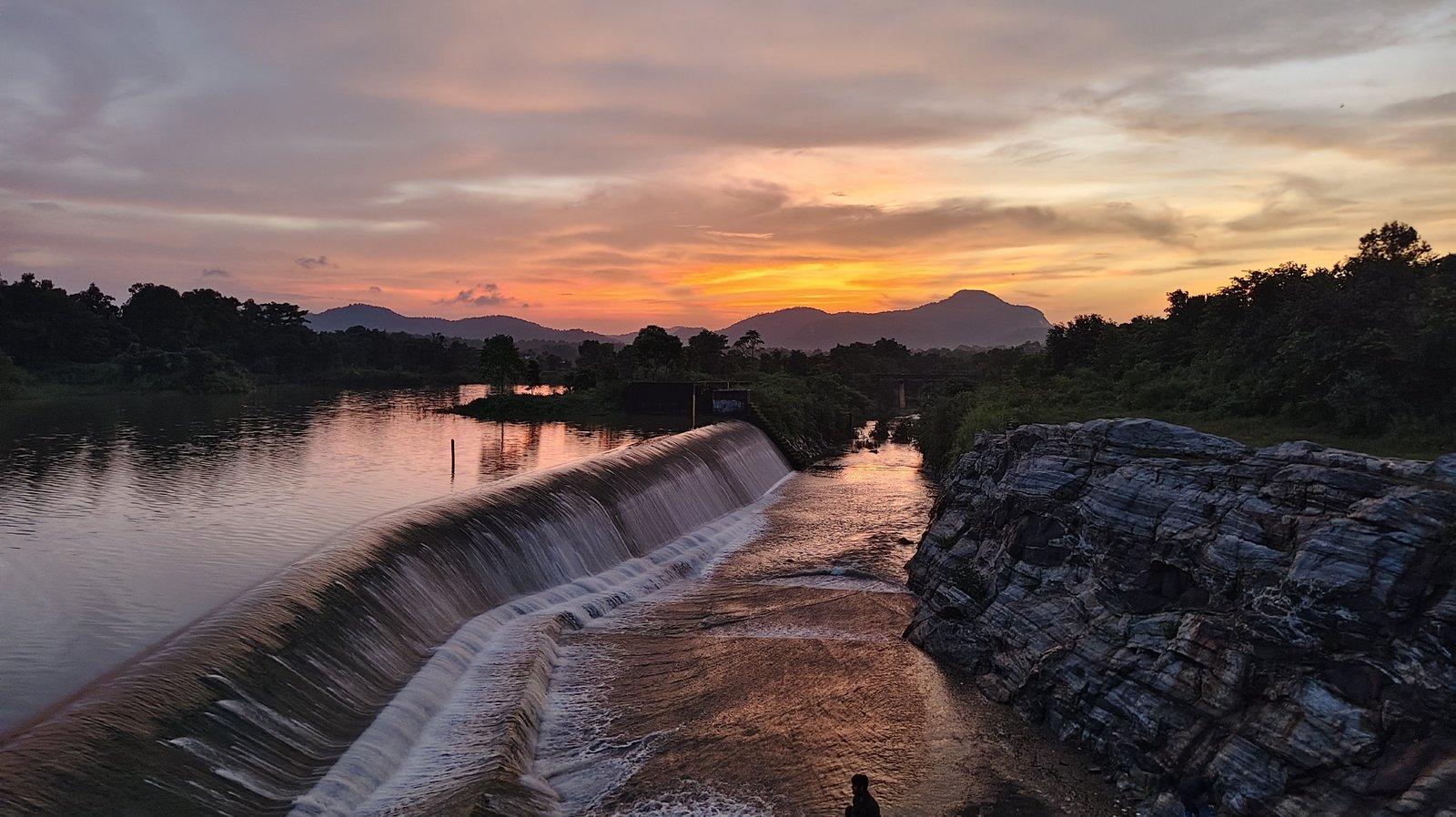
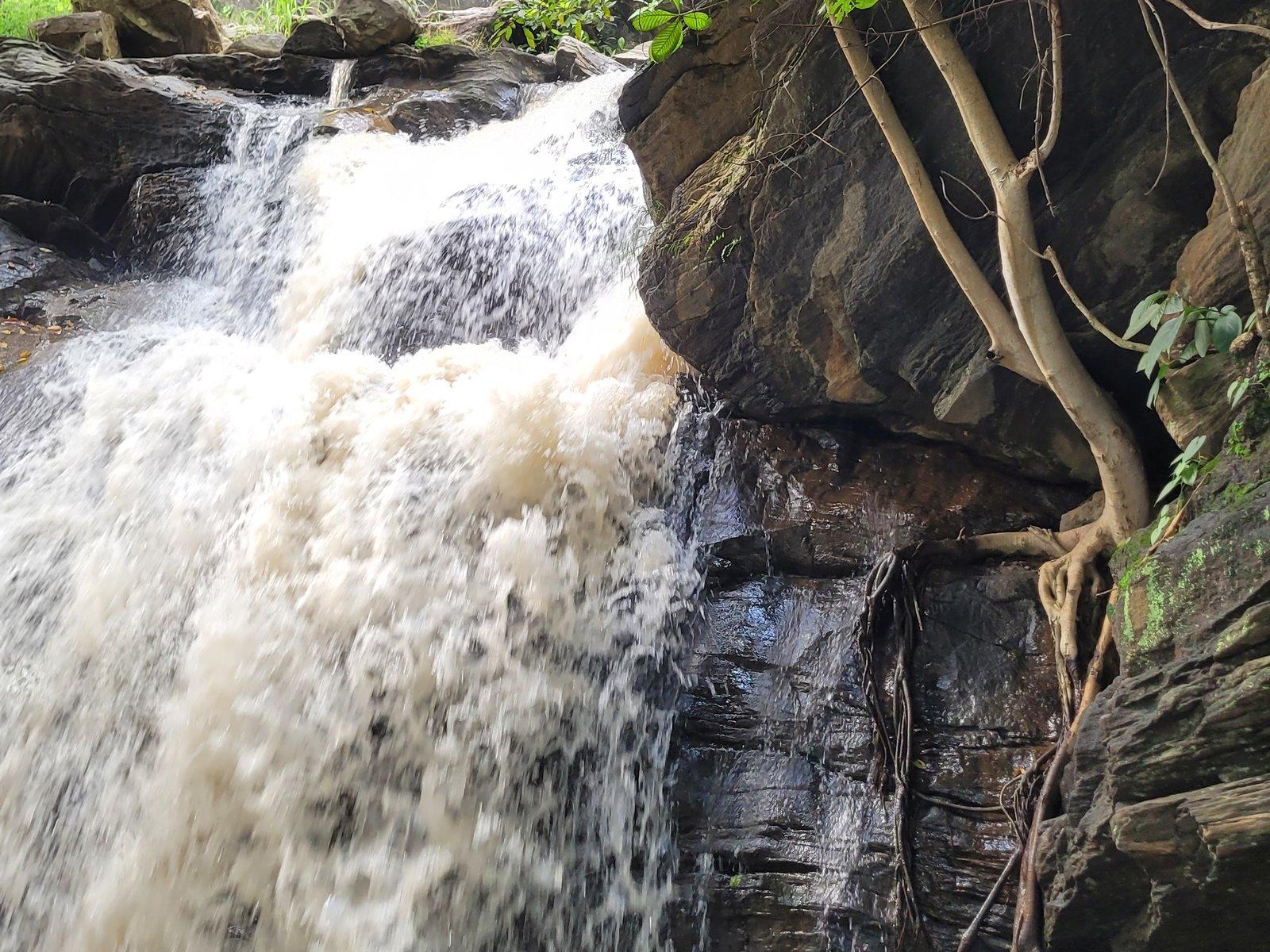
Bhadra is monsoon time, and the hills are at their greenest. The falls run fullest in these weeks, but they are also at their most dangerous: in July 2019 police rescued two students caught by a flash flood while bathing at Bamni Falls. Stay out of the water, wear shoes with a good grip and keep off forest trails after dark, when elephants move through these hills. Our guide to Purulia in monsoon covers roads, weather and what to pack.
Bhadu itself is not staged for visitors, and we cannot promise you will see it. If you are in a village during the month, listen from a respectful distance, step into a courtyard only when invited, and ask before photographing anyone, especially girls. On the last day of Bhadra, an immersion procession may pass along the road to a pond or river; let it pass, and keep your distance at the water's edge.