At a glance
- Jhumur (also Jhumar or Jhumair) is the folk song and dance tradition of the Chota Nagpur plateau, and Purulia, once Manbhum district, is one of its heartlands.
- Its songs range from Radha–Krishna love and mythology to drought, migration, coal mines and campaigns against child marriage and witch-hunting.
- Village Jhumur is sung to dhol, madal, dhamsa and shehnai; the courtly Darbari style adds harmonium and pakhawaj.
- It belongs to festivals such as Karam, Tusu and Bandna, and to the nachni dancers whose art carried it for generations.
- The surest places to hear it are festivals: Tusu in mid-January, Karam in Bhadra and the Chhau-Jhumur festivals held in villages such as Charida.
Jhumur is the folk song of Purulia and the old Manbhum region: short, rhythmic songs about love, gods, seasons and hard times, sung in the local Bengali and Kurmali to drums and the shehnai, and often danced to. If you hear a Jhumur song in Purulia today, it will most likely be at a village festival such as Tusu or Karam, at a Chhau-Jhumur festival, or at a cultural programme. It belongs to the whole Chota Nagpur plateau, but Manbhum has always been one of its heartlands.
What is Jhumur?
Jhumur, also written Jhumar or Jhumair, is a song tradition of the Chota Nagpur plateau: Jharkhand, south-western West Bengal and northern Odisha. Migrant workers carried it to the tea gardens of Assam, where it is still sung. It is sung mainly in Bengali, Kurmali and Nagpuri, and tribal communities sing blends of these with their own languages.
Manbhum, the old district from which Purulia was carved in 1956, is so closely tied to the form that one scholar, Prasenjit Panda, calls it Gaanbhum, the land of song. You can read about that history in From Manbhum to Purulia.
Nobody agrees on where the name comes from. One explanation links it to jhum, shifting cultivation, and to the calls of women working the fields; another to the movement of the body in dance; a third to the chime of a dancer's anklets.
How old is Jhumur?
Its age is debated. Banglapedia traces its beginnings to indigenous communities, especially the Santals, who still sing and dance Jhumur at the Karam festival, and says it later spread among everyone in the region. Some scholars see it as a folk offshoot of the Charyapada, the Buddhist songs of the late first millennium; others point to references in Vidyapati's Padavali and the music treatise Sangeet Damodar.
What is clear is that it is an oral tradition, passed from singer to singer rather than written down. Jhumur also reached the city: by the 19th century it was a popular entertainment in Kolkata, and Banglapedia notes that both Rabindranath Tagore and Kazi Nazrul Islam wrote songs in the Jhumur style.
What are Jhumur songs about?
A Jhumur song is usually short, built around a refrain and ending in a signature verse that names its poet. The themes are wide:
- Love and longing, often through Radha and Krishna. Many songs are written as dialogues, which gives them a dramatic edge.
- Gods and myths, from the epics and the Puranas.
- Riddles and wordplay, sung as contests of wit.
- Everyday life and hardship: drought, floods, poverty and separation.
- Social and political change. Panda lists songs about migration to the Assam tea gardens, the "coolie train", work in the Dhanbad coalfield and Birsa Munda's struggle, and even the Covid-19 pandemic. Jhumur has also been used in Purulia and Bankura to campaign against child marriage and witch-hunting.
Panda lists composers such as Barjuram, Bhabaprita and Dwija Gadadhar among those whose verses shaped the form, though many songs have no known author.
Types of Jhumur
Singers and scholars sort Jhumur in several overlapping ways, and the lists do not always match.
- By style: older forms such as Adivasi, Kathi and Nachni Jhumur, and more polished forms such as Darbari (courtly), Pala and Dand.
- By season: Bhaduria songs for the month of Bhadra, Chaitali for Chaitra, Ashadiya for Asharh, and Baramasya, which runs through the twelve months.
- By place: names such as Baghmudiya (from Baghmundi), Jhaldoya (from Jhalda) and Barabhuyan (from Barabhum) show how closely the songs belong to particular corners of the district.
- By way of singing: the high-pitched, shouted Hanka or Tairh, the Danrh sung standing, and the seated Baithaki or Darbari style.
Banglapedia also lists a "Chhau jhumur" in Purulia, and a 2025 ETV Bharat report quotes experts saying the tunes of Chhau and Jhumur are the same. The two arts share stages, festivals and drummers; see our guide to Purulia Chhau dance.
Instruments and dance
In the villages, Jhumur is sung to drums: the dhol, the madal and the deep dhamsa, with the reedy shehnai carrying the tune. The refined Baithaki or Darbari style, once heard in landlords' courts, uses harmonium and pakhawaj.
Jhumur is rarely just listened to. Jhumair is also the name of the dance that goes with it, and Banglapedia describes Jhumur song and dance as group performances, still part of Karam in Santal villages. The most famous Jhumur dancers, though, have been the nachnis.
The nachni and the rasik
A nachni is a woman who sings and dances Jhumur professionally. Traditionally she works with a rasik, a connoisseur of poetry and music who often plays Krishna to her Radha and manages her performances. Landlords were once their main patrons; after independence land reform shrank that patronage, and nachnis were increasingly stigmatised.
The People's Archive of Rural India told the story of Charubala Kalindi, a nachni from Senabana village in Purulia's Arsha block, who was still giving high-energy performances at 65. It describes a Jhumur season running roughly from October to May, all-night shows for clubs and puja committees, and modest pay. In Senabana, a nachni welfare society runs a school.
Purulia's best-known Jhumur singer was Sindhubala Devi (1912–2004). The district administration describes her as a foremost Jhumur artist of Purulia; she sang regularly on All India Radio Kolkata from 1975 and received the state's Lalan Prize in 1993. The cultural organisation Banglanatak credits the singer and composer Salabat Mahato with reviving traditional Jhumur across Bengal, Jharkhand and Odisha.
Jhumur and Purulia's festivals
Jhumur runs through the farming year, and the festivals are where it is heard most.
- Karam, in Bhadra (August–September), is the oldest link. Villagers plant Karam branches in the village ground with songs and dance, and later immerse them in a river; around Murguma it is a monsoon sight.
- Bhadu, also in Bhadra, has its own body of women's songs; read about the Bhadu festival of Manbhum.
- Bandna, the cattle festival after the harvest; see Bandna and Sohrai.
- Tusu, ending at Makar Sankranti in mid-January, fills fairs such as the one at Deulghata with songs; see our guide to Tusu Parab.
Where to hear Jhumur songs in Purulia today
There is no fixed concert calendar, so the honest answer is: follow the festivals.
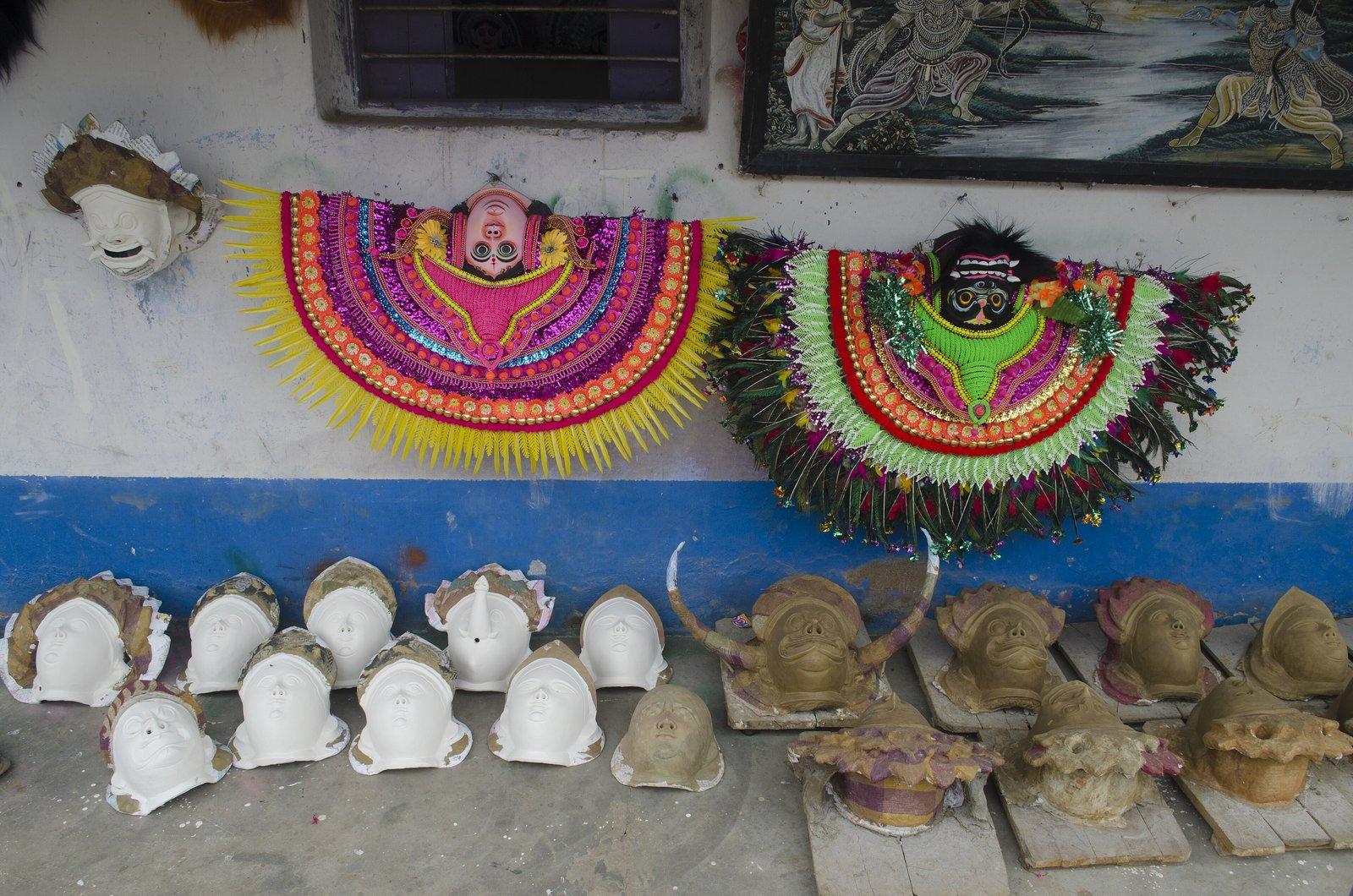
- Chhau-Jhumur festivals. The mask makers of Charida, 10 km from the resort, host a festival with Chhau and Jhumur, usually in winter or early spring. In 2023 a Chau Jhumur festival was held at Bamnia in Jhalda II block from 28 to 30 March, part of the state's Rural Craft and Cultural Hubs programme with UNESCO.
- Tusu and Karam in the villages, if your dates match.
- Government cultural programmes. The state pays folk artists a monthly stipend and books them for shows; PARI reported ₹1,000 a month in 2019. The project's Folk Library lists 2,943 Jhumur artists across Bankura, Purulia and South 24 Parganas.
At the resort we can arrange Baul songs, Chhau and Santhali dance on request; see our evening experiences. For Jhumur itself, a festival is worth timing a trip around. Use our month-by-month guide to plan.