At a glance
- April and May average about 37–38 °C by day in Purulia town, and heatwaves have pushed readings to 44 °C.
- Summer suits travellers who want quiet roads and village festivals, not waterfalls, treks or palash.
- Sightsee from sunrise to about 9.30 am and after 4.30 pm, and stay indoors through the midday heat.
- The Gajan season, also called Chhow Parab, runs from mid-March to May, with an all-night Chhau at Lahariya in mid-April.
- Never swim in the reservoirs to cool off, and keep cigarettes and fire out of the dry forest.
Purulia in summer, from April to early June, is hot and dry, and it is worth visiting only if you plan your days around the heat. IMD averages for Purulia town are about 37–38 °C by day in April and May, heatwaves push readings to 44 °C, and the waterfalls dry up. In return you get quiet roads, the season of Gajan and Chhau, village festivals and long, golden evenings by the dams of the Ajodhya Hills.
How hot is Purulia in summer?
These are India Meteorological Department (IMD) averages for Purulia town for 1991–2020, with the highest temperature on record for each month.
| Month | Average day | Average night | Highest recorded | Average rain |
|---|---|---|---|---|
| March | 33.1 °C | 19.8 °C | 41.7 °C | 26 mm |
| April | 37.4 °C | 24.2 °C | 46.0 °C | 40 mm |
| May | 37.9 °C | 25.9 °C | 46.3 °C | 82 mm |
| June | 35.2 °C | 26.0 °C | 46.2 °C | 251 mm |
Heatwaves go well beyond the averages. On 28 April 2022, Purulia's 44.3 °C was the highest reading in West Bengal that day, 6.5 degrees above normal, PTI reported. In April 2024, when the district's maximum reached 44 °C, Sangbad Pratidin found tourism on Ajodhya Hill had almost stopped, with the heat and the general election both to blame.
Nights bring little relief, averaging 24–26 °C in April and May. The heat is dry in April, with evening humidity around 36%, and more humid in May, when evening humidity averages 48%.
Late afternoons can also bring a nor'wester, or kalbaishakhi: a sudden storm with strong wind, heavy rain and sometimes hail. These storms usually start forming in April, bring welcome relief from the midday heat, and can bring down trees.
Is it worth visiting Purulia in summer? An honest answer
Summer is not Purulia's best season, and we would rather say so. But it does suit some travellers.
Go in summer if you:
- want empty viewpoints and easy bookings;
- are interested in Gajan, Chhau and village festivals, which peak in these months;
- are happy to start at dawn, rest through the afternoon and go out again at dusk.
Choose another season if you:
- want waterfalls: Bamni and Turga thin out as the heat builds and can dry up by early summer;
- want long walks, treks or rock climbing, which are cool-season activities;
- are travelling with small children, elderly relatives or anyone who struggles in the heat;
- are coming for the palash, which is mostly over by mid-April.
Our month-by-month guide compares every season.
A heat-smart day in Purulia
The trick is to use the long days at both ends. The sun rises at about 5.25 am in mid-April and about 5 am by June, and sets at about 6.05 pm in mid-April and 6.30 pm by late June.
| Time | What to do |
|---|---|
| Sunrise to about 9.30 am | Sightseeing while it is cool: the plateau, Marble Lake, Upper Dam, Sita Kund |
| 10 am to 4 pm | Indoors: a long lunch, rest and plenty of fluids |
| 4.30 pm to sunset | The dams and lakes in the late light |
| After sunset | Dinner and an evening in; keep off forest roads after dark |
If you want a climb, such as the hundred-plus steps of Mayur Pahar on the plateau or the long stairway at Joychandi Pahar, do it at first light; by mid-morning the rock and steps are already hot. Leave the steep descent to Bamni Falls for another season, as the climb back is far harder in the heat and the falls may be dry anyway.
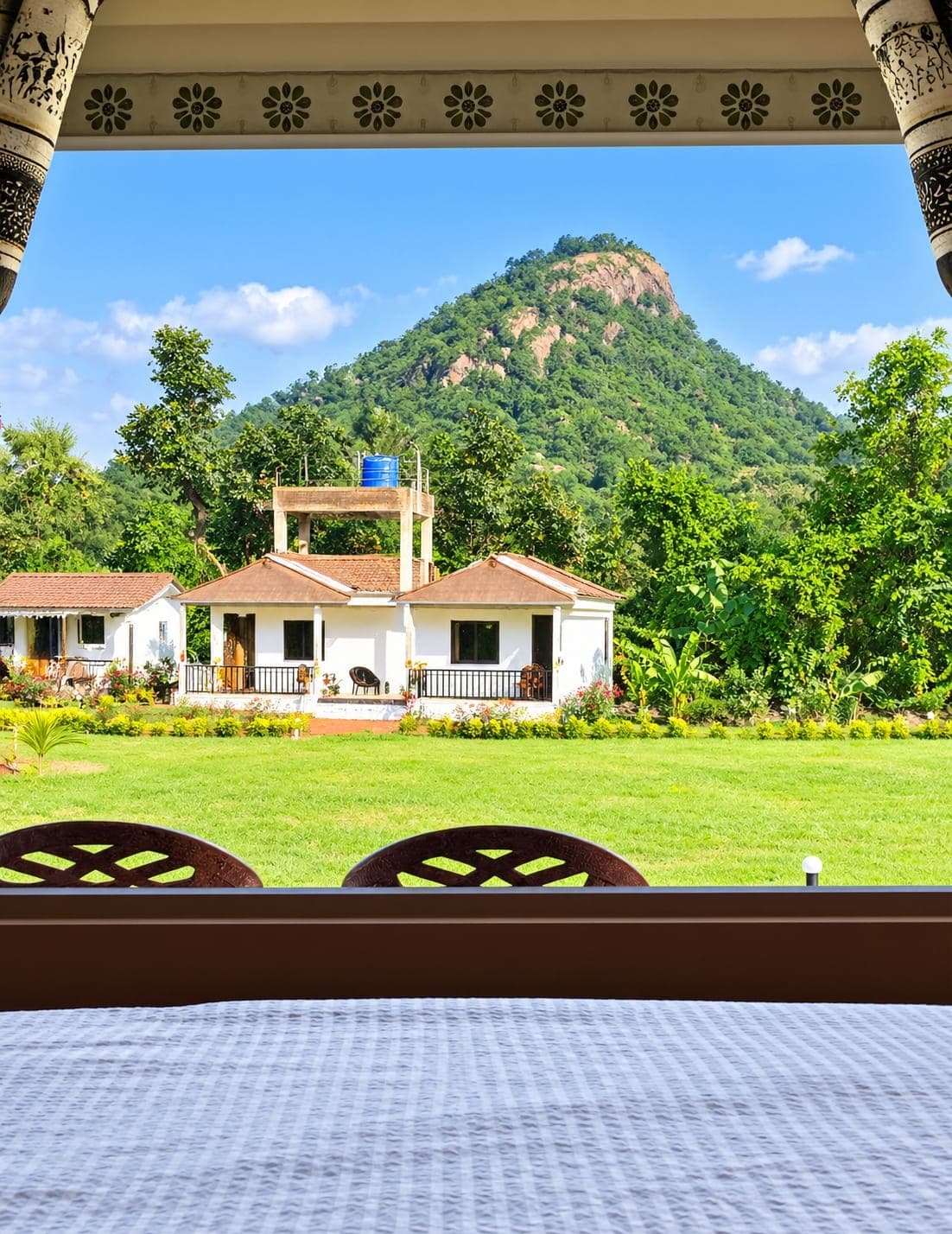
The National Disaster Management Authority advises staying out of the sun especially between noon and 3 pm, so the midday break matters. At Rangamati the Double Bed rooms are air-conditioned, and the resort has 24-hour power backup and water supply.
Dams and lakes at golden hour
The reservoirs are summer's best evening outing, when the light softens and a breeze comes off the water.
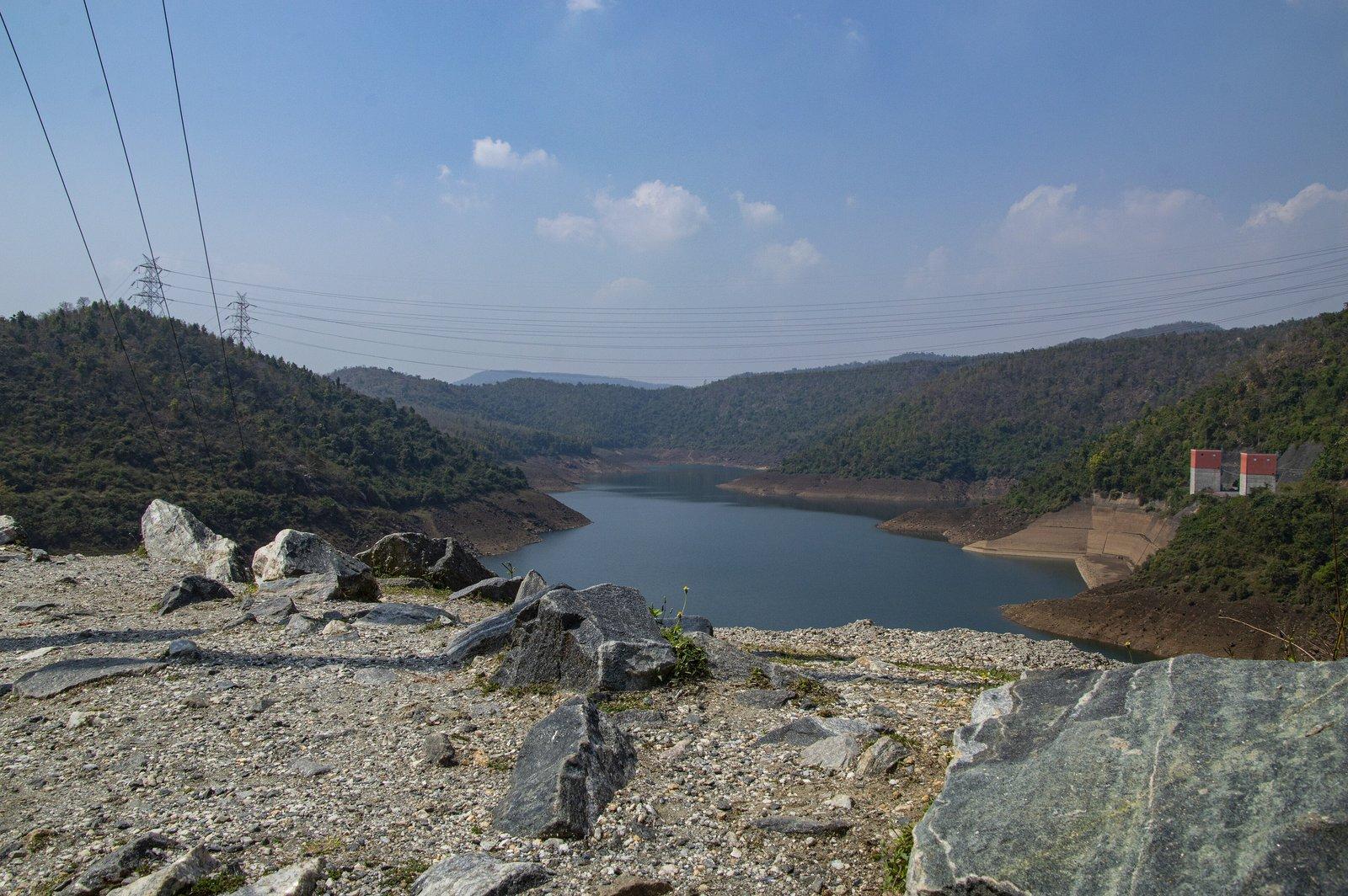
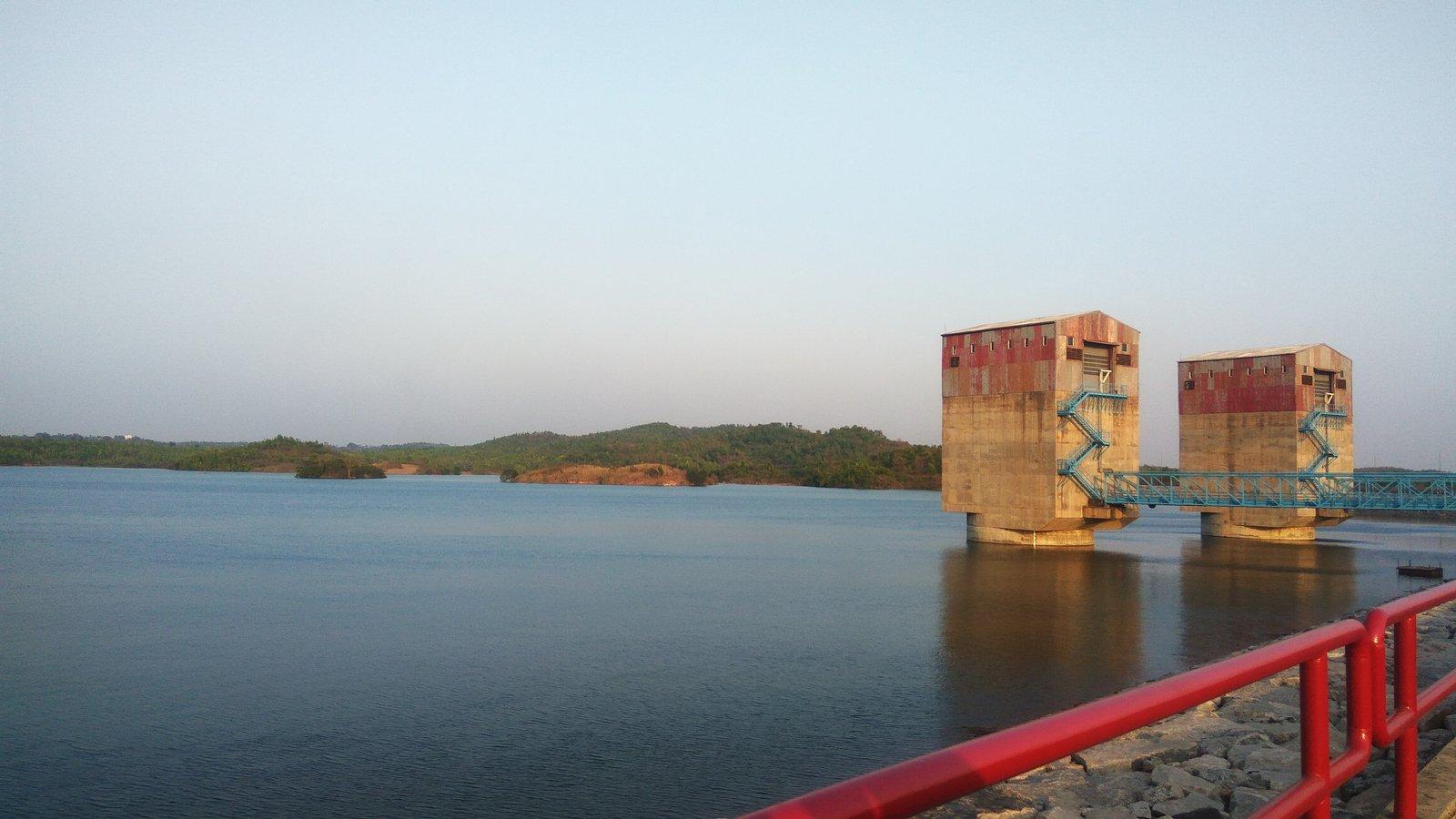
- Lower Dam, 11 km. The weather here turns more pleasant from late afternoon. It belongs to a working power station, so keep off the embankment slopes.
- Upper Dam, 16 km. A road runs along the top of the embankment, an easy, level place for a slow walk. The water level can move by up to about 22 m as the plant runs, so stay away from the edge.
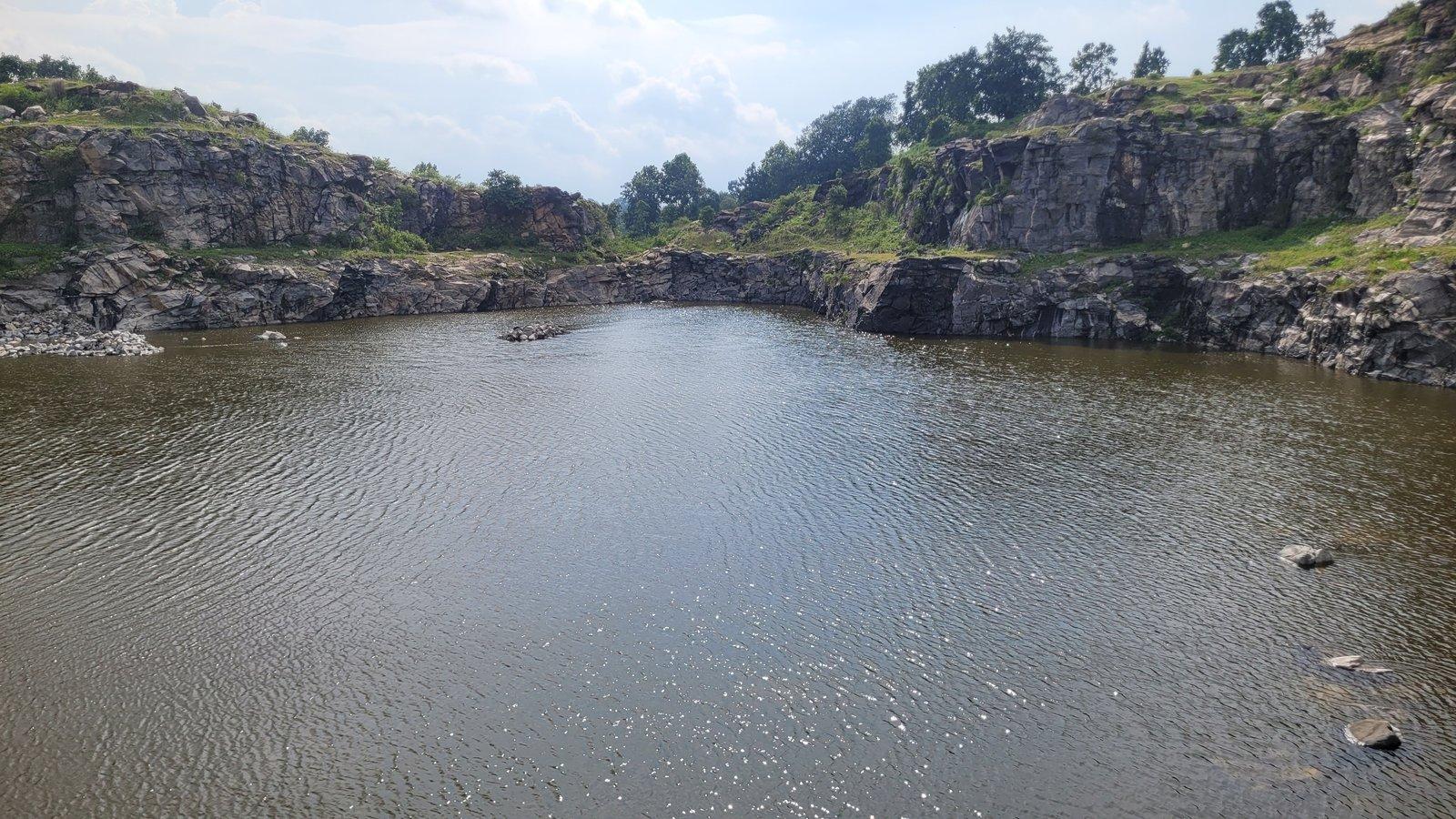
- Marble Lake, 19 km. Clear summer skies bring out the blue of this flooded former quarry. It is about 40 feet deep and ringed by steep rock.
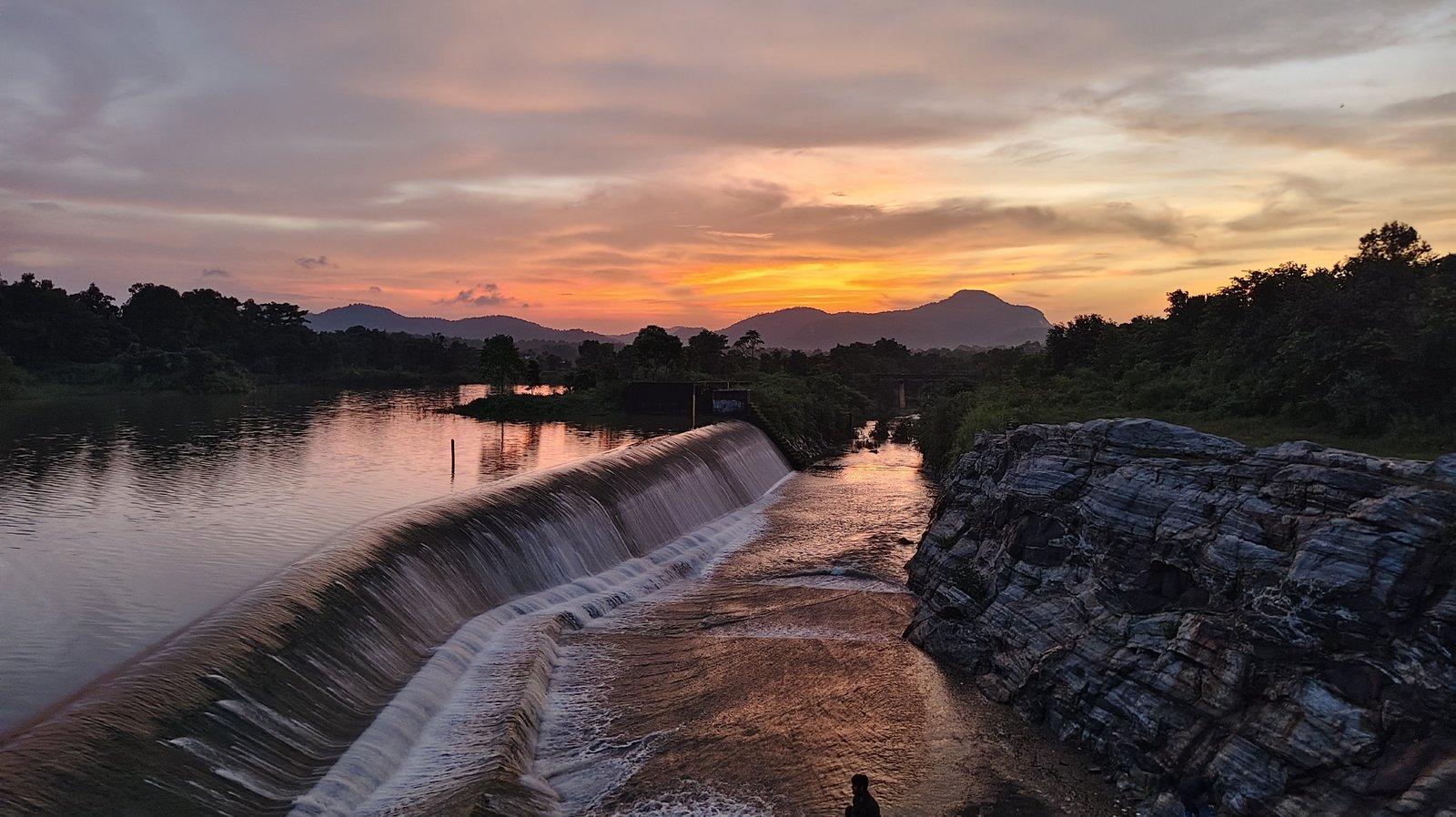
- Murguma Dam, 37 km. The embankment runs for over 2 km, and sunset over the lake, with the Ajodhya Hills behind, is the reason to make the longer drive.
What's on in the hot months
Summer is festival season in Purulia's villages. The district administration's calendar lists several, and these are community occasions, so watch respectfully and ask before taking photographs.
- Gajan, also called Chhow Parab, mid-March to the end of May. The Shiva festival with which Chhau is closely linked. UNESCO describes Chhau as tied to the spring festival Chaitra Parva and performed at night in an open space; read more in our guide to Purulia Chhau.
- The Lahariya Gajan and Charak fair, mid-April. At Lahariya Shib Mandir, 10 km from the resort, worship begins two days before Chaitra Sankranti, and the night before brings an all-night Chhau performance and the fair. TV9 Bangla reported in 2025 that the fair drew several thousand people, including visitors from Jharkhand, and that it is known for bringing Hindus and Muslims together. Expect slow traffic that week.
- Dharma Thakur's puja and fairs, mid-April to mid-May. Held in various parts of the district.
- Disum Sendra, on Baisakhi Purnima (April–May). The Santal hunting festival of the Ajodhya hills, when large numbers gather on the plateau, some at Sita Kund. Hunting is illegal, and the forest department runs check posts at the entry points and holds cultural programmes, so expect crowds and checks.
- Rohini, on 13 Jaistha (about 28–29 May). The day farmers sow seed and celebrate.
Spring is also when villagers gather fallen mahua flowers in the forest. They are a valuable source of income, so leave them where they lie.
Heat and safety checklist
- Drink before you are thirsty. NDMA recommends water through the day, plus ORS, lassi, lemon water or buttermilk, and limiting alcohol, tea, coffee and fizzy drinks.
- Dress for it. Light, loose cotton, a hat or umbrella, and sunglasses.
- Carry water in the car. Shops are few once you leave the main roads.
- Never leave children in a parked car, even for a few minutes.
- Know the signs of heat stroke. Move the person into shade, give ORS if they are conscious, and get to a health centre fast. There is a primary health centre on Ajodhya Hill and a rural hospital at Pathardihi near Baghmundi.
- Keep fire out of the forest. Spring and summer are fire season. In March 2022 a fire spread through several of the district's forests, and experts blamed many such fires on carelessness, including by visitors. Don't smoke or light fires.
- Respect the storms. When dark clouds build in the afternoon, get off embankments and hilltops and away from tall trees.
- Be out of the forest by dusk, when elephants move through these hills.
Quiet roads, and why your visit helps
The empty roads are real. In April 2024, Sangbad Pratidin found the Upper Dam without visitors, drivers and guides who had gone more than a week without work, and mask sales at Charida down sharply. A summer visit keeps some income flowing in the leanest months.
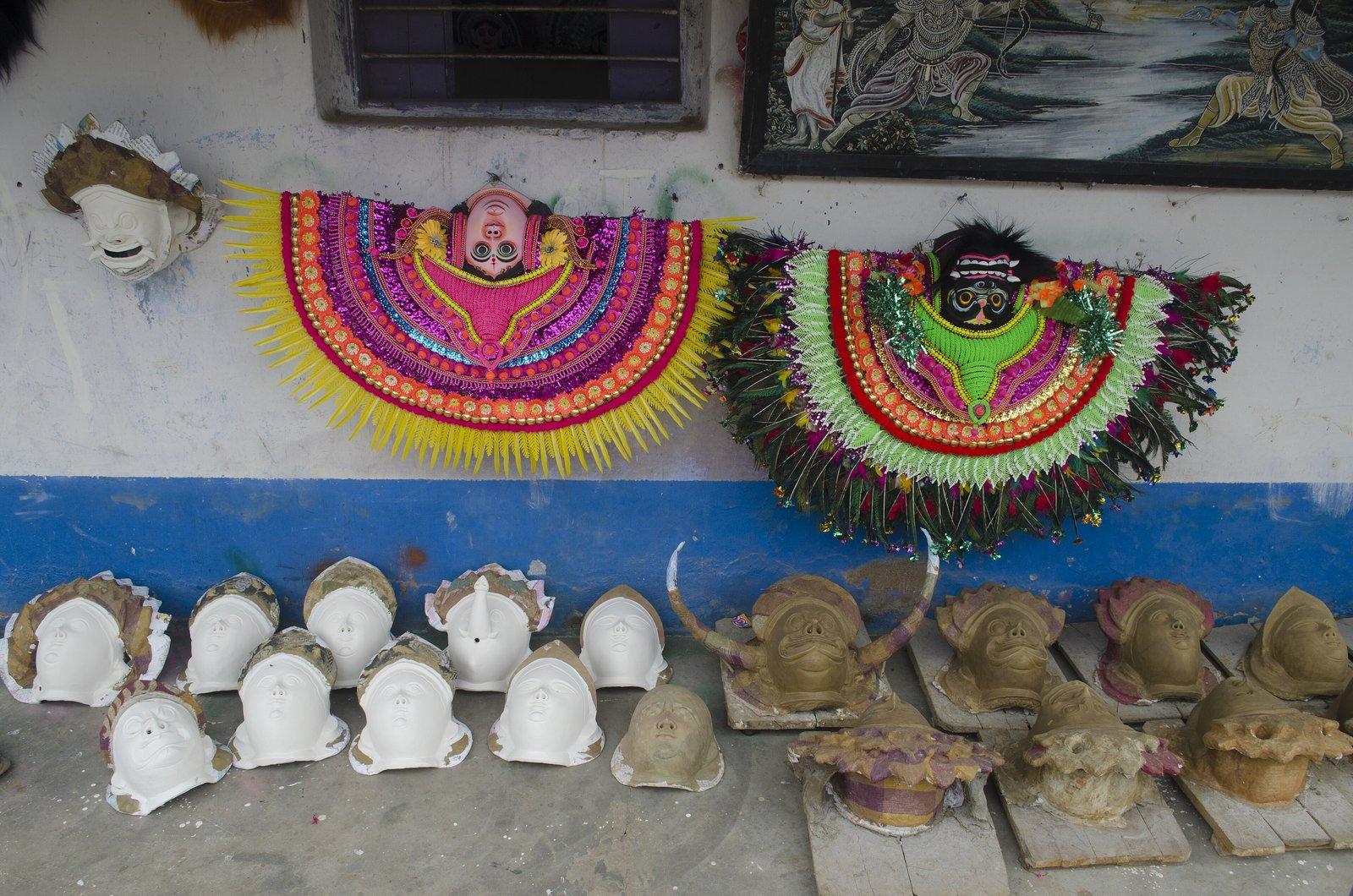
If you go, buy directly from the mask makers at Charida, 10 km away, who work in open-fronted workshops along the main road. At Pakhi Pahar, carving pauses in extreme heat, though the giant birds can still be seen from the road. Pack for the sun with our list of what to bring to Purulia.