At a glance
- Palash flowers between February and April; in Purulia the fullest bloom usually comes in March.
- The bloom varies from year to year, and a poor winter can thin it, so treat any date as a guide.
- The Matha forest, the Ajodhya plateau, Khairabera and Baranti are all named by local reporters as palash country.
- Dol and Holi fall in the same weeks, and rooms across Purulia have sold out in the days before Dol.
- Leave the flowers on the tree: palash is slow-growing and its blossoms feed birds and insects in the dry months.
Palash season in Purulia usually runs from late February into early April, and in most years the trees are at their fullest in March. The palash, or flame of the forest (Butea monosperma), flowers on almost bare branches, so whole slopes of the Ajodhya Hills turn orange-red above the red earth. The peak moves a little each year with the winter weather, and it overlaps with Dol and Holi, the district's busiest spring weekend.
When is palash season in Purulia?
Botanical references give palash a flowering window of February to April. They also note that the trees do not flower equally well every year: a winter that is too cold, too dry or too wet can thin the display. A Ranchi University geologist quoted by Mongabay India in April 2026 put the bloom in neighbouring Jharkhand in February and March, when the rest of the forest is leafless.
Reports from Purulia fit that pattern. An IANS photograph taken on 7 March 2023 shows a Purulia road lined with palash in full bloom, and Sangbad Pratidin was still reporting the bloom, and full hotels, on 24 March 2024, on the eve of Dol. Outlook Traveller's writer described April as the month the forests turn into "a sea of red", so late trees do linger.
| Period | What you are likely to see | Purulia weather (IMD average) |
|---|---|---|
| Late February | The first trees in flower; how many varies by year | Days about 28 °C, nights about 15 °C |
| March | The main bloom in most years, including the Dol and Holi weeks | Days about 33 °C, nights about 20 °C |
| Early to mid-April | Late trees still in flower as the bloom thins | Days about 37 °C, nights about 24 °C |
The temperatures are 1991–2020 averages for Purulia town. If you can travel at short notice, ask your hosts how the bloom looks that week before you book.
What palash looks like, including yellow and white trees
The flowers are a deep orange-red and crowd the bare branches, which is why a hillside in bloom can look as if it is on fire. Rabindranath Tagore likened the flower to fire, and West Bengal Tourism describes Purulia as a land "of red soil and red blooms of Palash".
Not every tree is orange-red. In its March 2024 report, Sangbad Pratidin described yellow, or basanti, palash across the Rarh region that year, and rare white palash seen in several places, alongside the reddish new leaves of the kusum trees. Don't plan a trip around finding a white tree; enjoy it if you do.
Palash matters well beyond the view. The flowers are a traditional source of red and orange Holi colour, the tree is one of India's main hosts for the lac insect, its leaves were long used as plates, and it is the state flower of neighbouring Jharkhand. In the dry months its blossoms are also a key source of nectar for birds and insects.
Where to see palash around the Ajodhya Hills
Palash grows scattered through the district's dry deciduous forest rather than in one grove, so the best plan is a drive that links several forest areas. Sangbad Pratidin's spring reports single out the Ajodhya Hills and their foothills, and name Khairabera, the Matha forest, Duarsini, Joychandi Pahar, Garh Panchkot and Baranti among Purulia's palash country.
| Place | Road distance from the resort | Why go in palash season |
|---|---|---|
| Matha forest, around Matha Buru | 3 km | Sal and teak forest mixed with palash, kusum and mahua |
| Upper Dam | 16 km | Palash in the forest around the reservoir |
| Ajodhya Hill Top and Mayur Pahar | 20 km | Plateau forest, with a tower on Mayur Pahar looking over it |
| Khairabera Dam | 22 km | Palash trees round the lake, usually at their best around Holi |
| Bandwan Duarsini | 76 km | Palash is one of the main trees of its rolling forest |
| Garh Panchkot and Baranti | 110–120 km | The March bloom around the fort ruins and the lake |
Close to home: the Matha forest
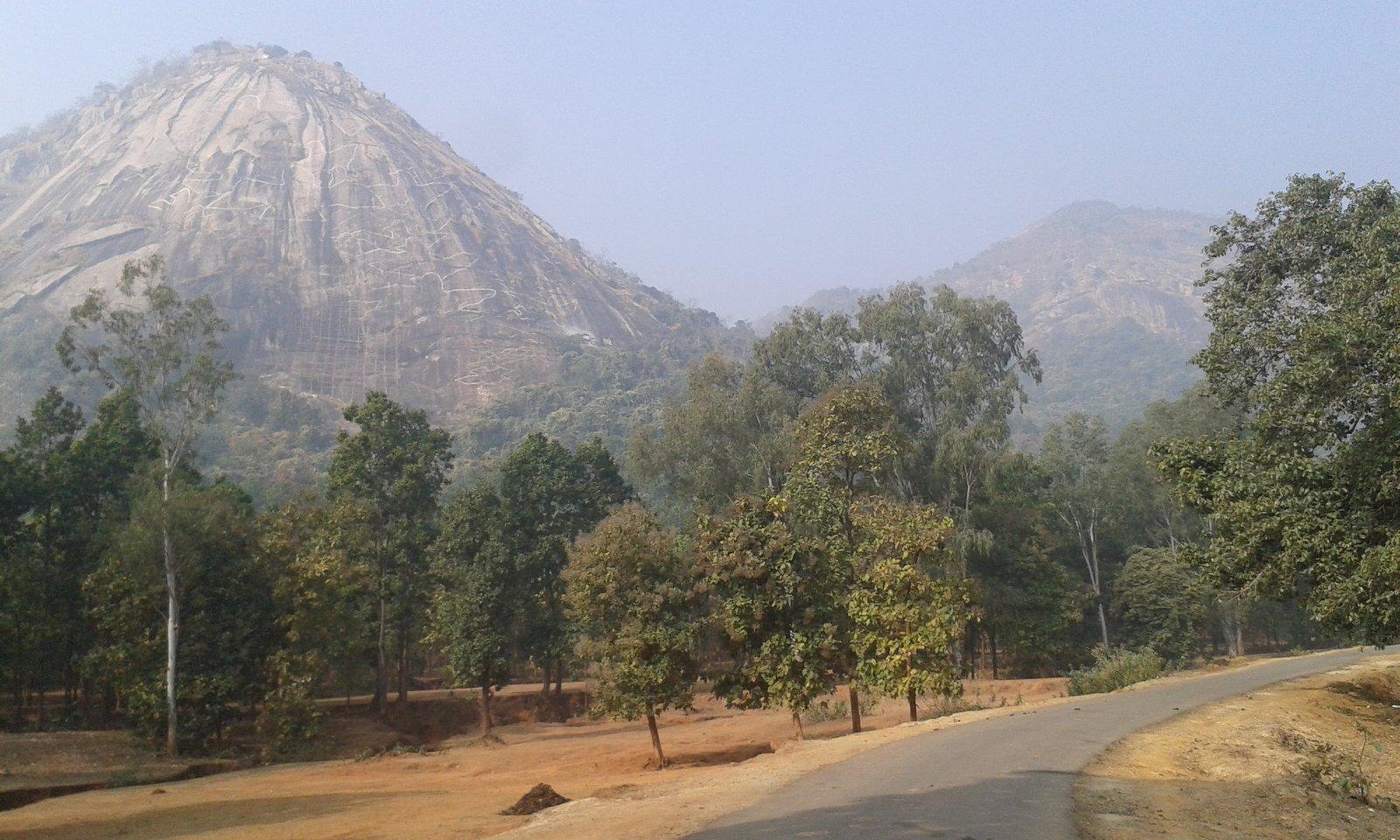
The forest around Matha Buru is mostly sal and teak, mixed with palash, kusum, mahua and kend. From our cottages at the foot of the hill it is the nearest palash you will see, and the drive to Pakhi Pahar, the bird-carved rock hill 6.5 km away, runs through the same forest.
On the Ajodhya plateau
The hill road climbs from Baghmundi past Turga and Bamni falls to the Upper Dam, where palash flowers in the surrounding forest in spring. Higher up, the flat ridge of Ajodhya Hill Top is about 20 km from the resort. Climb the hundred-plus steps of Mayur Pahar to its observation tower for the widest view over the forest below.
Khairabera and further north
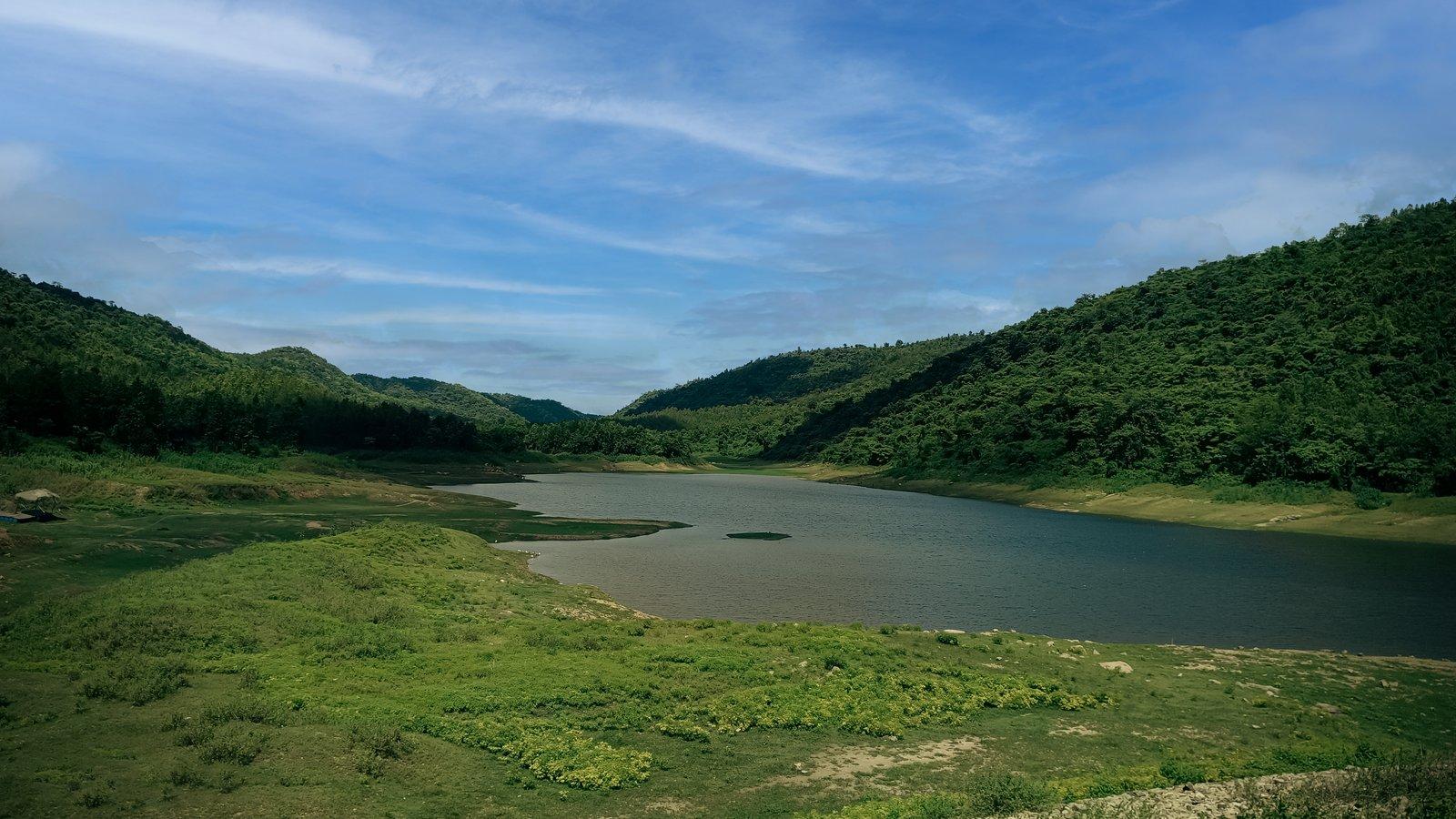
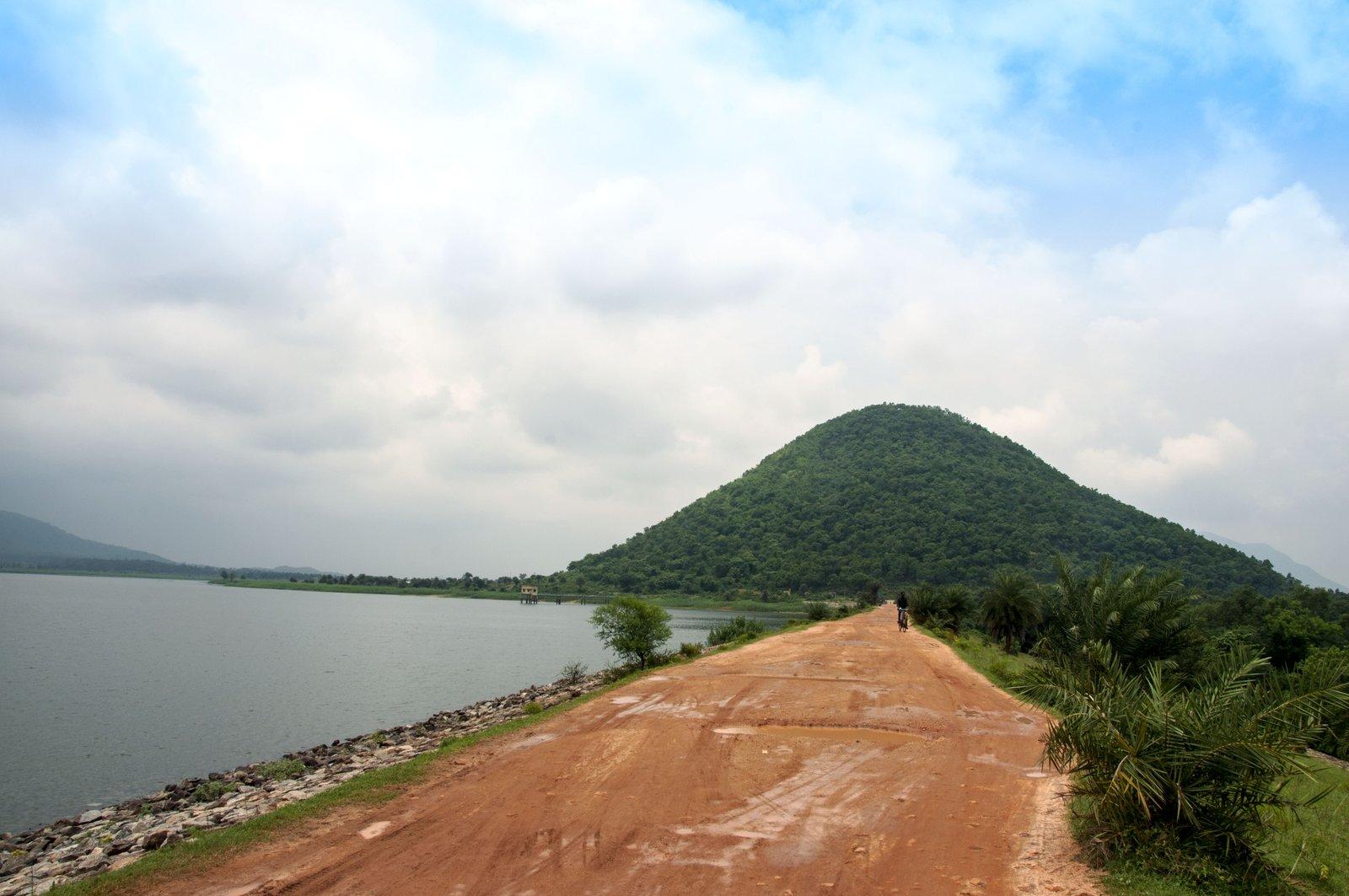
Khairabera Dam, 22 km away at the foot of the Chemtaburu ridge, is a good palash stop: the trees round the reservoir usually flower around Holi. A forest road links it with Ajodhya Hill Top, about 21 km, so the two can be combined; ask your driver about its condition first.
Baranti, 120 km north, gets a second wave of visitors each March when palash turns the hills round its lake red. It pairs with Garh Panchkot and Joychandi Pahar, as in our north Purulia day trip, though the distance makes it a long day or an overnight stay.
A palash drive from Matha: a suggested day
This route keeps the driving short and puts you in the best light at both ends of the day.
- Leave soon after sunrise, which is about 6 am in early March and nearer 5.50 am by late March, and drive slowly through the Matha forest.
- Stop at Pakhi Pahar, where the carved birds can be seen from the road; the women's guide group usually starts later in the morning.
- Drive north to Baghmundi and up the Ajodhya Hill road. Turga Falls (11 km) and Bamni Falls (13 km) are on the way, though by March they may be thinning.
- Continue to the Upper Dam and the plateau, with Sita Kund and Mayur Pahar close together at the top.
- Eat simply at the plateau's small local eateries, or carry a packed lunch.
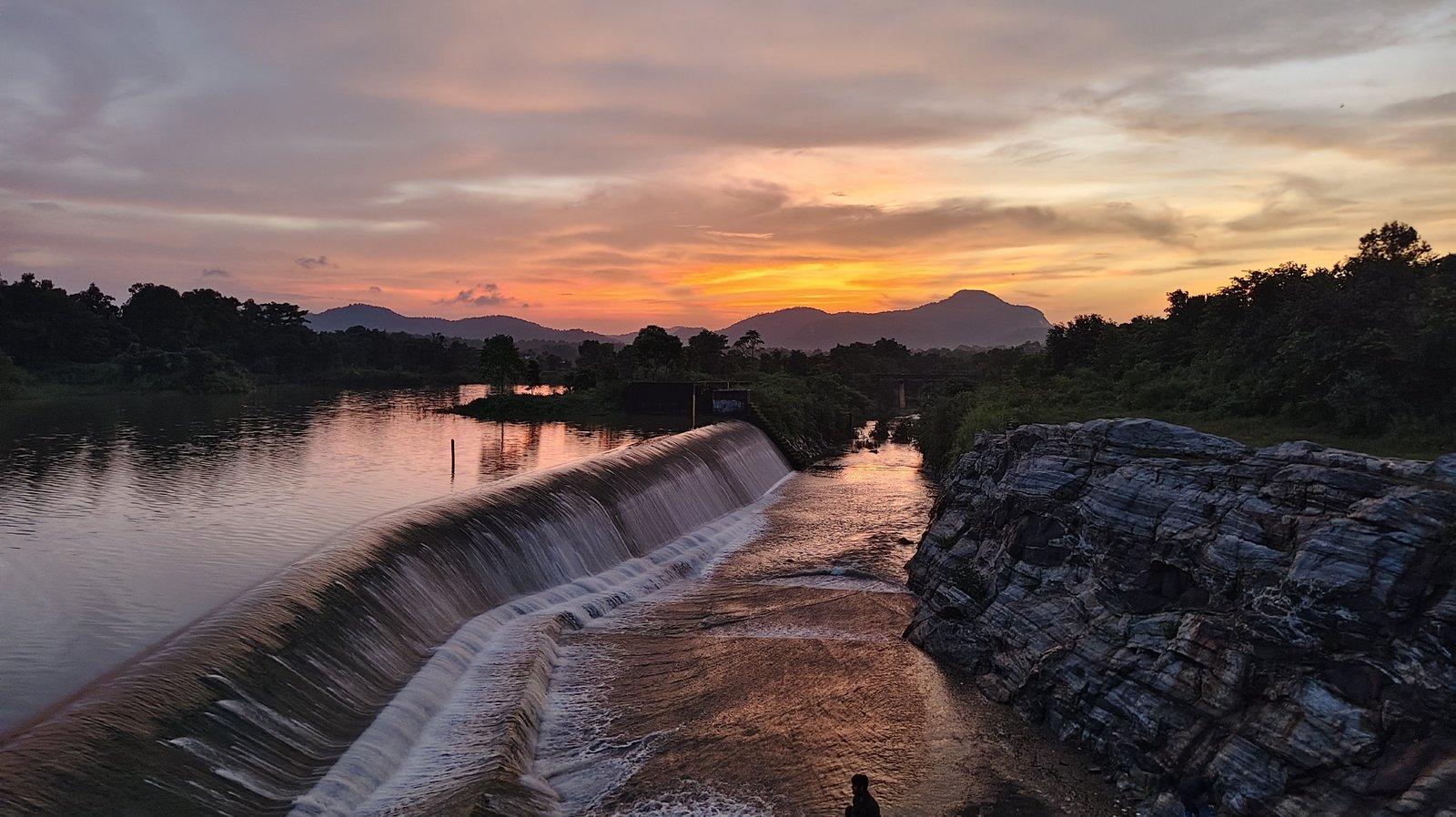
- Spend the late afternoon at Khairabera, where the low sun lights the lake and the trees on its shore.
- Be out of the forest by dusk. Elephants move through these hills, mostly after dark.
The resort can arrange a local guide and a sightseeing cab with a driver on request.
Palash photography tips
- Use the soft light. Early morning and late afternoon give the flowers depth; by midday in March the light is flat and the heat is building.
- Shoot against the sky. Palash glows when the sun is behind the petals, and a clear blue sky makes the colour stand out.
- Go long for hillsides. A zoom lens compresses layers of flowering trees into a pattern, which works well from Mayur Pahar or the hill road.
- Show the setting. Red earth paths, sal trunks and mud-walled houses give context, but ask before photographing people or their homes.
- Watch for birds. Birds come to the flowers for nectar; stay still near a tree in full bloom and wait.
- Work around haze. Spring is also forest-fire season, and smoke can dull distant views; on hazy days go in close.
Never climb a tree or bend a branch for a picture. Our photographer's guide to Purulia has more on light and locations.
Leave the flowers on the tree
Palash is slow to grow. A Krishi Vigyan Kendra scientist told Mongabay it takes at least 10 years to mature and is pollinated by birds, and in the dry months its flowers feed many birds and insects. Breaking off a branch for a photo or a bouquet takes away next year's flowers as well as this year's.
Fallen blossoms have a use too. Mongabay reported women in Palamu, Jharkhand, drying palash flowers to make abir, the coloured powder of the spring festivals. Leave them on the ground for the people who gather them.
Sangbad Pratidin reported in 2024 that several tourism operators had pledged eco-friendly Dol celebrations to protect the trees, and that the district police had been watching over palash conservation since the year before.
Palash, Holi and booking ahead
The bloom and the spring festivals arrive together, and rooms go fast. Sangbad Pratidin reported in 2018 that Dol weekend stays across Purulia were full, and in March 2024 it found hotels, resorts and government lodges booked out two or three days before Dol, with late arrivals asking for a veranda or a cot.
The central government's 2027 holiday list puts Holi on Tuesday 23 March 2027. In Bengal, Dol sometimes falls on the same day as Holi and sometimes the day before, so check the West Bengal list when it is published. Our guide to Holi and Basanta Utsav in Purulia covers the festival itself.
If you want the flowers without the crowds, aim for a weekday in early or mid-March. Book well ahead for the Dol weekend, carry a sun hat and plenty of water, and see our month-by-month guide for how spring compares with the rest of the year.